
Introduction
In large-scale production environments, air compressors are critical utilities that power pneumatic tools, automation systems, and material handling equipment. Understanding the total cost of ownership (TCO) for industrial air compressors is essential for B2B manufacturers to optimize operational budgets and maintain competitive advantage. This guide provides a detailed cost analysis framework, covering initial investment, energy consumption, maintenance, and hidden expenses.
Key Cost Components of Industrial Air Compressors
1. Initial Purchase Price
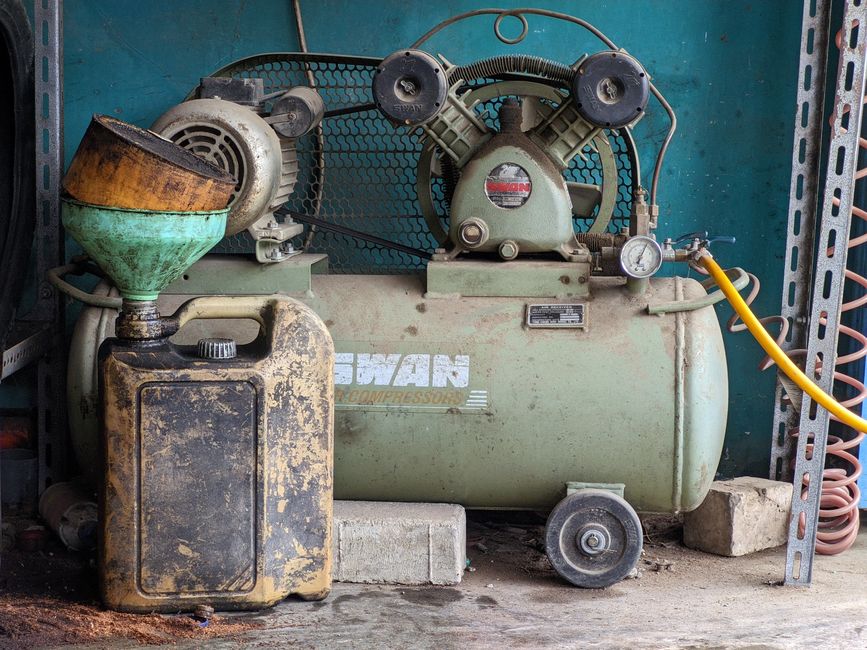
The upfront cost varies by compressor type: reciprocating compressors are typically lower in cost ($5,000–$20,000), while rotary screw ($20,000–$80,000) and centrifugal models ($80,000–$300,000+) are more expensive. However, initial price is only a fraction of TCO.
2. Energy Consumption
Energy accounts for 70–80% of a compressor's lifetime cost. A 100 hp compressor running 8,000 hours/year at $0.10/kWh costs approximately $60,000 annually in electricity. Variable frequency drives (VFDs) can reduce energy use by 20–35%.
3. Maintenance and Repair
Routine maintenance—oil changes, filter replacements, belt adjustments—costs 5–10% of initial purchase price annually. Unexpected repairs can double costs. Preventive maintenance contracts range from $1,000–$5,000 per year.
4. Installation and Infrastructure
Site preparation, piping, electrical work, and foundation costs add 15–25% to the initial investment. Proper air treatment (dryers, filters) adds another 10–15%.
Lifecycle Cost Analysis: A Practical Example
| Cost Category | Rotary Screw (100 hp) | Centrifugal (300 hp) |
|---|---|---|
| Initial Purchase | $50,000 | $200,000 |
| Energy (10 years) | $480,000 | $1,440,000 |
| Maintenance (10 years) | $40,000 | $120,000 |
| Installation | $10,000 | $40,000 |
| Total 10-Year Cost | $580,000 | $1,800,000 |
Note: Energy costs dominate. Even a 10% reduction in energy consumption saves $48,000 over a decade for the rotary screw model.
Hidden Costs to Watch Out For
- Air leaks: A single 1/4-inch leak can waste $2,500/year. Regular audits can cut losses by 20–30%.
- Incorrect sizing: Oversized compressors run inefficiently, increasing energy waste. Undersized units cause pressure drops and downtime.
- Poor air quality: Inadequate filtration leads to equipment damage and product contamination, raising operational costs.
- Load/unload cycling: Frequent cycling wears out components faster and wastes energy.
Strategies to Optimize Air Compressor Costs
1. Conduct a Compressed Air Audit
Measure actual demand, identify leaks, and assess pressure requirements. An audit typically costs $2,000–$5,000 but can reveal savings of 15–25%.
2. Right-Size Your Compressor
Match capacity to demand. Use multiple smaller units instead of one large unit to match fluctuating loads. Sequencing controls can optimize operation.
3. Invest in Energy-Efficient Technologies
VFDs, high-efficiency motors (IE4), and heat recovery systems can reduce energy costs by 20–40%. Heat recovery alone can offset 50–90% of compressor heat, reducing facility heating costs.
4. Implement Preventive Maintenance
Schedule regular oil changes, filter replacements, and belt inspections. Use condition monitoring to predict failures. A well-maintained compressor operates 5–10% more efficiently.
5. Optimize Air Treatment
Use properly sized dryers and filters. Avoid over-treatment: for example, a refrigerated dryer is sufficient for most applications; a desiccant dryer adds unnecessary cost.
Total Cost of Ownership (TCO) Calculation Template
Use this formula to estimate TCO for your specific needs:
TCO = Initial Purchase + Installation + (Annual Energy × Years) + (Annual Maintenance × Years) + (Repair Costs) + (Air Treatment Costs)
For example, a 150 hp compressor with a purchase price of $70,000, installation $15,000, annual energy $90,000, annual maintenance $7,000, and repairs $10,000 over 10 years yields TCO = $70,000 + $15,000 + ($90,000×10) + ($7,000×10) + $10,000 = $1,045,000.
Conclusion
Air compressor cost analysis for large-scale production reveals that energy consumption is the dominant factor. By focusing on energy efficiency, proper sizing, and proactive maintenance, B2B manufacturers can reduce TCO by 20–30%. Investing in a comprehensive audit and modern technologies pays off within 2–3 years. For a personalized cost analysis, consult with our experts to find the optimal compressor solution for your facility.