 English
 简体中文
简体中文 Русский
 Español
 Deutsch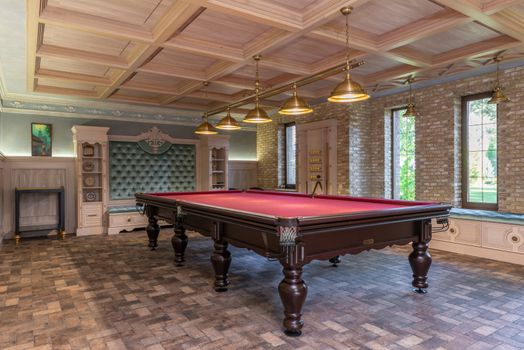
Complete guide to snooker table lighting requirements: lux levels, fixture height, color temperature, CRI, and glare control. Get your table lit right.
Why Snooker Table Lighting Matters More Than You Think
Snooker is a game of millimeters. A pot that looks routine from the wrong angle can become impossible when shadows fall across the cloth, and a safety shot can turn into a gift when glare washes out the cushion line. While players obsess over tip shape, cue weight, and cloth speed, lighting is often the silent variable that decides whether a session feels effortless or frustrating. Proper snooker table lighting is not simply about making the room bright. It is about delivering even, shadow-free, low-glare illumination across the entire playing surface so that every ball, pocket, and cushion edge is read accurately.
This complete guide covers the practical requirements for lighting a snooker table: recommended lux levels, fixture height and placement, color temperature, CRI, glare control, shade design, and the differences between professional tournament setups and home installations. Whether you are building a dedicated snooker room or upgrading an existing table, these guidelines will help you get the light right the first time.
The Core Goals of Snooker Table Lighting
Before choosing fixtures, understand what the lighting must achieve. A well-lit snooker table satisfies four fundamental goals:
- Uniform brightness: The light level should be consistent from the baulk cushion to the black spot, with no dark corners or hot spots.
- Shadow control: Players, cues, and bridge hands should not cast distracting shadows onto the balls or the aiming line.
- Glare reduction: Light should illuminate the cloth, not reflect off the balls into players' eyes.
- Color accuracy: Reds, yellows, greens, browns, blues, pinks, and blacks must be distinguishable under the light source.
These goals are interrelated. A fixture that is too low creates glare and hot spots. A fixture that is too high or too diffuse reduces contrast and makes the balls harder to read. The ideal setup balances intensity, height, and beam control.
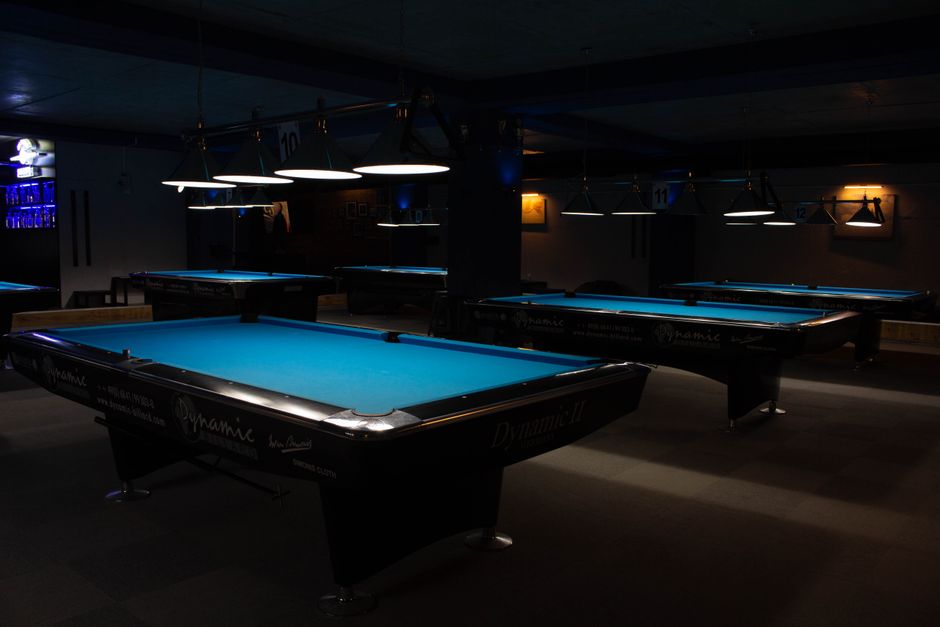
Recommended Light Levels: Lux and Foot-Candles
The snooker industry generally follows standards similar to those used for billiards and professional broadcast tables. The table surface should receive between 500 and 1,000 lux (approximately 50 to 100 foot-candles) for recreational play. Professional tournament and televised tables often exceed this, reaching 1,000 to 1,500 lux to satisfy broadcast camera requirements and eliminate any ambiguity for players.
| Setting | Recommended Illuminance | Notes |
|---|---|---|
| Home / recreational | 500–750 lux | Comfortable for casual play; lower energy use |
| Club / league play | 750–1,000 lux | Even coverage across the full bed |
| Professional / tournament | 1,000–1,500 lux | Meets broadcast and referee visibility needs |
| Televised final stages | 1,500+ lux | May require additional camera lighting |
Uniformity matters as much as raw output. A useful target is a uniformity ratio of at least 0.7, meaning the darkest point on the table should be no less than 70 percent of the brightest point. Achieving this with a single fixture is difficult; multiple lamps or a long linear fixture usually works better.
Fixture Height and Placement
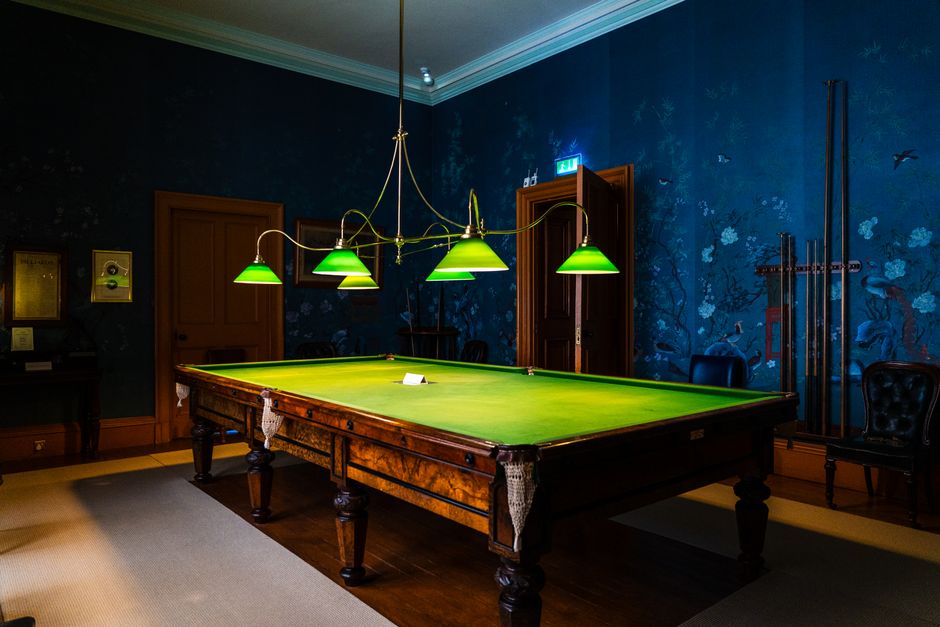
The traditional snooker light is a long rectangular shade suspended above the center of the table, often with three or four lamps inside. The standard recommendation is to hang the fixture so the bottom edge sits approximately 30 to 36 inches (76 to 91 cm) above the table bed. This height provides a good balance: low enough to concentrate light on the playing surface, high enough to avoid glare and to allow players to stand and cue without striking the shade.
For a full-size 12-foot snooker table, a single central fixture may not cover the entire bed evenly. Many clubs use two or three smaller shades spaced along the length of the table, or one long linear fixture that spans most of the playing area. If you use multiple fixtures, overlap their beams slightly so that the light levels blend smoothly rather than creating bands of brightness and shadow.
Positioning Relative to the Table
- Center the fixture over the middle of the table, not over the baulk line or the black spot.
- Align the long axis of the shade with the long axis of the table.
- Keep the fixture parallel to the bed; a tilted shade produces uneven light.
- For multi-fixture setups, space them evenly and check coverage with a lux meter at several points.
Color Temperature and CRI
Color temperature describes the warmth or coolness of light, measured in Kelvin (K). For snooker, a neutral to slightly cool white is generally preferred because it enhances contrast between the cloth and the balls. Recommended ranges:
- 3,000–3,500K: Warm white; cozy but can make reds and browns look muddy.
- 4,000–5,000K: Neutral white; the sweet spot for most snooker rooms.
- 5,000–6,500K: Cool daylight; excellent contrast, but can feel clinical in a home setting.
Equally important is the Color Rendering Index (CRI), which measures how faithfully a light source reveals colors. Look for a CRI of 90 or higher, ideally 95+. A high-CRI lamp ensures that the red ball and the brown ball remain clearly distinct, and that the green cloth looks natural rather than gray or yellow.
Glare Control and Shade Design
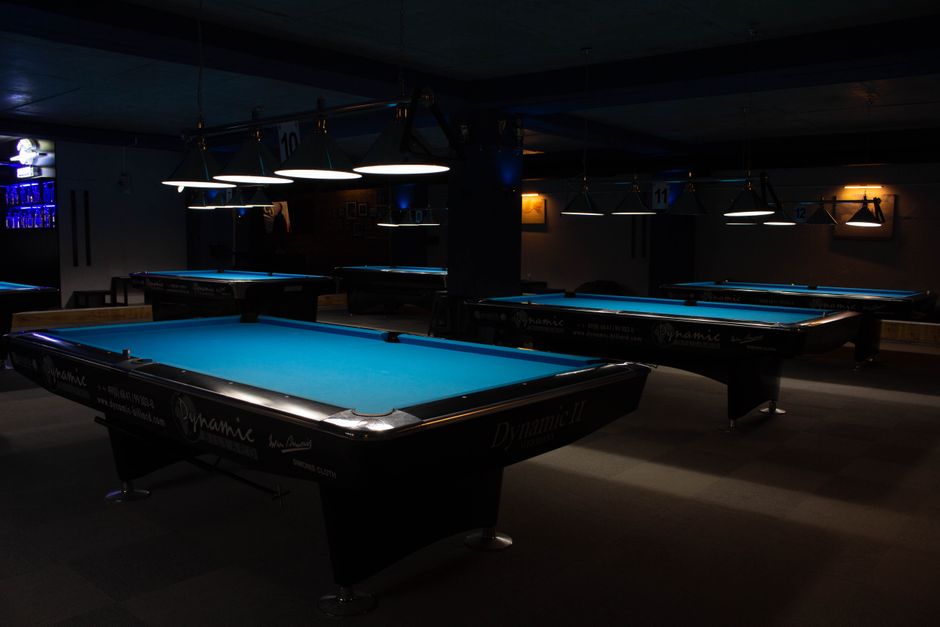
Glare is the enemy of accurate aiming. It occurs when a light source or its reflection is visible in the player's field of view, or when light bounces off the glossy surface of a ball directly into the eyes. Several design choices reduce glare:
- Deep shades: A shade that extends below the lamps hides the bulbs from view and directs light downward.
- Diffusers: Frosted panels or prismatic diffusers soften the beam and reduce harsh reflections.
- Matte finishes: Avoid highly polished metal interiors that create mirror-like reflections.
- Beam angles: Narrow beams concentrate light on the table but can create hot spots; medium beams with overlapping coverage are usually better.
If players complain of seeing bright spots on the balls, try raising the fixture slightly, adding a diffuser, or switching to lamps with a lower surface brightness.
Light Source Options: LED vs. Traditional
For decades, snooker tables were lit by incandescent or halogen bulbs. Today, LED technology dominates for good reason. LEDs run cooler, last far longer, and can be tuned to specific color temperatures and CRI values. They also consume a fraction of the energy of halogen equivalents.
| Feature | Halogen / Incandescent | LED |
|---|---|---|
| Efficiency | Low | High |
| Heat output | High | Low |
| Lifespan | 1,000–2,000 hours | 25,000–50,000 hours |
| Color options | Limited | Wide range of K and CRI |
| Dimming | Possible but limited | Excellent with compatible drivers |
When choosing LEDs, verify the CRI and color temperature on the specification sheet rather than relying on marketing descriptions. Cheap LEDs often have poor color rendering and visible flicker, both of which hurt playing comfort.
Practical Installation Tips
- Use a lux meter: Measure light at the center, four corners, and midpoints of the table. Adjust height or add fixtures until uniformity is acceptable.
- Control the room light: Ambient light should be dimmer than the table light so the table remains the visual focus. Dimmers on room lights help.
- Avoid reflective walls: Glossy paint or mirrors near the table can bounce light back onto the cloth.
- Consider the ceiling: A dark, matte ceiling reduces stray reflections and makes the illuminated table stand out.
- Plan for maintenance: Choose fixtures that allow easy lamp replacement without dismantling the shade.
- Test with real play: Numbers matter, but the final test is whether players can see the edge of the balls and the cushion line comfortably for hours.
Common Mistakes to Avoid
Even experienced installers make avoidable errors. Watch out for these:
- Hanging the fixture too low, causing glare and head collisions.
- Using a single small shade on a 12-foot table, leaving the ends dim.
- Mixing lamps of different color temperatures in one fixture.
- Ignoring CRI and choosing lamps purely on wattage.
- Placing the table under a ceiling fan or air vent, which creates moving shadows.
- Forgetting to dim surrounding room lights, so the table does not stand out.
Frequently Asked Questions
How high should a snooker light be above the table?
Typically 30 to 36 inches (76–91 cm) from the bottom of the shade to the table bed. Adjust within this range to balance coverage and glare.
How many lux do I need for a snooker table?
500–750 lux for home play, 750–1,000 lux for clubs, and 1,000–1,500 lux for professional or televised tables.
What color temperature is best?
Neutral white in the 4,000–5,000K range offers the best combination of contrast and comfort for most players.
Can I use ordinary LED bulbs?
You can, but choose high-CRI bulbs (90+) with a suitable color temperature and low flicker. Standard household bulbs often fall short.
Conclusion
Snooker table lighting is a precision task, not an afterthought. By targeting 500–1,500 lux depending on your level of play, maintaining uniform coverage, choosing high-CRI LEDs around 4,000–5,000K, and controlling glare with well-designed shades, you create a playing environment where the balls are easy to read and the game feels fair. Measure, test, and adjust until the light disappears into the background and only the table remains. That is when you know the lighting is right.