 English
 简体中文
简体中文 Русский
 Español
 Deutsch
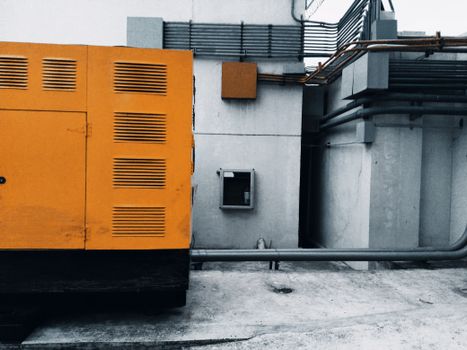
If you're planning to install backup power for a home or business, one question inevitably comes up: how much does a generator and automatic transfer switch (ATS) really cost? The answer isn't a single number — it depends on generator size, fuel type, ATS amperage, installation complexity, and regional labor rates. This guide breaks down every cost component so you can budget accurately and avoid surprises.

Why You Need an ATS with Your Generator
An automatic transfer switch monitors utility power and, within seconds of an outage, disconnects your home or facility from the grid and connects it to the generator. Without an ATS, you'd have to manually flip breakers and start the generator — impractical during storms or when you're away. The ATS also prevents backfeeding, a serious safety hazard for utility crews. Because the ATS is a critical safety and convenience component, its cost should always be factored into your total generator budget.
Average Cost Overview: Generator + ATS
For a typical residential installation, expect the following ranges:
| System Type | Generator Cost | ATS Cost | Installation | Total Range |
|---|---|---|---|---|
| Portable generator + manual transfer switch | $800 – $2,500 | $200 – $600 | $300 – $1,000 | $1,300 – $4,100 |
| Small standby (7–10 kW) + 100A ATS | $2,000 – $3,500 | $500 – $900 | $1,000 – $2,500 | $3,500 – $6,900 |
| Mid-size standby (14–20 kW) + 200A ATS | $4,000 – $7,000 | $700 – $1,500 | $1,500 – $4,000 | $6,200 – $12,500 |
| Large standby (22–48 kW) + 400A ATS | $8,000 – $20,000 | $1,500 – $4,000 | $3,000 – $8,000 | $12,500 – $32,000 |
These figures are for planning purposes. Actual quotes vary widely by region, fuel availability, and site conditions.
Generator Costs by Fuel Type and Size
Portable Generators
Portable units cost $500–$2,500 depending on wattage. They're the cheapest option but require manual setup and a manual transfer switch. They're best for occasional outages and smaller loads.
Home Standby Generators (Air-Cooled)
Air-cooled standby generators in the 7–24 kW range cost $2,000–$7,000 for the unit alone. They run on natural gas or propane and pair with an ATS for fully automatic operation.
Liquid-Cooled Standby Generators
For larger homes or light commercial use, liquid-cooled units from 22 kW to 150 kW cost $8,000–$50,000+. They handle heavy loads like central AC, well pumps, and elevators, and they require larger ATS units.
Commercial and Industrial Generators
Diesel generators above 100 kW can exceed $50,000, with ATS and switchgear costs adding tens of thousands more. These projects are typically engineered to specification.
ATS Cost Breakdown
Automatic transfer switch prices depend primarily on amperage and feature set:
- 100-amp ATS: $400–$900 — suitable for small homes and essential circuits.
- 200-amp ATS: $700–$1,500 — the most common choice for whole-house standby systems.
- 400-amp ATS: $1,500–$4,000 — for large homes and small commercial buildings.
- Service-entrance rated ATS: Adds $200–$800 over standard models.
- Smart or Wi-Fi-enabled ATS: Adds $150–$600 for remote monitoring and load management.
If your generator comes bundled with an ATS — common with brands like Generac, Kohler, and Briggs & Stratton — you may save 10–20% versus buying separately.
Installation Costs: The Hidden Variable
Labor is often 30–50% of the total project. Key factors include:
- Electrical work: $75–$150 per hour in most markets.
- Permits: $100–$500, depending on your municipality.
- Concrete pad or platform: $200–$800.
- Gas line installation: $300–$1,500 if natural gas isn't already at the generator location.
- Electrical panel upgrades: $1,000–$3,000 if your panel can't accommodate the ATS.
- Long conduit or trenching runs: $10–$30 per linear foot.
Ongoing Costs to Budget For
Ownership costs extend beyond installation:
- Annual maintenance: $150–$500 for oil, filters, spark plugs, and inspection.
- Fuel: Natural gas standby units typically add $10–$50 per month to utility bills; propane and diesel cost more per kWh.
- Battery replacement: $50–$200 every 3–5 years.
- Extended warranties: $200–$800 for 5–10 year coverage.
Practical Tips to Reduce Your Total Cost
- Size correctly: Oversizing wastes money. Use a load calculation to match the generator to your essential and convenience loads.
- Bundle generator and ATS: Manufacturer packages usually cost less than buying components separately.
- Get three quotes: Installation pricing varies by 30–50% between contractors in the same area.
- Check for rebates: Some utilities and states offer incentives for standby power or for generators that support grid stability.
- Consider a managed ATS: Load-shedding ATS models let you run a smaller, cheaper generator by prioritizing circuits.
- Plan for future loads: If you may add an EV charger or heat pump, size the ATS accordingly now to avoid a costly redo later.
Is the Investment Worth It?
For homeowners in outage-prone regions, a standby generator with an ATS protects food, sump pumps, medical equipment, and home comfort — and it can preserve property values. For businesses, the math is even clearer: downtime costs revenue, spoiled inventory, and customer trust. A properly sized generator and ATS typically pay for themselves after just a few avoided outages.
Final Thoughts
The total cost of a generator and automatic transfer switch ranges from roughly $1,300 for a basic portable setup to $30,000+ for a large standby system. The biggest cost drivers are generator size, fuel type, ATS amperage, and installation complexity. By understanding each component, getting multiple quotes, and sizing your system correctly, you can secure reliable backup power without overpaying. Start by calculating your essential loads, then request itemized quotes that separate equipment, labor, and permits — that's the surest way to control your final price.
Our application engineers help with sizing, standards and switching schemes.