 English
 简体中文
简体中文 Русский
 Español
 Deutsch
Why Cleaning Your Life Jacket Matters More Than You Think
A life jacket is one of the few pieces of safety gear that can literally mean the difference between life and death on the water. Yet many boaters treat their personal flotation device (PFD) like an afterthought—tossing it in a damp locker, leaving it in the sun for months, or never giving it a second glance until the day it's needed. That's a mistake. Dirt, salt, sunscreen, mildew, and UV damage don't just make your life jacket look bad; they can weaken the fabric, corrode zippers, degrade buoyant foam, and compromise the flotation performance you're counting on.
In this guide, you'll learn exactly how to clean a life jacket safely, what products to avoid, how often to do it, and how to store your PFD so it stays ready for years of reliable service. Whether you own a neoprene vest for wakeboarding, an inflatable belt pack for paddleboarding, or a classic foam-filled offshore jacket, the maintenance principles below apply.
Know Your Life Jacket Type Before You Clean It
Not all life jackets are cleaned the same way. Before you reach for soap and water, identify which category your PFD falls into.
Foam-Filled (Inherently Buoyant) Life Jackets
These are the classic vests filled with PVC or polyethylene foam. They're durable, require no inflation, and are generally the easiest to clean. Most can be hand-washed with mild soap and thoroughly air-dried.
Inflatable Life Jackets (PFDs with CO2 Cartridges)
Inflatable vests and belt packs rely on a CO2 cartridge and a bladder. They need gentler handling. You should never submerge the inflator mechanism or the cartridge, and you must inspect the bladder for leaks after cleaning. Always check the manufacturer's instructions first—some inflatables can only be wiped down, not soaked.
Neoprene and Hybrid Jackets
Neoprene offers warmth and flexibility but can harbor mildew and odors if stored damp. Hybrid jackets combine foam and inflatable elements, so they require the cautious approach of both categories.
How Often Should You Clean a Life Jacket?
There's no single rule, but here's a practical schedule to follow:
- After every saltwater trip: Rinse thoroughly to remove salt crystals that abrade fabric and corrode hardware.
- After heavy sweat or sunscreen exposure: Oils and chemicals can break down foam and stitching over time.
- At least twice per season: A full wash for jackets used regularly in freshwater.
- Before storage: Never put a dirty or damp jacket away for the off-season.
- Any time you notice stains, odor, or stiffness: Don't wait—address it immediately.
Step-by-Step: How to Clean a Foam-Filled Life Jacket
This is the most common scenario, and the good news is that it's simple. Follow these steps for a thorough, safe clean.
1. Gather Your Supplies
- Mild liquid soap or dish detergent (free of bleach, ammonia, and harsh solvents)
- A soft-bristle brush or sponge
- A large tub, sink, or bucket filled with lukewarm water
- Clean towels
- A shaded, well-ventilated drying area
2. Pre-Treat Stains and Odors
For stubborn stains, make a paste of mild soap and a little water, then work it gently into the fabric with a soft brush. For mildew spots, a diluted solution of one part white vinegar to three parts water can help—but test it on a hidden area first. Never use chlorine bleach, which weakens nylon and polyester fibers.
3. Hand-Wash Gently
Submerge the jacket in lukewarm water and use your hands or a soft brush to work the soapy water through the fabric. Pay attention to the collar, underarm areas, and straps where body oils and sweat accumulate. Do not wring, twist, or scrub aggressively—this can distort the foam and stress the stitching.
4. Rinse Thoroughly
Rinse with clean, cool water until no soap residue remains. Soap left in the fabric can attract dirt and irritate skin. If you're rinsing after saltwater use, this step is especially important.
5. Remove Excess Water
Gently squeeze—don't wring—the jacket to release excess water. You can also roll it in a clean towel and press down to absorb moisture.
6. Air-Dry Completely
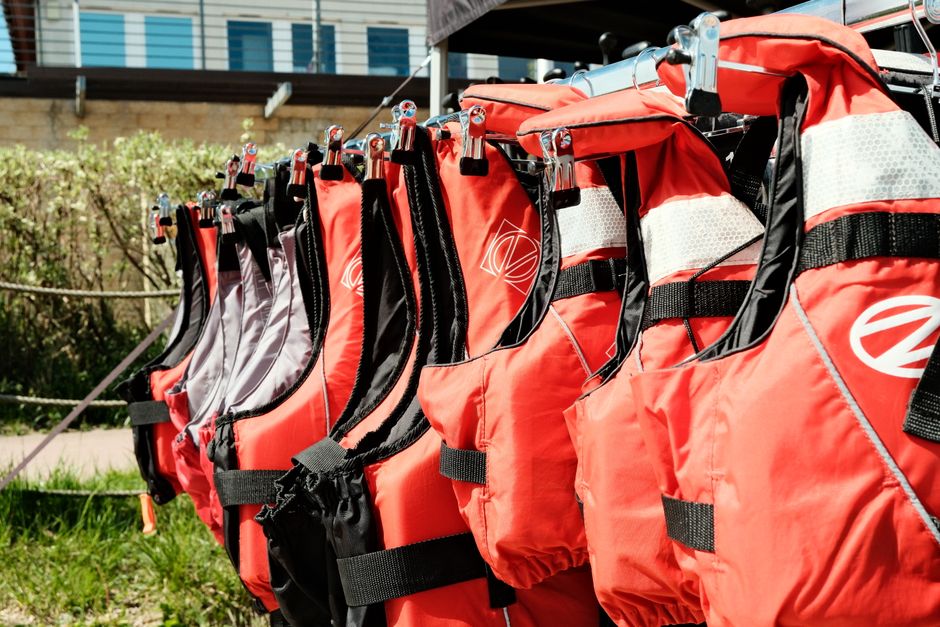
Hang the jacket on a wide plastic hanger in a shaded, well-ventilated spot. Avoid direct sunlight, which degrades fabric and foam, and never use a dryer or radiator—heat can damage the flotation material. Turn the jacket occasionally so both sides dry evenly. Depending on humidity, drying can take 24 to 48 hours.
How to Clean an Inflatable Life Jacket
Inflatable PFDs demand extra care because of their mechanical components.
- Remove the CO2 cartridge only if the manufacturer's manual instructs you to. In many models, you should leave the mechanism intact and simply avoid soaking it.
- Wipe the outer shell with a damp cloth and mild soap rather than submerging the whole unit.
- Clean the bladder if it's removable, following the maker's guidance.
- Inspect after cleaning: Check the bladder for punctures, the seams for separation, and the inflator for corrosion or salt buildup.
- Test inflation using the oral tube (not the CO2 cartridge) to confirm the bladder holds air overnight.
If your inflatable fails an inflation test, do not rely on it. Replace the cartridge or send the unit for professional servicing.
What to Avoid When Cleaning a Life Jacket
Some cleaning mistakes cause permanent damage. Steer clear of these:
| Don't Use | Why It's Harmful |
|---|---|
| Chlorine bleach | Weakens nylon and polyester, fades color, damages stitching |
| Washing machine | Agitates and compresses foam, distorts shape, damages hardware |
| Clothes dryer or heat | Melts or degrades foam and synthetic fabrics |
| Harsh solvents or ammonia | Breaks down coatings and buoyant materials |
| Direct sunlight for drying | UV rays degrade fabric and foam over time |
Drying and Storing Your Life Jacket Correctly
Proper storage is half the battle. A clean jacket stored poorly will degrade just as fast as a dirty one.
- Dry fully before storing. Even slight dampness invites mildew and odors.
- Store loosely. Hang on a wide hanger or lay flat. Don't crush jackets under heavy gear or fold them tightly for long periods, which can crease foam.
- Keep out of direct sun. UV exposure is one of the leading causes of PFD aging.
- Choose a cool, dry, ventilated space. Avoid damp basements and hot attics.
- Loosen straps and buckles. This reduces stress on webbing and hardware.
Routine Inspection: The Habit That Saves Lives
Cleaning is the perfect time to inspect your life jacket for wear. Run through this checklist every time:
- Check the outer fabric for tears, holes, or fraying.
- Inspect seams and stitching for separation.
- Test zippers for smooth operation; lubricate metal zippers with a dab of silicone grease if needed.
- Examine buckles, snaps, and D-rings for cracks or corrosion.
- Confirm the foam is firm and not crumbling or compressed.
- Verify the label and weight rating are still legible.
- For inflatables, check the CO2 cartridge indicator and bladder integrity.
If a jacket shows significant damage, replace it. Life jackets are not expensive relative to the safety they provide, and a compromised PFD is worse than none at all because it creates false confidence.
Quick Maintenance Tips for Longer Life
- Rinse after every use in saltwater or chlorinated water.
- Wear a base layer to reduce direct contact with sweat and oils.
- Apply sunscreen before putting on your jacket, not after, and let it absorb.
- Keep a spare jacket rotation so each one gets rest and drying time.
- Write the purchase date inside the jacket to track its age.
- Check manufacturer guidelines for recommended replacement intervals.
Final Thoughts
Learning how to clean a life jacket is one of the simplest, most cost-effective habits a boater, paddler, or angler can develop. A few minutes of gentle hand-washing, thorough rinsing, and shaded air-drying will keep your PFD comfortable, hygienic, and—most importantly—reliable when it matters most. Avoid harsh chemicals and machines, inspect your jacket regularly, and store it with care. Do that, and your life jacket will be ready every time you head out on the water.