 English
 简体中文
简体中文 Русский
 Español
 Deutsch
Learn the official tournament standard snooker table specs, from 12-foot dimensions and pocket sizes to slate beds and cloth. Read our full FAQ guide now.
What Exactly Is a Tournament Standard Snooker Table?
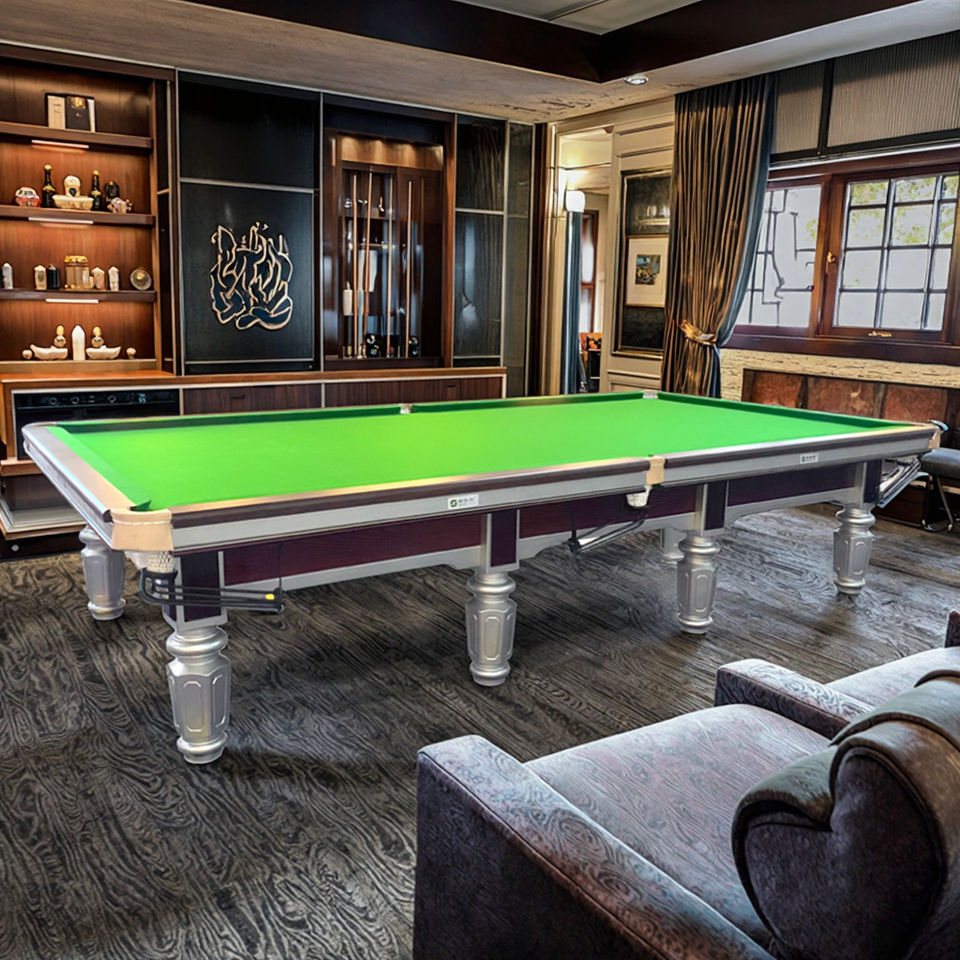
A tournament standard snooker table is a full-size table built to the specifications used in professional events such as the World Snooker Championship. The playing surface measures 12 feet by 6 feet (3569 mm x 1778 mm) when measured between the cushions, making it the largest table used in any cue sport. Every dimension, from cushion height to pocket opening, is tightly controlled so that players face identical conditions wherever a sanctioned event is held.
These tables are not simply oversized furniture. They are precision instruments made from kiln-dried hardwood frames, slate beds, and tensioned wool cloth. The World Professional Billiards and Snooker Association (WPBSA) and World Snooker Tour set the rules, while manufacturers such as Star, Shender, and Strachan cloth suppliers build equipment to match them. If you have ever wondered why a club table feels different from what you see on television, the answer usually lies in how closely it follows these tournament specifications.

What Are the Official Playing Surface Dimensions?
The playing area of a tournament snooker table must be 11 feet 8.5 inches by 5 feet 10 inches (3569 mm x 1778 mm), measured from cushion nose to cushion nose. Including the rails and frame, the overall footprint is roughly 12 feet by 6 feet 3 inches. The bed is normally made from five pieces of slate, each around 45 mm thick, precision-ground and bolted together before the cloth is fitted.
Height is equally standardized: the top of the cushion must sit between 32 and 33 inches (about 813 to 838 mm) from the floor. This height suits the average player's stance and bridge, and it is checked at every professional venue. Any deviation of more than a few millimetres can affect cue ball control, so referees and technicians measure tables before play begins.
How Big Are the Pockets on a Tournament Table?
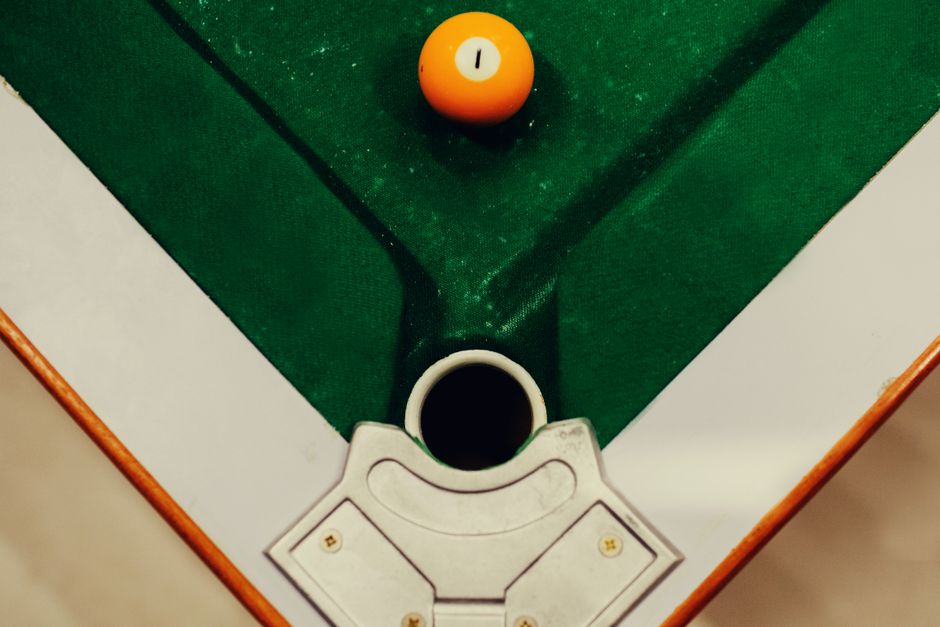
Pocket openings are one of the most important differences between a tournament table and a recreational one. The corner pockets must be between 3.5 and 3.75 inches (86 to 95 mm) wide, while the middle pockets are slightly tighter at around 4 inches (101 mm) when measured across the jaws. The cushion cut angle is also specified, typically 145 degrees for corners and 165 degrees for middles.
These tight openings demand accurate potting and precise cue ball control. On a club table with 4.5-inch pockets, a slightly off-centre pot might still drop. On a tournament table, the same shot rattles in the jaws and stays out. This is why professionals practise on tables set to competition spec long before a major event.
What Cloth and Cushions Are Used in Professional Play?
Tournament tables use finely woven wool cloth, usually 100% napped wool or a wool-nylon blend, with a weight around 22 to 24 ounces. Strachan 6811 is the most famous example, and it is the cloth seen at the World Championship. The cloth is stretched tightly over the slate and brushed regularly to keep the nap running consistently in one direction.
Cushions are made from vulcanized rubber with a carefully controlled rebound. The rubber must be responsive enough to return the ball at speed but consistent enough that players can predict angles. Cushion height and profile are checked against templates, because even a 1 mm variation changes how the ball leaves the rail.
What Is the Difference Between a Tournament Table and a Club Table?
The main differences come down to size, pocket tightness, cloth quality, and slate thickness. A tournament table is always the full 12-foot size, while many clubs use 10-foot or even 9-foot tables to save space. Pocket openings on club tables are often 4.5 to 5 inches wide, which forgives inaccurate shots and speeds up casual games.
Slate is another factor. Tournament tables typically use five-piece slate with a total thickness of 45 mm or more, supported by a heavy steel or hardwood frame. Cheaper tables may use thinner slate or a single-piece bed that is more prone to settling. The result is a table that stays flat and true for years rather than months.
Why Does the Slate Bed Matter So Much?
Slate is the only material that combines the flatness, weight, and stability required for top-level snooker. A tournament-grade slate bed is ground to a tolerance of around 0.1 mm across the entire surface. If the bed is not perfectly flat, the ball will drift, and no amount of skill can compensate for a table that rolls off.
Slate is also heavy, which is why a full-size table can weigh over a tonne. The frame and legs must be engineered to carry that load without twisting. This is why professional tables are assembled by trained fitters and then left to settle before the cloth is fitted and the final levelling is done.
How Is a Tournament Table Set Up and Levelled?
Setup begins with the frame and slate, which are assembled on a level floor and checked with a spirit level and straight edge. Technicians then adjust the legs or shims until the bed is flat to within a fraction of a millimetre. The slate joints are filled and sanded smooth, and the cloth is stretched and stapled in place.
Cushions are fitted next, followed by the pocket plates and nets. The table is then brushed, ironed, and marked with the baulk line and spots. Finally, the referee or tournament technician measures pocket openings, cushion height, and playing dimensions to confirm the table meets the standard before a single ball is struck.
Can You Buy a Tournament Standard Table for Home Use?
Yes, but it requires space and budget. A full-size tournament table needs a room at least 22 feet by 16 feet to allow for cueing room on all sides. The table itself costs anywhere from a few thousand to over twenty thousand dollars depending on the manufacturer, slate quality, and finish.
If space is limited, many buyers choose a 10-foot or 9-foot table with tournament-style pockets and cloth. These smaller tables can still be set up to professional tolerances, and they are a good compromise for players who want authentic conditions without building an extension. Just be sure to check the slate thickness and pocket dimensions before you buy.
| Specification | Tournament Standard |
|---|---|
| Playing surface | 3569 mm x 1778 mm (12 ft x 6 ft) |
| Cushion height | 813-838 mm |
| Corner pocket opening | 86-95 mm |
| Middle pocket opening | About 101 mm |
| Slate thickness | 45 mm or more |
| Cloth weight | 22-24 oz wool |
Frequently Asked Questions About Tournament Snooker Tables
Are all professional snooker tables the same size?
Yes. Every table used on the World Snooker Tour must meet the same 12-foot playing surface specification. This ensures that players face identical conditions from event to event and that records and averages remain comparable across the season.
How often is the cloth changed on a tournament table?
Cloth is usually replaced before each major tournament, and sometimes between sessions if it becomes worn. A fresh cloth offers consistent pace and nap direction, which is essential for fair play at the highest level.
Do tournament tables use heating?
Many professional tables have heated slate beds that keep the cloth dry and the pace consistent. Heating prevents moisture from slowing the cloth and helps the balls roll more truly, especially in humid venues.
Share your site, game, table sizes and quantities — we reply with a sampling plan and a quotation.