Introduction to Power Transmission
Electricity is generated at power plants, but the outlets in your home may be hundreds of miles away. How does that energy travel so far and arrive safely? The answer lies in power transmission — the network of high-voltage lines, transformers, and substations that move electricity from generation sources to distribution systems. This beginner's guide explains the core principles, components, and practical considerations of power transmission.
Whether you are a student, a technician, or simply curious about the grid, understanding transmission helps you appreciate the infrastructure that powers modern life. We will cover why high voltage is used, the key equipment involved, the difference between transmission and distribution, and how to think about efficiency and safety.
The Basic Physics: Why High Voltage?
Power transmission relies on a simple relationship: electrical power equals voltage multiplied by current (P = V × I). To deliver a given amount of power, you can either use high voltage with low current, or low voltage with high current. The problem with high current is that it causes significant energy loss as heat in the conductors, calculated as I²R (current squared times resistance).
By stepping voltage up, current drops proportionally, and losses fall dramatically. For example, increasing voltage by a factor of 10 reduces current by 10, which cuts resistive losses by 100 times. This is why long-distance transmission lines operate at extremely high voltages — typically 110 kV to 765 kV, and even over 1,000 kV in some ultra-high-voltage (UHV) projects.
Alternating Current vs. Direct Current
Most transmission systems use alternating current (AC) because AC voltage can be easily stepped up and down with transformers. High-voltage direct current (HVDC) is used for very long distances, underwater cables, and interconnecting grids with different frequencies. HVDC has lower losses over extreme distances and allows more precise control of power flow.
Key Components of a Transmission System
A transmission network consists of several essential parts working together:
- Generating station: Produces electricity at medium voltage (e.g., 10–25 kV).
- Step-up transformer: Raises voltage to transmission levels, reducing current for efficient transport.
- Transmission lines: Conductors, usually aluminum with a steel core, suspended from towers or buried underground.
- Substations: Facilities with transformers, switches, and protection equipment that route and regulate power.
- Step-down transformer: Lowers voltage for distribution to homes and businesses.
- Control centers: Monitor and manage the grid in real time using SCADA systems.
Transmission Towers and Conductors
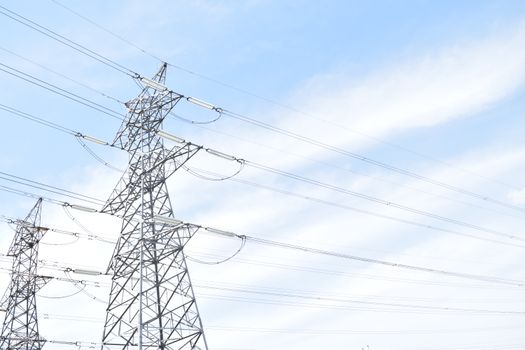
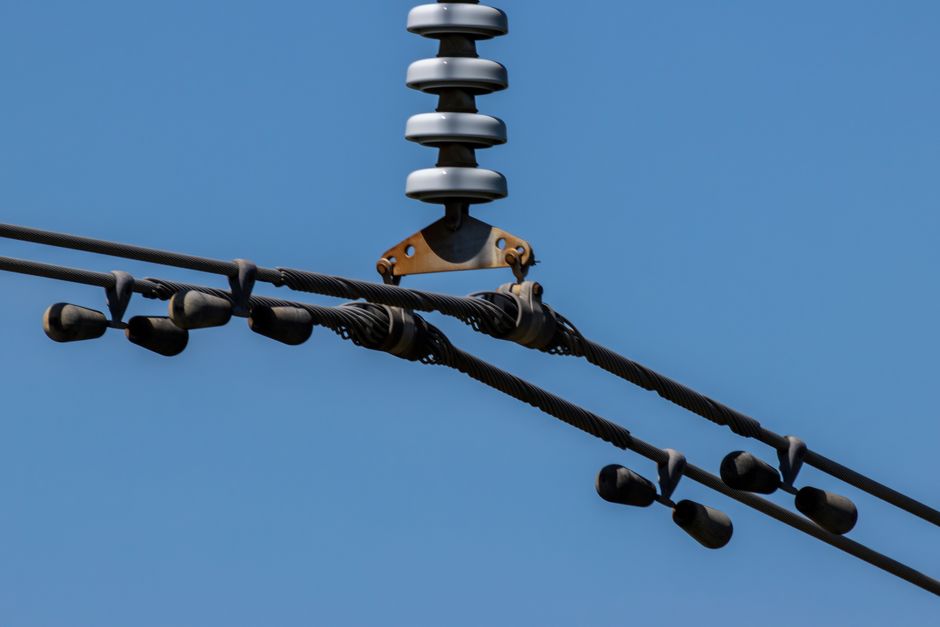
Transmission towers come in many designs: lattice steel towers, monopoles, and guyed structures. They must withstand wind, ice, and seismic loads. Conductors are typically ACSR (aluminum conductor steel reinforced) because aluminum conducts well and is lightweight, while the steel core provides strength. Bundled conductors — two or more wires per phase — reduce corona discharge and increase capacity.
Transformers and Voltage Levels
Transformers are the workhorses of transmission. They use electromagnetic induction to change voltage with minimal loss. Common transmission voltage levels include 115 kV, 230 kV, 345 kV, 500 kV, and 765 kV. The choice depends on distance, power transfer requirements, and cost. Higher voltages require larger clearances and more expensive insulation, so engineers balance capital costs against efficiency gains.
Transmission vs. Distribution: What's the Difference?
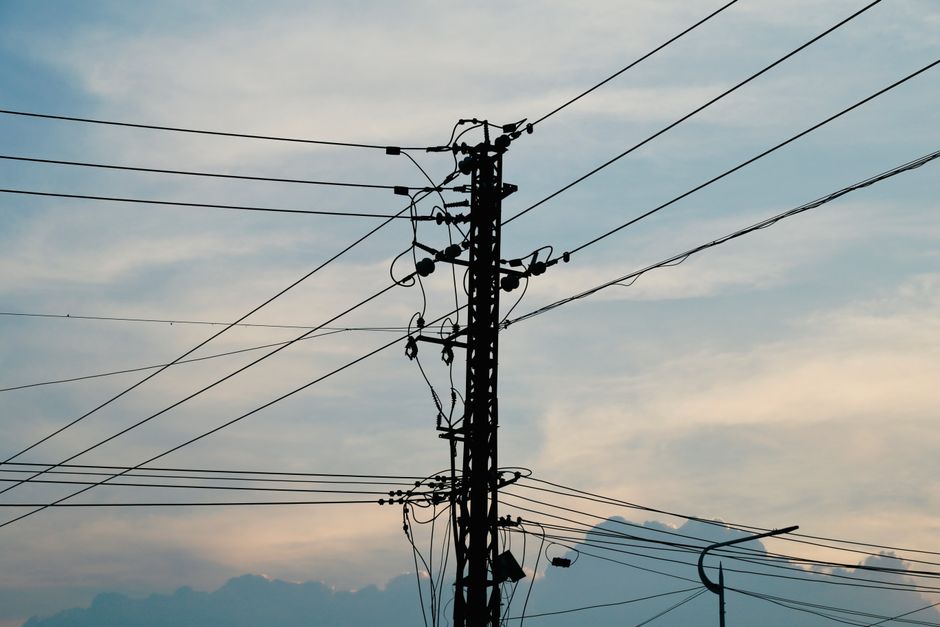
Many people use the terms interchangeably, but they describe different parts of the grid. Transmission moves bulk power over long distances at high voltage. Distribution delivers power to end users at lower voltages (e.g., 4 kV to 34.5 kV, then 120/240 V). The boundary is usually a substation with a step-down transformer.
| Aspect | Transmission | Distribution |
|---|---|---|
| Voltage | High (110 kV+) | Medium to low (under 35 kV) |
| Distance | Long (tens to hundreds of miles) | Short (miles or less) |
| Typical Structure | Large towers, substations | Poles, pad-mounted transformers |
| Primary Function | Bulk power transfer | Deliver to end customers |
How the Grid Stays Stable
A power grid must maintain a delicate balance: generation must equal demand plus losses at all times. Frequency (50 or 60 Hz) and voltage must stay within tight limits. System operators use automatic generation control (AGC), spinning reserves, and demand response to manage fluctuations. If a major line fails, protection relays isolate the fault, and power reroutes through other paths. This is why grids are interconnected — redundancy improves reliability.
Protection and Control Systems
Transmission lines are protected by circuit breakers, relays, and fuses that detect faults and disconnect equipment within milliseconds. Modern digital relays communicate with each other to locate faults precisely. Wide-area monitoring systems (WAMS) use phasor measurement units (PMUs) to observe grid dynamics and prevent cascading outages.
Practical Tips for Understanding Transmission
- Follow the voltage: When you see a transmission tower, note the number of insulators — more discs usually mean higher voltage.
- Think in terms of losses: Remember that I²R losses dominate; that's why voltage is high.
- Respect safety clearances: Never approach downed lines or climb towers. Transmission voltages are lethal.
- Consider the environment: Transmission projects require rights-of-way, environmental reviews, and public consultation.
- Stay updated on HVDC: It is growing for renewable energy integration and long-distance links.
Challenges and Future Trends
The transmission sector faces aging infrastructure, increasing demand, and the need to integrate renewable sources like wind and solar, which are often located far from load centers. Smart grid technologies, dynamic line rating, and advanced conductors can increase capacity without new lines. Energy storage and microgrids also change how transmission is planned. In the coming decades, UHV and HVDC will play larger roles in moving clean energy across continents.
Conclusion
Power transmission is the backbone of the electrical grid. By using high voltage and low current, it minimizes losses and enables efficient long-distance energy transport. From step-up transformers to sophisticated control centers, every component plays a role in keeping the lights on. Understanding these basics empowers you to engage with energy issues and appreciate the engineering behind the socket.