


Disinfectant Spray vs Wipes for Offices: Which Works Better?
Keeping an office clean is no longer just about appearances. Shared desks, conference phones, breakroom counters, and door handles are touched by dozens of people every day, making them prime transfer points for colds, flu, and other pathogens. Facility managers and office administrators often face a simple but important question: should we stock disinfectant spray or disinfectant wipes? Both products promise to kill germs, but they behave very differently in real-world office settings. This comparison breaks down how each option performs, where each one excels, and which is the better choice for most workplaces.
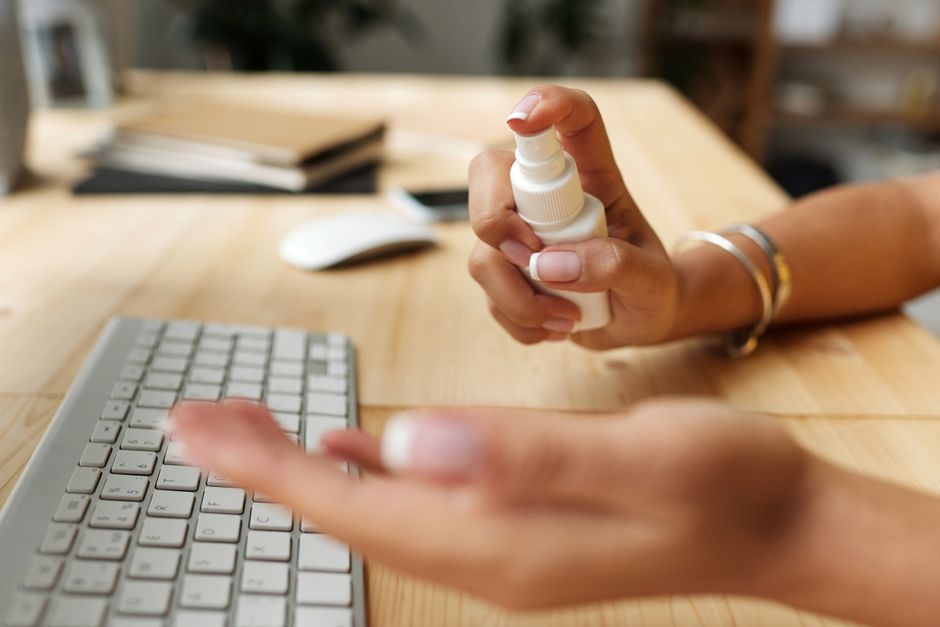
How Disinfectant Spray and Wipes Actually Work
Disinfectant sprays are liquid solutions, usually containing quaternary ammonium compounds, hydrogen peroxide, or alcohol, delivered through a pump or aerosol trigger. The user sprays the surface and either lets it air dry or wipes it with a cloth. Disinfectant wipes are pre-moistened nonwoven sheets saturated with a similar active ingredient. The user pulls one from a canister and wipes the surface directly.
The critical factor in both cases is dwell time, also called contact time. A disinfectant only kills the pathogens it claims to kill if the surface stays visibly wet for the full contact time listed on the label, which can range from 30 seconds to 10 minutes depending on the product and the organism. This single detail explains most of the practical differences between sprays and wipes in an office environment.
Head-to-Head Comparison
| Feature | Disinfectant Spray | Disinfectant Wipes |
|---|---|---|
| Ease of use | Requires a cloth or paper towel; two-step process | One-step, ready to use straight from the canister |
| Coverage of irregular surfaces | Excellent; mist reaches crevices, keyboards, and vents | Moderate; flat wiping misses deep grooves |
| Contact time control | Easy to keep surfaces wet; can re-spray as needed | Dries quickly; users often wipe before dwell time is met |
| Cost per use | Lower; one bottle covers many surfaces | Higher; each wipe is single-use and disposable |
| Waste and environmental impact | Less solid waste; refillable bottles | More landfill waste from nonwoven sheets and packaging |
| Risk of cross-contamination | Low if cloths are changed frequently | Low if wipes are never reused; one wipe per surface |
| Storage and shelf life | Long shelf life; compact storage | Can dry out if lids are left open; bulkier |
| Best for | Large areas, high-touch electronics, deep cleaning | Quick touch-ups, shared equipment, personal desks |
Where Disinfectant Spray Wins
Spray shines when you need to cover a lot of ground efficiently. A single bottle of disinfectant spray can treat an entire conference room, including the table, chair arms, light switches, and the phone, in a fraction of the time it would take to pull wipe after wipe. Because the liquid is applied as a mist, it reaches areas a wipe cannot easily press into, such as keyboard gaps, mouse scroll wheels, and the seams of shared headsets.
Spray is also more economical at scale. Offices with large common areas, reception desks, and breakrooms will spend noticeably less per square foot using a concentrate-and-spray system than buying canister after canister of wipes. For facilities teams that clean on a schedule, spray plus a supply of clean microfiber cloths offers the best combination of coverage, cost, and control over contact time.
Where Disinfectant Wipes Win
Wipes win on convenience and compliance. There is no cloth to find, no bottle to pump, and no risk of overspray landing on food or paperwork. An employee who notices a sneeze-covered desk can grab a wipe and address it immediately. That low barrier to action matters, because the biggest weakness of any office disinfection program is not the product, it is whether people actually use it.
Wipes are also ideal for shared equipment that moves between hands, such as hot-desking laptops, barcode scanners, and point-of-sale terminals. A single wipe per device keeps the process hygienic and prevents the cross-contamination that can happen when one damp cloth is dragged across multiple surfaces. For smaller offices or teams without dedicated cleaning staff, wipes make it realistic for employees to sanitize their own workstations daily.
The Verdict: Which Works Better?
There is no universal winner, but there is a clear recommendation for most offices: use both, with a defined role for each. If you must choose only one, choose disinfectant spray for general cleaning and disinfectant wipes for high-touch, shared items.
- Choose spray if your priority is cost efficiency, broad coverage, and treating large or irregular surfaces like electronics and furniture.
- Choose wipes if your priority is speed, employee adoption, and disinfecting shared devices between users.
- Choose both if you want a program that is both thorough and practical, which describes most modern offices.
Practical Tips for Office Disinfection
- Always read the label and respect the listed contact time. A surface wiped dry in five seconds is not disinfected.
- Store wipes upside down so the top sheet stays saturated, and keep canister lids closed.
- Use one wipe per surface to avoid spreading germs from a dirty area to a clean one.
- Keep spray and clean cloths near high-traffic areas so cleaning happens without a trip to the supply closet.
- Disinfect high-touch points at least once daily, and more often during cold and flu season.
Ultimately, the best disinfectant is the one your team will actually use consistently. Spray delivers value and reach; wipes deliver speed and follow-through. Combining them gives your office the strongest defense against the germs that spread where people work together.