
 English
 简体中文
简体中文 Русский
 Español
 Deutsch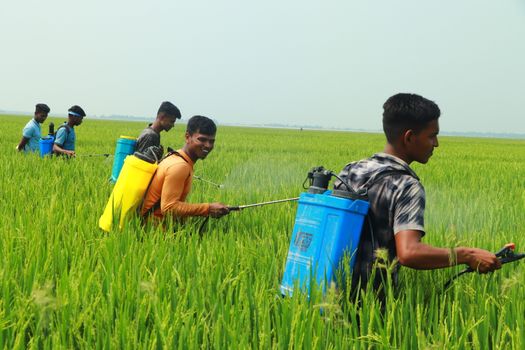

New Crop Protection Products in 2025: A Quick Overview
The 2025 growing season brings a wave of new crop protection chemistries, biologicals, and precision application tools to the market. For growers, agronomists, and input distributors, sorting through the hype is essential—especially as resistance management, regulatory pressure, and input costs continue to reshape the landscape. This review evaluates six notable new products and platforms expected to see broad availability in 2025, with pros, cons, ratings, and practical recommendations.
Why 2025 Matters for Crop Protection
Three forces are driving this year's launches. First, resistance: weeds like Palmer amaranth and waterhemp, plus diseases such as soybean sudden death syndrome, have rendered several legacy actives unreliable. Second, regulation: the EPA's ongoing review of older chemistries has pushed manufacturers toward novel modes of action (MoAs) and biological alternatives. Third, technology: AI-driven scouting and variable-rate sprayers now make it feasible to deploy premium products only where they pay off. The products below reflect all three trends.
Comparison Table: New Crop Protection Products 2025
| Product | Type | Primary Use | Key Active(s) | Rating (out of 5) | Best For |
|---|---|---|---|---|---|
| Veridian XR | Herbicide | Broadleaf & grass weeds | Novel PPO inhibitor + safener | 4.5 | Corn & soybean rotations |
| BioShield 360 | Biological fungicide | Foliar disease prevention | Bacillus amyloliquefaciens + chitosan | 4.0 | Organic & conventional specialty crops |
| NemaGuard Pro | Nematicide/seed treatment | Root-knot & cyst nematodes | Fluopyram analog + microbial blend | 4.2 | Cotton, sugarbeet, vegetables |
| PyraFlex Duo | Insecticide | Sucking & chewing pests | Pyrethroid + diamide premix | 4.3 | High-value fruits & vegetables |
| FungiStop Elite | Fungicide | Rust, blight, mildew | SDHI + strobilurin co-formulation | 4.6 | Cereals & soybeans |
| AgriSense AI Spray | Application platform | Targeted spraying | Camera + AI decision engine | 4.4 | Large-acreage row crops |
Detailed Reviews
1. Veridian XR (Herbicide) — 4.5/5
Pros: Excellent knockdown of ALS- and glyphosate-resistant broadleaves; the built-in safener reduces crop injury in corn; flexible application window from pre-emergence to early post.
Cons: Requires timely rainfall or irrigation for activation; not a silver bullet for grasses; premium price per acre.
Recommendation: Ideal as a rotational partner in a diversified herbicide program. Pair with a residual grass herbicide for full-spectrum control.
2. BioShield 360 (Biological Fungicide) — 4.0/5
Pros: Zero pre-harvest interval (PHI), OMRI-listed, safe for beneficials; improves soil microbial activity over time.
Cons: Preventive only—little curative activity; shorter residual than synthetic standards; storage sensitivity to heat.
Recommendation: Best in organic systems or as a tank-mix partner to reduce synthetic load. Scout aggressively and apply before disease onset.
3. NemaGuard Pro (Nematicide/Seed Treatment) — 4.2/5
Pros: Dual mode of action combines chemical and biological control; improves root vigor; low mammalian toxicity.
Cons: Limited retail availability in some regions; results vary by soil type and nematode pressure.
Recommendation: Use in fields with confirmed nematode thresholds. Soil testing is non-negotiable for ROI.
4. PyraFlex Duo (Insecticide) — 4.3/5
Pros: Broad-spectrum control with two MoAs, reducing resistance risk; strong knockdown plus residual; good IPM fit.
Cons: Harmful to pollinators if applied during bloom; restricted-use in some states; higher cost than single-actives.
Recommendation: Apply outside bloom periods and follow drift precautions. Excellent for high-value crops where pest pressure is intense.
5. FungiStop Elite (Fungicide) — 4.6/5
Pros: Outstanding broad-spectrum disease control; strong preventive and early curative activity; improved formulation for rainfastness.
Cons: SDHI resistance concerns require strict rotation; not for late-season curative use.
Recommendation: A top pick for cereal and soybean programs. Limit to two applications per season and rotate MoAs.
6. AgriSense AI Spray (Application Platform) — 4.4/5
Pros: Cuts herbicide use by 30–60% in trials; real-time weed detection; integrates with major sprayer brands.
Cons: High upfront investment; requires calibration and training; performance drops in dense canopies.
Recommendation: Strong ROI for operations above 1,000 acres. Start with a single unit and scale after validation.
Key Takeaways for 2025
- Rotation is mandatory: Every new MoA must be rotated to delay resistance.
- Biologicals are mainstream: They work best preventively and in tank mixes.
- Precision pays: AI sprayers and variable-rate tools amplify the value of premium products.
- Read the label: New formulations often carry updated PHIs, re-entry intervals, and buffer zones.
Final Verdict
2025 offers genuinely useful tools rather than mere reformulations. FungiStop Elite and Veridian XR lead on performance, while AgriSense AI Spray represents the biggest long-term shift in how products are applied. Growers should trial new chemistries on limited acreage, track resistance, and integrate biologicals where label economics allow. The best program in 2025 will be a diversified one—no single product, however highly rated, can carry a season on its own.