 English
 简体中文
简体中文 Русский
 Español
 Deutsch

Why Automatic Transfer Switch Sizing Matters
An automatic transfer switch (ATS) is the unsung hero of home backup power. When the grid fails, the ATS detects the outage, disconnects your home from the utility lines, and connects your generator or battery system within seconds. But if that switch is undersized, you risk nuisance tripping, overheating, or a complete failure right when you need power most. If it's oversized, you waste money and may struggle with code compliance. This guide walks you through every factor that determines the correct automatic transfer switch sizing for your home.
According to the National Electrical Code (NEC), transfer switches must be rated for the full load they serve. That means you cannot simply pick a switch based on the generator's nameplate rating alone. You must consider service entrance capacity, continuous versus intermittent loads, and the type of transfer switch you install. Let's break it down step by step.

Understanding the Basics: What an ATS Does
An automatic transfer switch is a relay-based device that monitors utility power. When voltage drops below a threshold (usually around 80% of nominal), it signals the generator to start. Once the generator reaches stable voltage and frequency, the ATS transfers the load from utility to generator. When utility power returns and stabilizes, the ATS transfers back and shuts down the generator after a cool-down period.
There are two main categories for homes:
- Whole-house ATS: Rated for the full ampacity of your electrical service, typically 200A or 400A. It can power everything, provided your generator can handle the total load.
- Essential-circuit ATS: Rated for a subpanel that feeds only critical loads like furnace, refrigerator, sump pump, and a few lights. These are often 50A, 100A, or 125A.
Your sizing decision starts with choosing which category fits your budget and backup goals.
Step 1: Determine Your Electrical Service Size
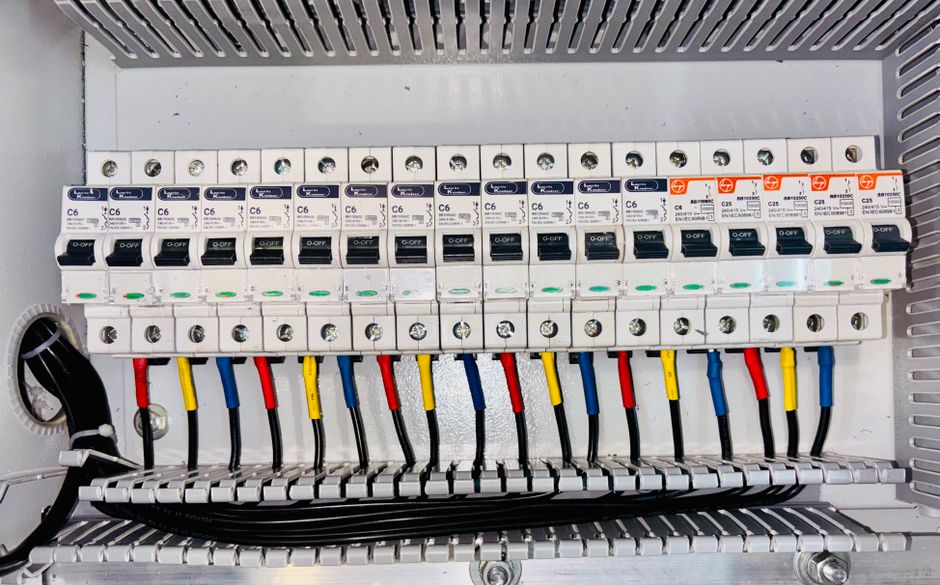
Look at your main electrical panel. The main breaker rating tells you the maximum current your home can draw. Common residential service sizes are 100A, 150A, 200A, and 400A. For a whole-house ATS, the switch must be rated at least as high as your service. A 200A service requires a 200A ATS. You cannot install a 100A ATS on a 200A service and expect it to pass inspection or safely handle a full load.
If you have a 400A service, you may need a 400A ATS or a pair of 200A switches depending on the panel configuration. Always consult the manufacturer's listing and local code requirements.
Step 2: Calculate Your Generator's Output
Your generator's continuous output rating, measured in kilowatts (kW) or amps, is the next critical number. Use this formula to convert kW to amps for a single-phase 240V system:
Amps = (kW × 1000) ÷ 240
For example, a 22 kW generator produces about 91.7 amps. A 14 kW unit produces about 58.3 amps. The ATS must be rated for at least the generator's output, but also for the load it will carry.
| Generator Size | Approx. Output (Amps at 240V) | Minimum ATS Rating |
|---|---|---|
| 7.5 kW | 31 A | 50 A |
| 10 kW | 42 A | 50 A |
| 14 kW | 58 A | 100 A |
| 22 kW | 92 A | 100 A or 200 A |
| 26 kW | 108 A | 200 A |
Notice that the minimum ATS rating is often higher than the generator output. That's because transfer switches are typically available in standard sizes (50A, 100A, 200A, 400A) and you must round up. It also provides headroom for motor starting surges.
Step 3: Account for Surge Loads and Motor Starting
Resistive loads like lights and heaters draw steady current. Motor loads—well pumps, furnaces, air conditioners, refrigerators—draw a large inrush current for a few seconds when starting. This inrush can be 3 to 7 times the running current. If your ATS is sized only for running amps, it may trip during motor starts.
To size correctly, identify the largest motor load in your home and add its locked-rotor amps (LRA) to the total running load. Many ATS manufacturers publish a "motor load" rating that accounts for this. As a rule of thumb, choose an ATS with a continuous rating at least 25% higher than your calculated running load if you have significant motor loads.
Step 4: Decide Between Service-Entrance and Subpanel ATS
Service-entrance ATS models replace your main breaker panel or mount between the meter and the panel. They are rated for the full service amperage and are the cleanest solution for whole-house backup. Subpanel ATS models feed a dedicated essential-loads panel. They are smaller and less expensive but require you to move circuits from your main panel to the subpanel.
For most homes with a 200A service and a generator under 22 kW, a 200A service-entrance ATS is the standard choice. If you only need to back up a few circuits, a 100A subpanel ATS paired with a 10–14 kW generator is more economical.
Step 5: Verify Neutral and Ground Switching Requirements
Automatic transfer switches come in two configurations: switched neutral and solid neutral. The choice depends on whether your generator is a separately derived system.
- Switched neutral ATS: Required when the generator has its own neutral-ground bond and the transfer switch must break the neutral to prevent parallel paths. This is common with portable generators used as standalone sources.
- Solid neutral ATS: Used when the generator is not a separately derived system, meaning the neutral remains connected to the utility neutral. Most home standby generators are installed this way.
Getting this wrong can create a ground loop, nuisance tripping of GFCI devices, or a code violation. Always follow the generator manufacturer's instructions and local inspector guidance.
Step 6: Consider Enclosure Type and Location
ATS enclosures are rated NEMA 1 (indoor), NEMA 3R (outdoor, rainproof), or NEMA 4X (corrosive environments). For outdoor installation near the meter, choose NEMA 3R. Indoor installations in a garage or utility room can use NEMA 1. The enclosure must be sized to accept the largest conductors required by your service and generator feeders. Check the manufacturer's wire range table before ordering.
Step 7: Check Code and Listing Requirements
Your ATS must be listed to UL 1008, the standard for transfer switch equipment. It must also be installed per NEC Article 702 (Optional Standby Systems) and Article 700 or 701 if it serves emergency or legally required standby loads. Many jurisdictions require a permit and inspection. Some utilities also require a visible-break disconnect or an outdoor-rated transfer switch for lineman safety.
Never use a manual transfer switch as a substitute for an automatic one if you want unattended operation. And never attempt to backfeed a dryer outlet—this is illegal and deadly.
Step 8: Match the ATS to the Generator's Control Interface
Modern standby generators communicate with the ATS through a low-voltage control harness. The ATS sends a start signal and receives status feedback. If you mix brands, you may need a third-party interface module or a generator with a two-wire start capability. Always confirm compatibility before purchase. A mismatch can leave you with a switch that never signals the generator to start.
Practical Sizing Example
Suppose your home has a 200A service, a 22 kW standby generator, and a 4-ton air conditioner with a locked-rotor amps rating of 90A. Your total running load is about 80A. The generator can supply 92A continuously. The ATS must handle the generator output plus the AC inrush. A 200A service-entrance ATS with a 200A continuous rating easily handles this. If you chose a 100A ATS, it might work for running load but could trip on AC startup. The 200A unit provides the necessary surge capacity and matches your service size.
Common Mistakes to Avoid
- Sizing the ATS to the generator only, ignoring the service panel rating.
- Forgetting to account for motor starting surge.
- Using a solid-neutral ATS with a separately derived generator.
- Installing an indoor-rated switch outdoors.
- Skipping the permit and inspection process.
- Assuming all ATS brands communicate with all generators.
Final Checklist Before You Buy
- Confirm your service amperage (100A, 200A, 400A).
- Calculate generator continuous amps and round up to the next standard ATS size.
- Add 25% headroom if you have large motor loads.
- Decide between whole-house and essential-circuit backup.
- Verify neutral configuration (switched vs. solid).
- Choose the correct NEMA enclosure for your location.
- Check UL 1008 listing and local code requirements.
- Confirm control-wire compatibility with your generator.
Proper automatic transfer switch sizing is not guesswork. By following these steps, you ensure a safe, code-compliant installation that keeps your home powered when the grid goes down. When in doubt, consult a licensed electrician who specializes in standby power systems. The cost of a professional assessment is small compared to the risk of an undersized or improperly installed switch.
Our application engineers help with sizing, standards and switching schemes.