AC vs DC Power Transmission Efficiency Compared
Every megawatt that leaves a generating station must travel hundreds of kilometers before it reaches a factory, a data center, or a neighborhood. Along the way, some of that energy is inevitably lost as heat. The size of that loss depends heavily on whether the electricity is transmitted as alternating current (AC) or direct current (DC). For more than a century, the debate between these two technologies has shaped the architecture of the global grid. This article compares AC and DC transmission efficiency across real-world operating conditions, examines the trade-offs of each option, and offers a clear recommendation for modern power systems.
The Physics Behind Transmission Losses
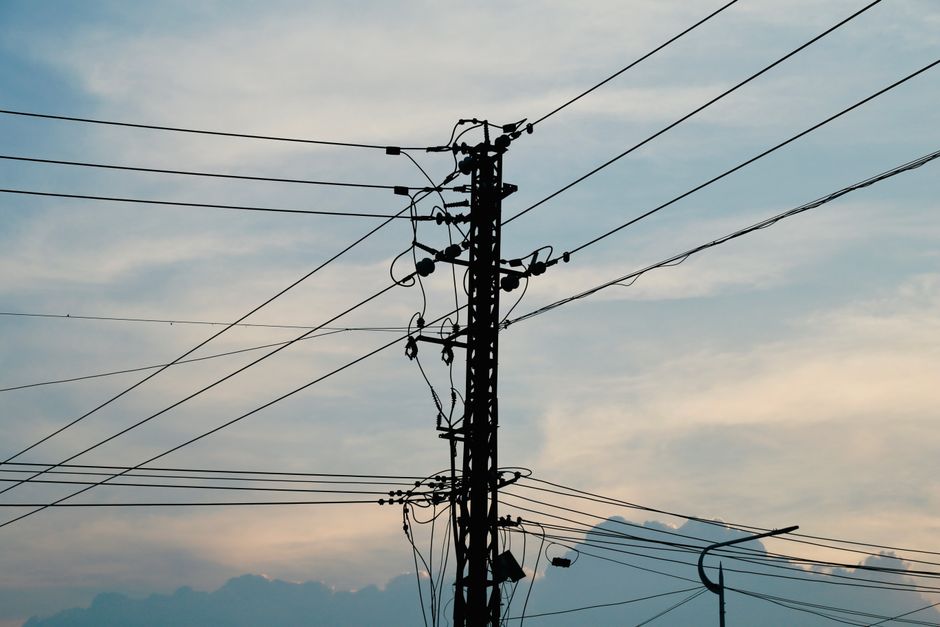
Transmission losses come primarily from resistive heating in the conductors, described by the formula P = I²R, where P is power lost, I is current, and R is resistance. Because losses scale with the square of current, the most effective way to reduce them is to reduce current. For a given power level, current can be lowered by raising voltage. This is why both AC and DC systems operate at very high voltages: 345 kV to 765 kV for AC, and 320 kV to 1,100 kV for DC.
The difference lies in how each technology handles voltage transformation, reactance, and capacitance. AC systems rely on transformers, which are cheap, robust, and efficient. DC systems require power electronics—rectifiers, inverters, and converters—which were once prohibitively expensive but have improved dramatically with modern semiconductor technology.
Comparing AC and DC Transmission Options
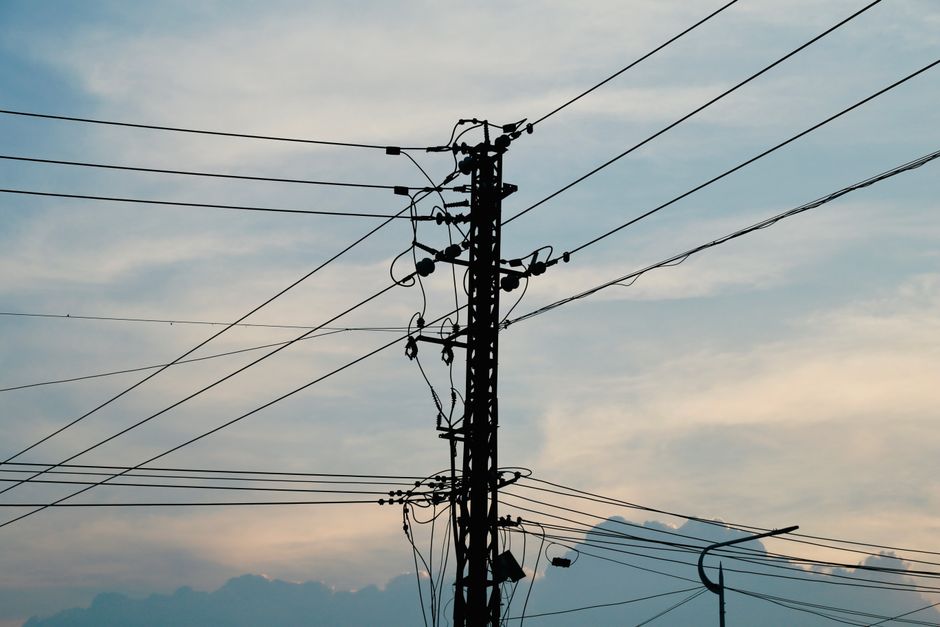
The table below compares the most common transmission configurations used by utilities today.
| Feature | HVAC (High-Voltage AC) | HVDC (High-Voltage DC) |
|---|---|---|
| Typical voltage range | 115 kV – 765 kV | 320 kV – 1,100 kV |
| Line losses (per 1,000 km) | 5% – 10% | 3% – 5% |
| Converter station cost | Low (transformers only) | High (power electronics) |
| Break-even distance | N/A | 500 – 800 km overhead; 50 km submarine |
| Reactive power compensation | Required | Not required |
| Right-of-way width | Wide | Narrow |
| Interconnecting asynchronous grids | Not possible | Fully supported |
| Best use case | Short and medium distances, dense networks | Long distance, submarine, asynchronous ties |
Efficiency Advantages of HVDC
HVDC wins on efficiency for long-haul transmission for three reasons. First, DC lines have no skin effect, so the entire conductor cross-section carries current. Second, DC lines do not suffer from reactive power losses caused by line inductance and capacitance, which in AC systems can consume 30–50% of the line's capacity over long distances. Third, DC cables have no charging current, making them ideal for submarine routes where AC cables would require compensation every 30–50 km.
Real projects illustrate the gap. China's ±1,100 kV Changji–Guquan HVDC link moves power roughly 3,300 km with losses under 5%. An equivalent AC line at that distance would lose well over 10% and would require multiple intermediate substations.
Where AC Still Wins
AC remains the backbone of the grid for good reasons. Transformers allow voltage to be stepped up and down cheaply at every substation, which makes AC ideal for meshed networks with many injection and withdrawal points. AC circuit breakers are mature and inexpensive, and protection schemes are well understood. For distances under 500 km on land, the capital cost of HVDC converter stations—often hundreds of millions of dollars per terminal—cannot be justified by the modest loss savings.
Hybrid Systems: The Practical Answer
Most modern grids are not purely AC or DC. They are hybrid. AC forms the local and regional network, while HVDC overlays long-distance corridors, submarine links, and asynchronous interconnections. This combination captures the cost efficiency of AC at short range and the loss efficiency of DC at long range.
Recommendation
For new transmission projects, the decision should follow a simple rule based on distance and application:
- Under 500 km on land: Choose HVAC. Transformer economics dominate, and losses are manageable.
- Over 800 km on land, or any submarine cable over 50 km: Choose HVDC. The efficiency gains outweigh the converter cost.
- Interconnecting grids with different frequencies or phases: Choose HVDC. It is the only viable option.
- Integrating remote renewables: Choose HVDC for the trunk line, with AC for local collection.
In summary, DC transmission is more efficient per kilometer, but AC is more economical per terminal. The optimal strategy is not to pick one technology globally, but to deploy each where its strengths deliver the greatest system-wide benefit. Utilities that adopt a hybrid architecture will achieve the lowest total cost of delivered energy and the highest overall reliability.