
Understanding High Voltage Transmission Line Safety
High voltage transmission lines are the backbone of modern electrical infrastructure, carrying electricity at voltages typically ranging from 69 kV to 765 kV across vast distances. While these lines are engineering marvels that keep our homes, hospitals, and industries powered, they also present serious hazards when safety guidelines are ignored. Whether you are a utility worker, a contractor, a farmer, or a homeowner living near a right-of-way, understanding high voltage transmission line safety is not optional—it is a matter of life and death.
This comprehensive guide covers the core principles of high voltage safety, practical precautions for different groups, emergency response procedures, and the regulations that govern transmission line operations. By the end, you will have a clear framework for staying safe around energized conductors and the equipment that supports them.
How High Voltage Lines Differ from Distribution Lines
Before diving into safety rules, it is important to distinguish transmission lines from the lower-voltage distribution lines that connect to homes and businesses.
| Feature | Transmission Lines | Distribution Lines |
|---|---|---|
| Typical voltage | 69 kV – 765 kV | 4 kV – 35 kV |
| Purpose | Bulk power transfer over long distances | Local delivery to end users |
| Structure height | 15 – 60+ meters | 6 – 15 meters |
| Clearance requirements | Very large, strictly regulated | Moderate |
| Hazard level | Extreme—arc flash and step potential risks | High |
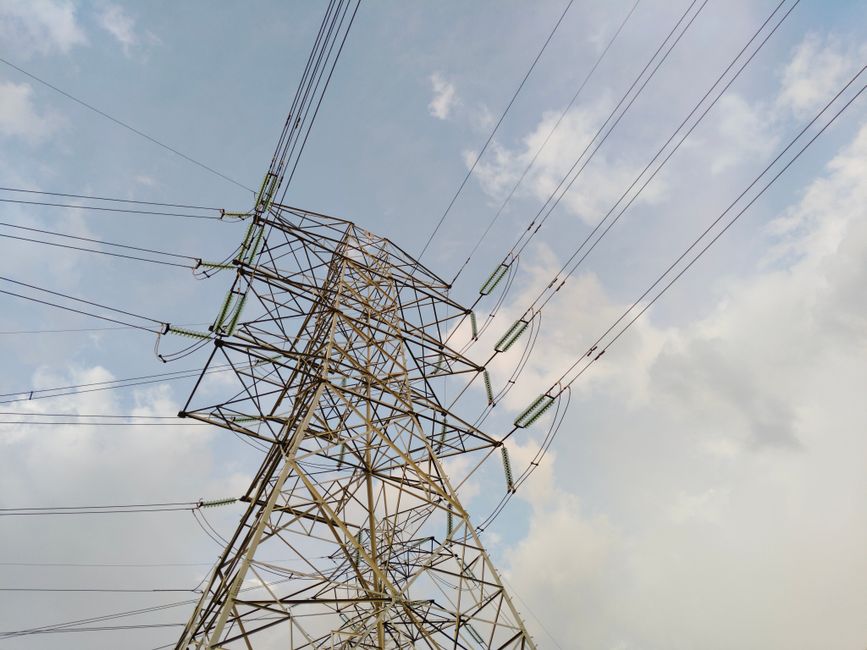
Because transmission lines operate at much higher voltages, electricity can arc across air gaps that would be safe near distribution lines. This means you do not need to physically touch a conductor to be injured or killed.
Core Principles of Electrical Safety Near Transmission Lines
1. Maintain Safe Approach Distances
The single most important rule is to keep a safe distance from energized conductors and equipment. The required distance depends on the voltage of the line. As a general guideline:
- Up to 50 kV: minimum 3 meters (10 feet)
- 50 kV to 200 kV: minimum 4.5 meters (15 feet)
- 200 kV to 350 kV: minimum 6 meters (20 feet)
- 350 kV to 500 kV: minimum 7.5 meters (25 feet)
- 500 kV to 765 kV: minimum 9 meters (30 feet)
These distances apply to people, tools, equipment, scaffolding, cranes, ladders, and even long conductive objects like irrigation pipes. Always check with the local utility for the exact voltage and required clearance before starting any work near a right-of-way.
2. Assume Every Line Is Energized
Never assume a line is de-energized because it looks quiet, is sagging, or has been reported as out of service. Transmission lines can be re-energized remotely without warning. Treat every conductor, insulator, and structure as live until the utility has confirmed isolation and grounding in writing.
3. Beware of Step and Touch Potential
When a high voltage line faults to the ground, the current spreads outward in concentric rings. This creates a voltage gradient that can electrocute a person whose feet are at different potentials—known as step potential. Touch potential occurs when a person touches a grounded object while standing on energized ground. If you suspect a downed line, keep your feet together and shuffle or hop away to a distance of at least 10 meters (33 feet).
4. Never Use Water or Foam Near Energized Equipment
Water and firefighting foam conduct electricity. Never spray water on or near a transmission line, transformer, or substation. If a fire involves electrical equipment, use a Class C extinguisher and wait for utility crews to de-energize the area.
Safety Guidelines for Workers and Contractors
Construction, agriculture, and tree-trimming workers face the highest risk of transmission line contact. The following practices are essential.
Pre-Job Planning and Utility Notification
- Call 811 or your local one-call service before any excavation.
- Request a utility locate and, for work within the right-of-way, a formal clearance or outage.
- Hold a tailboard meeting to review voltage, clearance distances, and emergency contacts.
Equipment Operation Near Lines
- Use a spotter when operating cranes, excavators, or boom trucks near lines.
- Install height-limiting devices or proximity alarms on equipment.
- Lower booms and masts before moving equipment under lines.
- Never store materials, fuel, or soil piles under a transmission line.
Personal Protective Equipment (PPE)
Workers who must approach energized lines should wear arc-rated clothing, insulated gloves rated for the voltage, and dielectric footwear. Grounding and bonding must be performed by qualified personnel following OSHA 1910.269 and NFPA 70E requirements.
Safety Guidelines for Homeowners and the Public
Living Near a Right-of-Way
- Do not plant tall trees within the right-of-way; roots and branches can compromise clearance.
- Never build sheds, pools, or fences under transmission lines without utility approval.
- Keep antennas, satellite dishes, and flagpoles well away from conductors.
- Do not fly drones, kites, or model aircraft near transmission lines.
Downed Power Lines
If you see a downed line, assume it is live. Do not touch it, do not drive over it, and do not attempt to move it with any object. Call 911 and the utility immediately. If a line falls on your vehicle, stay inside and wait for help unless the vehicle is on fire—then jump clear with both feet together and shuffle away.
Magnetic Field Concerns
Some residents worry about electromagnetic fields (EMF) from transmission lines. While research continues, the consensus of major health agencies is that no consistent evidence links typical residential EMF exposure to serious health effects. Nonetheless, many utilities maintain generous right-of-way buffers as a precaution.
Emergency Response and First Aid
Electrical injuries require immediate, specialized response.
- Do not approach a victim until the power source is confirmed de-energized.
- Call 911 and report the location, voltage if known, and number of victims.
- If the victim is not breathing, begin CPR only after ensuring the scene is safe.
- Treat electrical burns as serious trauma and watch for cardiac arrhythmias.
Utility crews should be dispatched to isolate and ground the circuit before anyone enters the hazard zone.
Regulations and Standards to Know
Several frameworks govern transmission line safety:
- OSHA 1910.269 – Electric power generation, transmission, and distribution.
- OSHA 1926 Subpart V – Power transmission and distribution for construction.
- NFPA 70E – Electrical safety in the workplace.
- NESC (ANSI C2) – National Electrical Safety Code for clearances and installations.
- IEEE Standards – Guides for grounding, insulation coordination, and live-line work.
Compliance with these standards is mandatory for utilities and contractors and is the foundation of any effective safety program.
Building a Culture of Transmission Line Safety
Rules and regulations only work when they are backed by a safety culture. Utilities should invest in regular training, refresher courses, and scenario-based drills. Workers should be empowered to stop work when conditions are unsafe. Communities should be educated through public awareness campaigns, school programs, and clear signage along rights-of-way.
Technology can also help. Drones with LiDAR, smart sensors, and remote monitoring can reduce the need for human proximity to energized lines. However, technology never replaces situational awareness and disciplined adherence to safe distances.
Key Takeaways
- Always maintain the voltage-specific safe approach distance.
- Treat every line as energized until formally isolated and grounded.
- Plan work near lines with the utility and use spotters and barriers.
- Never touch or approach a downed line—shuffle away and call for help.
- Follow OSHA, NFPA, and NESC requirements for all work activities.
High voltage transmission lines are essential to modern life, but they demand respect. By following these guidelines, you protect yourself, your coworkers, and your community from one of the most unforgiving hazards in the industrial world.