
HVDC vs HVAC Transmission: Which Is Better?
Choosing between high-voltage direct current (HVDC) and high-voltage alternating current (HVAC) is one of the most consequential decisions in power transmission planning. Both technologies move bulk electricity over long distances, but they behave very differently when it comes to efficiency, cost, controllability, and grid integration. This article compares the two options across the criteria that matter most to utilities, developers, and industrial power users, and gives a clear recommendation for each use case.
How HVAC and HVDC Work
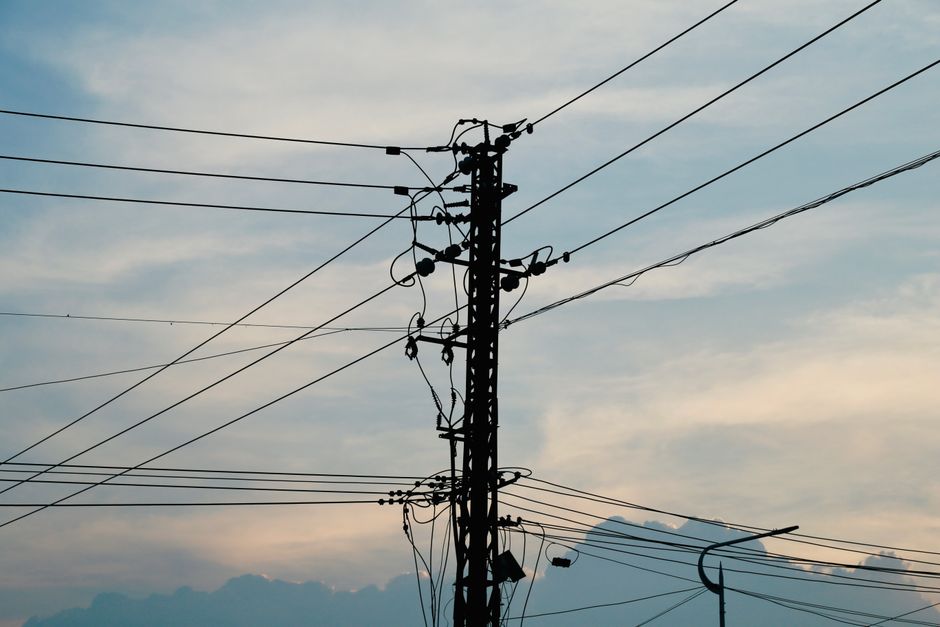
HVAC transmission is the backbone of modern grids. Alternating current can be stepped up or down easily with transformers, which makes it ideal for interconnected networks where power flows between many nodes. Most overhead lines and substations in the world today operate on HVAC.
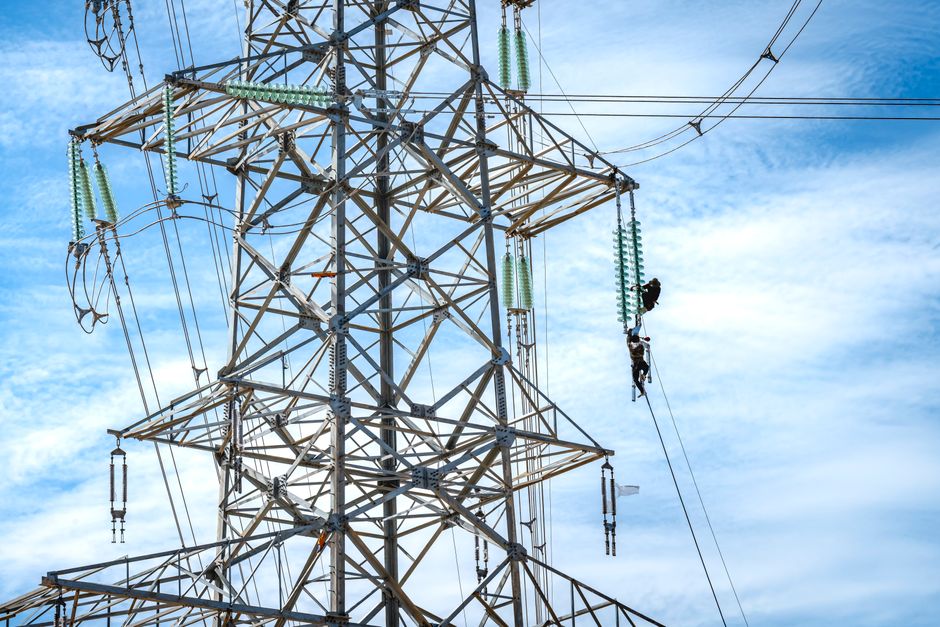
HVDC transmission converts AC to DC at a converter station, sends the power as direct current, and converts it back to AC at the receiving end. Because DC has no frequency or reactive power component, it can connect asynchronous grids, control power flow precisely, and avoid many of the losses that plague long AC lines.
Key Comparison Criteria
The right choice depends on distance, capacity, terrain, and the role the line plays in the wider grid. The table below summarizes the most important differences.
| Criterion | HVAC | HVDC |
|---|---|---|
| Typical economic distance | Short to medium (under ~600–800 km overhead) | Long (over ~600–800 km overhead, over ~50 km submarine) |
| Line losses | Higher at long distance; reactive losses significant | Lower per kilometer; no reactive power loss |
| Converter station cost | None; only transformers and switchgear | High; converter stations are the main cost driver |
| Power flow control | Passive; follows impedance paths | Active and precise; independent of grid conditions |
| Grid interconnection | Requires synchronized grids | Connects asynchronous grids and different frequencies |
| Right-of-way footprint | Wider corridors for the same capacity | Narrower corridors; lower visual and land impact |
| Cable suitability | Limited by charging current on long cables | Preferred for long submarine and underground cables |
| Technology maturity | Very mature, widely standardized | Mature and rapidly improving, especially VSC |
Cost Comparison: Where the Break-Even Point Lies
HVAC wins on capital cost for short lines because it avoids expensive converter stations. HVDC wins on operating and line cost for long lines because its conductors and towers can be lighter and its losses are lower.
The break-even distance is usually quoted as roughly 600–800 km for overhead lines and as little as 50 km for submarine cables. Beyond those thresholds, the savings in line losses and right-of-way costs typically outweigh the converter investment within a few years of operation.
| Cost Factor | HVAC Advantage | HVDC Advantage |
|---|---|---|
| Initial capital cost | Lower for short lines | Lower for long lines and cables |
| Converter stations | Not required | High cost, but fixed regardless of distance |
| Line and tower cost | Higher per kilometer | Lower per kilometer |
| Losses over 1,000 km | Typically 5–8% or more | Typically 2–4% |
| Land and right-of-way | Wider corridor required | Narrower corridor, easier permitting |
Technical Performance and Grid Benefits
HVAC Strengths
- Simple, proven, and easy to expand with standard transformers.
- Natural fit for meshed networks with many substations.
- Lower upfront cost for urban and medium-distance projects.
- Widely available equipment and skilled workforce.
HVDC Strengths
- Precise, fast control of power flow, improving grid stability.
- Connects asynchronous grids and supports offshore wind integration.
- Lower losses and narrower corridors over long distances.
- Enables submarine cables beyond the limits of AC charging current.
- Can provide black-start capability and support weak grids.
When to Choose HVAC
HVAC remains the best choice for short and medium-distance transmission, dense meshed grids, and projects where converter costs cannot be justified. If the line is under a few hundred kilometers on land and connects synchronized networks, HVAC is usually cheaper and simpler to build and operate.
When to Choose HVDC
HVDC is the better option for long-distance bulk transfers, submarine cables, interconnections between asynchronous grids, and projects that need precise power flow control. It is also increasingly favored for integrating large offshore wind farms and for reinforcing congested corridors where new right-of-way is difficult to obtain.
Recommendation
There is no universal winner, but the decision rule is clear. Choose HVAC for short and medium-distance onshore transmission within a synchronized grid. Choose HVDC for long-distance, submarine, asynchronous, or controllability-critical projects. For most utilities, the optimal strategy is a hybrid grid: HVAC for local and regional delivery, and HVDC as the high-capacity backbone that ties regions together. Evaluate each project against distance, capacity, terrain, and grid conditions, and let the break-even analysis, not tradition, decide.
Final Thoughts
Both HVDC and HVAC are essential tools in modern power transmission. HVAC offers simplicity and low cost at short range, while HVDC delivers efficiency, control, and reach at long range. As renewable generation grows and grids become more interconnected, HVDC will play an increasingly central role, but HVAC will remain the workhorse of distribution and regional transmission for decades to come.