
1. Heavy-Duty Rotary Screw Compressors for Continuous Operation
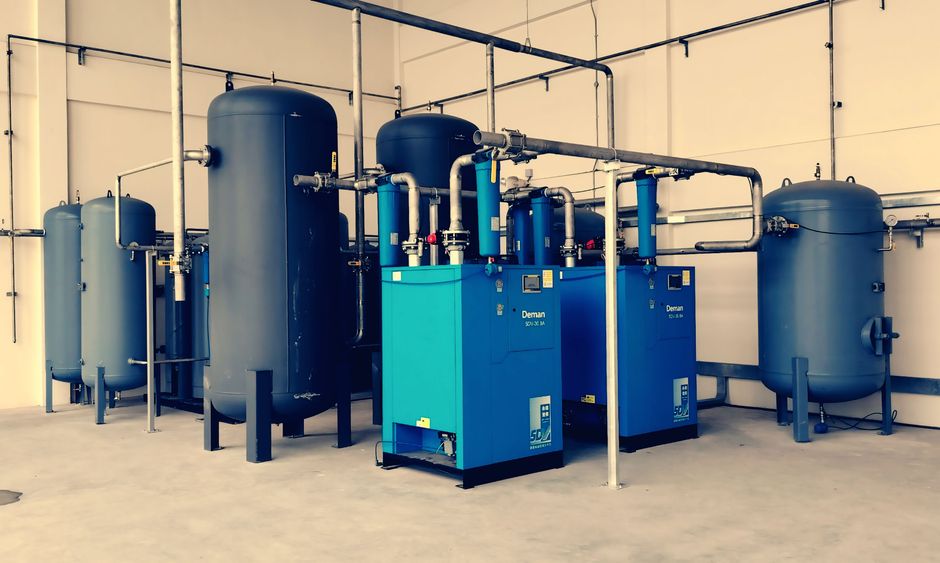
When construction projects demand non-stop air supply, rotary screw compressors are the workhorses you need. Unlike piston models, they use twin screws to compress air continuously without the pulsing flow, making them ideal for powering multiple tools like jackhammers, nail guns, and impact wrenches. For export, choose models with powder-coated frames and sealed electrical components to withstand harsh job sites and overseas shipping conditions.
Top manufacturers now integrate advanced cooling systems that maintain performance even in ambient temperatures up to 50°C. Look for units with automatic start/stop controls and digital displays for easy monitoring. A typical 185 CFM rotary screw compressor can run a 90 lb breaker for hours, boosting productivity on large-scale construction sites.
2. Compact Piston Compressors for Light-Duty Tasks
For smaller construction crews or finishing work, portable piston air compressors offer a cost-effective solution. These single-stage or two-stage models are lightweight (often under 100 lbs) and can be easily moved around a job site. They're perfect for powering brad nailers, staplers, and spray guns for painting or insulation.
When selecting for export, prioritize oil-free models to simplify maintenance and comply with environmental regulations. Many export-ready units feature low-noise enclosures (under 70 dB) for use in noise-sensitive areas. A 4-6 gallon tank with 150 PSI max provides sufficient air for most light-duty applications without the bulk of larger compressors.
3. Diesel-Powered Compressors for Remote Locations
Construction sites without access to electricity require self-powered air compressors. Diesel models deliver high CFM ratings (up to 1000+ CFM) and run for extended periods on a single fuel tank. They are indispensable for road building, mining, and pipeline projects where mobility and reliability are critical.
Export models should include cold-start kits, heavy-duty air filters, and spark arrestors to meet international safety standards. Many now come with canopy enclosures that reduce noise to 75 dB while protecting the engine from debris. Consider units with dual fuel tanks for longer runtime and easy refueling in remote areas.
4. Electric Portable Compressors for Indoor Use
For construction work inside buildings or enclosed spaces, electric portable compressors are the safest choice. They produce zero emissions and operate quietly, making them suitable for hospitals, schools, and office renovations. Modern variable speed drive (VSD) technology adjusts motor speed to match air demand, cutting energy costs by up to 35%.
Export versions often feature IP54-rated enclosures for dust and water resistance, plus thermal overload protection. Select models with soft-start motors to prevent tripping breakers on shared construction site power. A 5 HP electric compressor with a 30-gallon tank can easily run multiple tools simultaneously without voltage drop issues.
5. Ultra-Quiet Compressors for Urban Projects
Noise ordinances in cities require compressors operating below 60 dB. Ultra-quiet models use sound-dampening materials, vibration isolators, and low-RPM motors to achieve near-silent operation. These are perfect for night work, hospitals, or residential areas where noise restrictions are strict.
For export, ensure compliance with local noise regulations (e.g., EU directive 2000/14/EC). Many manufacturers offer soundproof enclosures that reduce noise without compromising airflow. Consider models with remote monitoring capabilities to track performance and maintenance needs from a distance.
6. Dual-Fuel Compressors for Versatility
Dual-fuel compressors can run on either gasoline or propane, giving construction crews flexibility based on fuel availability and cost. Propane burns cleaner, extending engine life and reducing maintenance. These compressors are ideal for projects where fuel sources may change, such as disaster relief or temporary construction.
Export models often include quick-change fuel systems and vapor-proof enclosures for safety. Look for units with electronic fuel injection for reliable starting in cold weather. A typical 8 CFM dual-fuel compressor weighs around 80 lbs, making it easy to transport in a pickup truck.
7. High-Pressure Compressors for Specialized Tools
Some construction tasks, like abrasive blasting or operating high-torque impact wrenches, require pressures above 150 PSI. High-pressure portable compressors deliver up to 200 PSI or more, with sufficient CFM to maintain tool performance. These are essential for heavy demolition, bridge repair, or industrial painting.
Export units must have robust filtration to remove moisture and contaminants, protecting downstream tools. Many now feature automatic drain valves and moisture separators. Choose models with pressure gauges and regulators for precise control, and ensure they meet ASME safety standards for pressure vessels.
8. Solar-Powered Compressors for Sustainable Construction
As green building gains traction, solar-powered air compressors offer a zero-emission alternative for light-duty tasks. They use photovoltaic panels to charge batteries that power a DC motor, ideal for remote sites with abundant sunlight. Though limited in CFM, they are perfect for small tools like staplers or inflators.
Export models should have efficient MPPT charge controllers and weatherproof batteries. While not yet mainstream, they appeal to eco-conscious buyers and can be a differentiator in markets with strict carbon regulations. A 12V solar compressor with a 2-gallon tank can run for hours on a full charge.
9. Towable Compressors for Large Sites
For massive construction projects like highways or airports, towable air compressors provide high CFM outputs (up to 1600 CFM) and easy mobility. They are mounted on trailers with road-legal tires, lights, and brakes. These units often feature multiple outlets to power a fleet of pneumatic tools simultaneously.
Export models must comply with local towing regulations and include safety chains, breakaway systems, and reflective markings. Many now come with remote start/stop and telematics for fleet management. A 375 CFM towable compressor can run three 90 lb breakers at once, dramatically improving productivity.
10. Customizable Compressors for OEM Export
For B2B exporters, offering customizable portable compressors can meet specific client needs. Options include different engine brands (Kubota, Yanmar, Honda), tank sizes, and control systems. Custom colors, branding, and language interfaces add value for international buyers.
Partner with manufacturers that provide engineering support and fast lead times. Ensure all custom units meet CE, ASME, or other applicable certifications. A flexible production line can handle minimum order quantities as low as 10 units, allowing you to test new markets without large inventory risk.