
Introduction to Specialized Air Compressors in Food & Beverage
In the food and beverage industry, compressed air is a critical utility used for packaging, conveying, mixing, and cleaning. However, standard air compressors can introduce contaminants like oil, moisture, and particles that compromise product safety and quality. Specialized air compressors for food and beverage applications are designed to deliver 100% oil-free, dry, and clean air, meeting strict hygiene standards such as ISO 8573-1 Class 0 and FDA requirements. This guide explores the types, benefits, and best practices for selecting and maintaining air compressors in this sector.
Why Food-Grade Compressed Air Matters
Compressed air comes into direct or indirect contact with food products during processes like pneumatic conveying, spraying, and packaging. Any contamination can lead to spoilage, recalls, or health risks. Specialized compressors eliminate oil carryover, reduce microbial growth, and ensure consistent air quality. Key regulations include:
- ISO 8573-1 Class 0: Requires zero oil content in compressed air.
- FDA 21 CFR 178.3570: Lists acceptable lubricants for incidental food contact.
- HACCP & GMP: Mandate risk assessment and preventive controls.
Using non-compliant compressors can result in costly downtime and legal penalties. Specialized units are engineered to meet these standards reliably.
Types of Air Compressors for Food & Beverage
Oil-Free Rotary Screw Compressors
These compressors use precision-ground rotors running without oil in the compression chamber. They deliver Class 0 air and are ideal for continuous operation in large plants. Models with stainless steel coolers and food-grade seals further enhance hygiene.
Oil-Free Piston Compressors
Suitable for smaller operations or intermittent use, these compressors use Teflon rings and dry bearings. They are compact and cost-effective but require more maintenance.
Centrifugal Compressors
For high-volume applications, centrifugal compressors provide 100% oil-free air with low pulsation. They are energy-efficient for large facilities but have higher initial cost.
Water-Injected Screw Compressors
These use water for cooling and sealing, achieving near-isothermal compression. They offer excellent efficiency and can be used in humid environments.
Key Features to Look For
- Oil-Free Certification: Ensure the compressor meets ISO 8573-1 Class 0 or Class 1.
- Stainless Steel Construction: Resists corrosion and easy to clean.
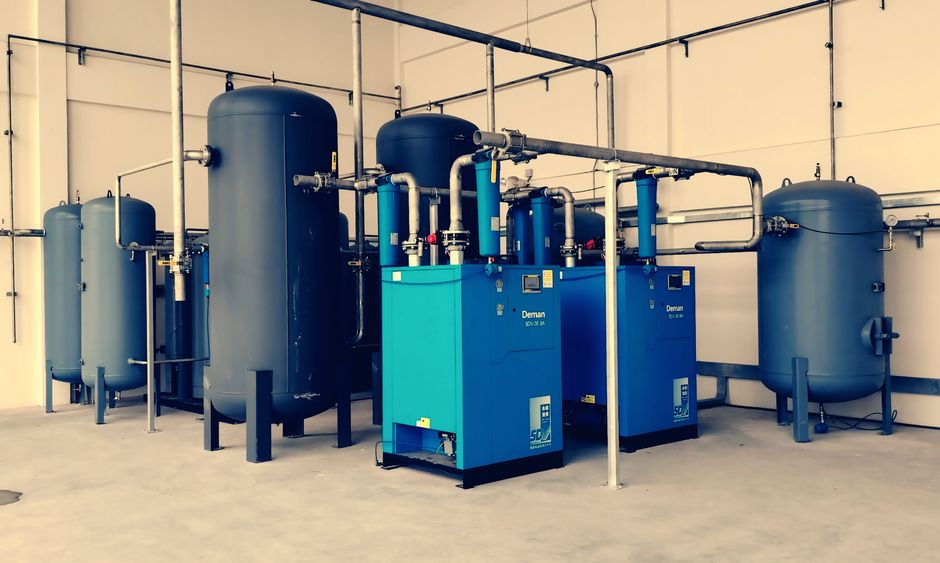
- Integrated Drying & Filtration: Built-in refrigerated or desiccant dryers and particulate filters.
- Food-Grade Materials: Seals, gaskets, and lubricants (if any) must be FDA-approved.
- Remote Monitoring: IoT sensors for real-time air quality and performance tracking.
Filtration and Drying Systems
Even oil-free compressors produce moisture and particles. A typical treatment train includes:
| Stage | Equipment | Removes |
|---|---|---|
| 1 | Pre-filter (coalescing) | Oil aerosols, water, particles >0.3 µm |
| 2 | Refrigerated dryer | Moisture to dew point +3°C |
| 3 | Desiccant dryer (optional) | Moisture to dew point -40°C |
| 4 | Activated carbon filter | Oil vapor, odors, tastes |
| 5 | Sterile filter | Bacteria, viruses |
Regular replacement of filter elements is critical to maintain air quality.
Energy Efficiency Considerations
Air compressors can account for up to 30% of a plant's energy use. To optimize efficiency:
- Use variable speed drive (VSD) compressors to match demand.
- Recover waste heat for preheating water or space heating.
- Install a centralized control system for multiple units.
- Conduct regular leak audits and repair leaks promptly.
Energy-efficient models often have a lower total cost of ownership despite higher upfront cost.
Installation and Maintenance Best Practices
Installation
- Place compressor in a clean, dry, well-ventilated area.
- Use stainless steel piping with proper slope for drainage.
- Install aftercooler and separator to reduce moisture load.
- Ensure easy access for maintenance.
Maintenance Schedule
- Daily: Check oil level (if applicable), drain condensate, monitor dew point.
- Weekly: Inspect filters, belts, and hoses.
- Monthly: Test safety valves, check vibration, clean cooler fins.
- Quarterly: Replace air/oil separator, check bearings, test air quality.
- Annually: Overhaul compressor, replace seals, calibrate sensors.
Case Studies: Successful Implementation
Case 1: Beverage Bottling Plant
A major soft drink manufacturer switched from lubricated to oil-free screw compressors with VSD. Result: 25% energy savings, zero oil-related downtime, and full compliance with ISO Class 0. Payback period: 18 months.
Case 2: Dairy Processing Facility
A cheese producer installed a water-injected compressor with integrated drying. The system provided consistent air quality for pneumatic conveying of powder, eliminating clumping and contamination. Maintenance costs dropped by 40%.
How to Choose the Right Supplier
When selecting an air compressor manufacturer for the food industry, consider:
- Certifications: ISO 9001, ISO 14001, and food-specific certifications.
- Industry Experience: Proven installations in food & beverage plants.
- After-Sales Support: 24/7 service, spare parts availability, training.
- Customization: Ability to design bespoke solutions.
- Warranty: Comprehensive coverage for compressor and air treatment.
Conclusion
Investing in specialized air compressors for the food and beverage industry is not just about compliance—it's about ensuring product quality, operational efficiency, and brand reputation. By choosing oil-free technology, proper filtration, and a reliable supplier, you can achieve safe, sustainable compressed air for all your processes. Evaluate your plant's needs, consult with experts, and implement a system that delivers pure air with minimal total cost of ownership.
Contact us today for a free audit and customized solution for your facility.