 English
 简体中文
简体中文 Русский
 Español
 Deutsch
Why New Car Smell Is More Than Just a Smell
That distinctive "new car smell" comes from a cocktail of volatile organic compounds (VOCs) off-gassing from adhesives, plastics, leather treatments, sealants, and paints. Common culprits include formaldehyde, benzene, toluene, and xylene. While the scent may feel nostalgic, prolonged exposure in a small, enclosed cabin can cause headaches, dizziness, nausea, and irritation of the eyes and throat. Because cabins are tight spaces, VOC concentrations can be several times higher than outdoor air.
A quality car air purifier with activated carbon and HEPA filtration can capture many of these compounds and particles, helping you enjoy your new vehicle without the chemical haze. Below are the best types of purifiers and specific models to remove new car smell quickly and safely.
1. HEPA + Activated Carbon Purifiers — The Gold Standard
HEPA filters capture fine particulate matter, dust, pollen, and smoke, while a thick activated carbon layer adsorbs the VOCs responsible for new car odor. This combination is the most effective way to reduce off-gassing chemicals rather than just masking them. Look for purifiers with a carbon filter weighing at least 100 grams; skimpy carbon pads saturate in weeks.
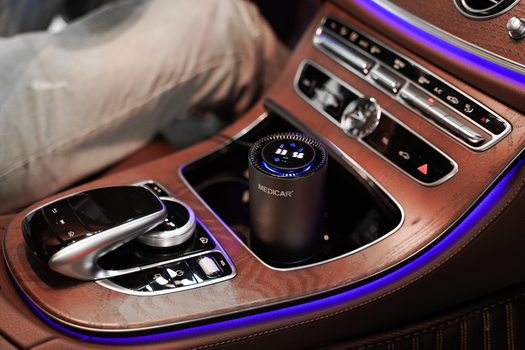
Models like the Philips GoPure Compact 200 and the Pure Enrichment PureZone Mini use this dual-stage approach. Place the unit near the center console or in a cup holder so air circulates through the cabin efficiently. Replace the carbon filter every two to three months during the first year of ownership, when off-gassing is strongest.
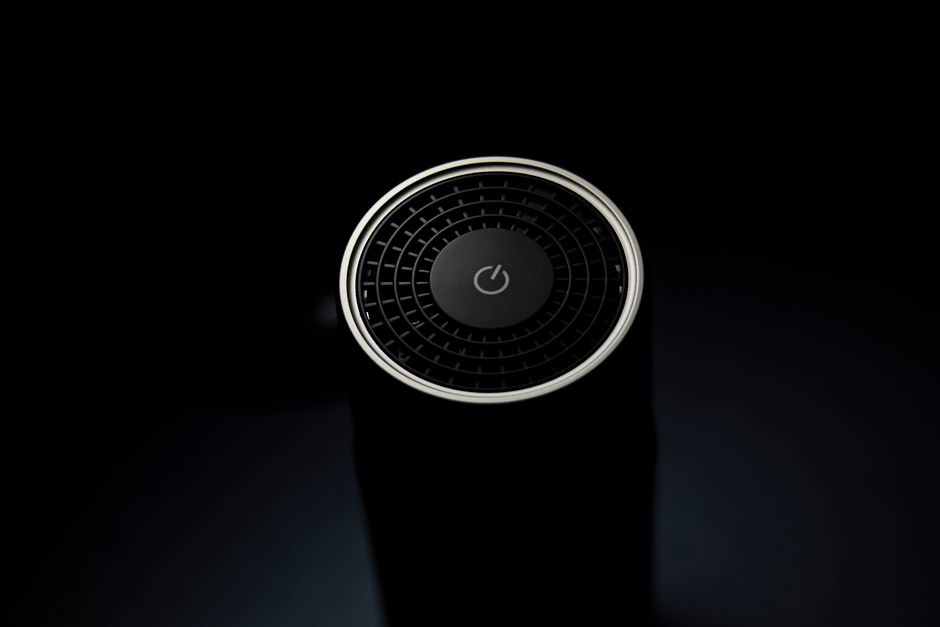
2. Ionizers with Washable Collectors
Ionizers release negatively charged ions that attach to airborne particles, causing them to clump and fall out of the air. Some also generate small amounts of ozone, which can react with VOCs — but ozone is a lung irritant, so choose an ionizer labeled "ozone-free" or with an ozone output below 0.05 ppm.
The Sharper Image Car Ionizer and HoMedics Auto Ionizer are popular plug-in options that fit into a 12V socket. They are quiet and require no filter replacement, but they work best as a supplement to carbon filtration, not a replacement. Run them while driving with the windows cracked for the first few weeks.
3. Photocatalytic Oxidation (PCO) Purifiers
PCO purifiers use a UV lamp and a titanium dioxide catalyst to break down VOCs into harmless water vapor and carbon dioxide. This technology targets the chemical sources of new car smell directly, making it a strong choice for stubborn odors. However, PCO units tend to be pricier and need occasional catalyst cleaning.
The Air Oasis Mobile and similar 12V PCO units are designed for vehicles. They are particularly useful in hot climates, where heat accelerates off-gassing. Keep the cabin ventilated during the first uses, and avoid staring directly at the UV lamp.
4. Activated Carbon-Only Odor Eliminators
If you want a simple, low-maintenance option, a pure activated carbon bag or canister can absorb VOCs without electricity. Bags like Moso Natural or Bamboo Charcoal Air Purifying Bags are placed under seats or on the dashboard and last up to two years if periodically sun-dried.
These are not as fast as powered purifiers, but they are silent, cheap, and safe. Use one or two bags in a new car and rotate them in direct sunlight monthly to release trapped compounds. They work best in combination with regular ventilation.
5. Cabin Air Filter Upgrades
Your car's built-in cabin air filter is a built-in purifier — but most factory filters are basic particulate filters. Upgrading to a HEPA cabin filter or a carbon-activated cabin filter from brands like Bosch, K&N, or FRAM can dramatically cut VOCs and odors entering through the HVAC system.
Installation takes 10–15 minutes for most vehicles and costs $15–$40. Replace it every 12,000–15,000 miles, or more often if you park outside. This is the single most cost-effective upgrade for new car smell because it treats all air entering the cabin.
6. Ozone Generators — Use with Extreme Caution
Ozone generators are powerful oxidizers that can destroy odor molecules, but they are not safe to run while people or pets are inside the car. High ozone levels can damage lung tissue and worsen asthma. If you use one, do it with the car empty, then air it out thoroughly for at least 30 minutes before driving.
For new car smell, ozone is usually overkill. A carbon + HEPA purifier used consistently will remove VOCs without the health risks. Reserve ozone treatments for severe cases like smoke or mold, and follow the manufacturer's safety instructions precisely.
7. Smart Purifiers with Air Quality Sensors
Some newer car purifiers include VOC and PM2.5 sensors that automatically adjust fan speed based on real-time air quality. The Xiaomi Car Air Purifier and Philips GoPure 5211 offer app connectivity, filter life indicators, and quiet night modes. These are ideal if you want set-and-forget operation.
Sensors help you see when off-gassing spikes — often on hot, sunny days — so the purifier can ramp up automatically. Expect to pay $60–$150 for a smart model, plus $20–$30 per replacement filter. The convenience and data are worth it for many new-car owners.
8. Placement and Ventilation Tips for Faster Results
No purifier works at peak efficiency in a sealed, sun-baked car. Park in the shade when possible, crack windows slightly on hot days, and run your HVAC on recirculate with the purifier on high for the first 10 minutes of each drive. This flushes concentrated VOCs and lets the filter capture what remains.
Place the purifier where it won't be blocked by seats or bags — center console, rear cup holder, or dashboard. Clean or replace filters on schedule; a clogged carbon filter can actually release trapped odors back into the cabin. With consistent use, most new car smell fades noticeably within two to four weeks.
Quick Comparison Table
| Purifier Type | Best For | Filter Cost | Effectiveness on VOCs |
|---|---|---|---|
| HEPA + Carbon | Overall best | Medium | High |
| Ionizer | Supplemental | None | Low–Medium |
| PCO | Stubborn odors | Medium–High | High |
| Carbon bags | Budget, silent | Low | Medium |
| HEPA cabin filter | Whole-cabin | Low | Medium–High |
Final Thoughts
The best car air purifier for new car smell combines activated carbon for VOCs with HEPA for particles, and ideally a smart sensor to adapt to changing conditions. Pair it with an upgraded cabin filter and smart ventilation habits, and you can cut that chemical new-car haze within weeks. Always prioritize ozone-free designs for the health of everyone in the vehicle.
Tell us the channel and volume — we reply with models, prices and sample options.