 English
 简体中文
简体中文 Русский
 Español
 Deutsch
Supply programme
Semiconductor Company News Today: Key Highlights
Stay updated with today‘s top semiconductor company news: TSMC‘s 2nm process, Intel‘s defense contract, NVIDIA‘s new AI chip, and more. Read now!
Stay ahead of the curve with the latest developments in the semiconductor industry. From groundbreaking chip designs to strategic partnerships and market shifts, here are the key highlights from today's news that every electronics professional should know.
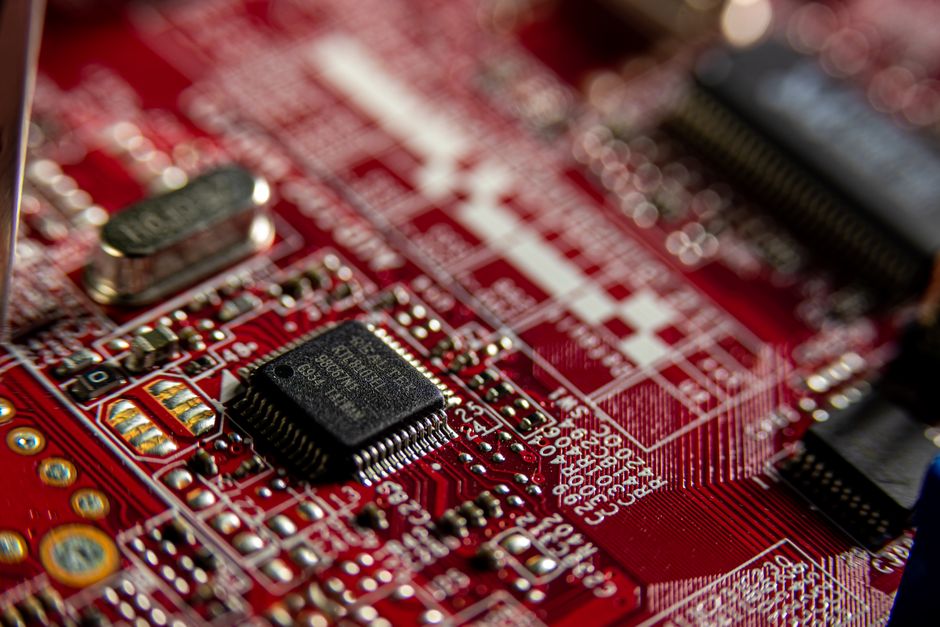
1. TSMC Unveils 2nm Process Technology, Enters Risk Production
Taiwan Semiconductor Manufacturing Company (TSMC) has officially announced that its 2nm (N2) process has entered risk production, marking a significant milestone in advanced chip manufacturing. The new node promises up to 15% performance improvement and 30% power reduction compared to the current 3nm process. This move is expected to solidify TSMC's leadership in the foundry market and attract major clients like Apple and NVIDIA.
Industry analysts note that the 2nm technology will be crucial for next-generation AI accelerators, high-performance computing, and mobile processors. The risk production phase allows TSMC to fine-tune the manufacturing process before mass production, which is slated for 2025. Competitors Samsung and Intel are also racing to advance their own nodes, but TSMC's early start could give it a competitive edge.
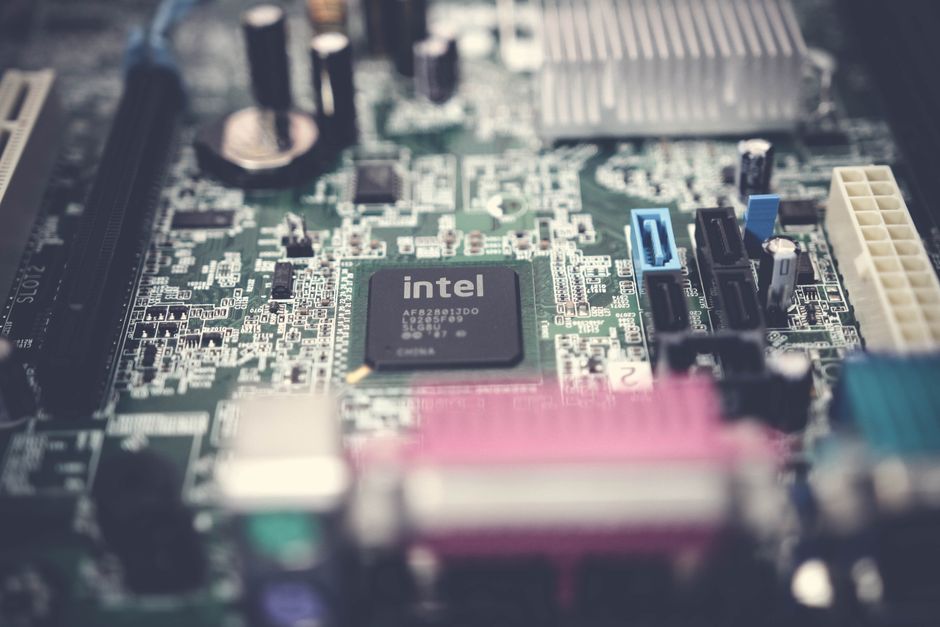
2. Intel Secures $3 Billion Government Contract for Secure Enclave
Intel has been awarded a $3 billion contract by the U.S. Department of Defense to develop a secure enclave for semiconductor manufacturing. This initiative aims to bolster domestic chip production for defense applications and reduce reliance on foreign supply chains. The contract is part of the broader CHIPS Act efforts to revitalize American semiconductor manufacturing.
Under the agreement, Intel will build a dedicated fabrication facility in Arizona that will produce chips for classified military systems. The company plans to collaborate with defense contractors and research institutions to ensure the highest levels of security and reliability. This deal not only provides Intel with a significant revenue stream but also reinforces its commitment to national security.
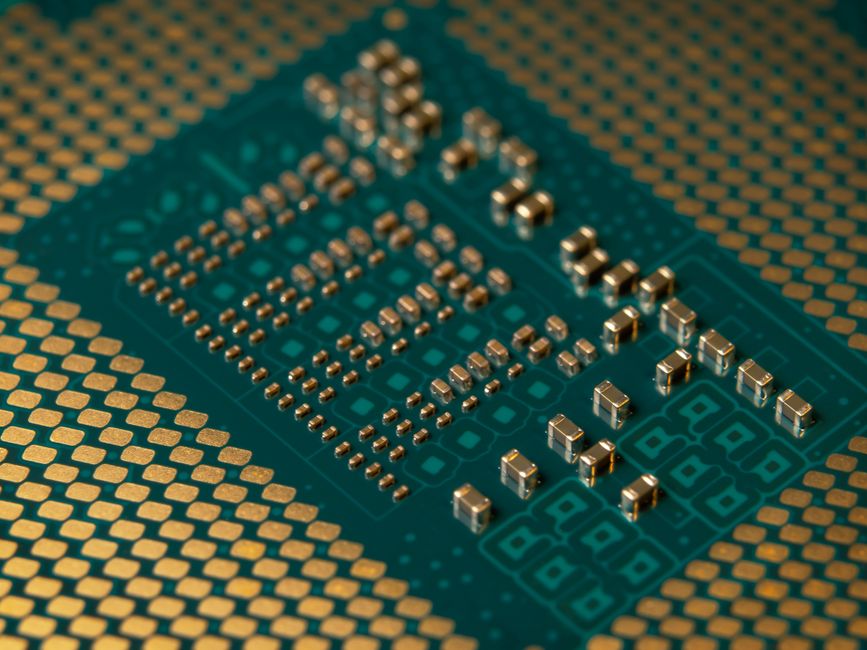
3. NVIDIA Announces New AI Chip, Blackwell B200, Targeting Data Centers
NVIDIA has launched its latest AI chip, the Blackwell B200, which is designed to handle the most demanding AI workloads in data centers. The B200 offers up to 20 petaflops of AI performance, a massive leap over the previous Hopper architecture. Major cloud providers like Amazon Web Services, Google Cloud, and Microsoft Azure have already placed orders.
The B200's architecture includes a new transformer engine that accelerates large language models and generative AI. NVIDIA claims that the chip can reduce training time for complex models from months to weeks. With the AI boom showing no signs of slowing, NVIDIA's latest offering is poised to further dominate the data center GPU market.
4. Samsung Begins Mass Production of 3nm Chips for Automotive Applications
Samsung Foundry has started mass production of 3nm chips specifically for automotive applications. These chips are designed to power advanced driver-assistance systems (ADAS) and autonomous driving platforms. The move comes as automakers increasingly demand high-performance, energy-efficient semiconductors to support software-defined vehicles.
Samsung's 3nm process uses gate-all-around (GAA) transistor technology, which offers better performance and power efficiency than traditional FinFET. The company has partnered with several leading automakers and Tier 1 suppliers to integrate these chips into their next-generation vehicles. This development highlights the growing convergence of the semiconductor and automotive industries.
5. Global Semiconductor Sales Hit Record High in Q2 2024
According to the Semiconductor Industry Association (SIA), global semiconductor sales reached a record $150 billion in the second quarter of 2024, up 20% year-over-year. The surge was driven by strong demand for AI chips, memory, and automotive semiconductors. All major regional markets, including the Americas, China, and Asia Pacific, reported growth.
The SIA attributes the increase to the proliferation of AI and IoT devices, as well as the recovery of the consumer electronics market. However, challenges remain, such as supply chain disruptions and geopolitical tensions. Industry experts predict that the momentum will continue through the end of the year, fueled by holiday sales and new product launches.
6. Micron Introduces 1β DRAM Technology for Energy-Efficient Memory
Micron Technology has announced its new 1β (1-beta) DRAM process, which delivers 15% higher energy efficiency and 35% higher bit density compared to the previous generation. The technology is aimed at data centers, smartphones, and automotive applications where power consumption is critical.
The 1β DRAM node utilizes advanced EUV lithography and innovative design techniques to achieve these improvements. Micron has already started shipping samples to key customers and expects mass production to ramp up in the coming months. This launch positions Micron as a leader in memory technology and addresses the growing need for energy-efficient solutions in AI and edge computing.
7. ASML Reports Strong Demand for EUV Lithography Systems
ASML, the Dutch supplier of extreme ultraviolet (EUV) lithography machines, has reported a surge in demand for its systems, driven by the global push for advanced chip manufacturing. The company's order backlog now exceeds $40 billion, with deliveries scheduled through 2026.
ASML's EUV machines are essential for producing chips at 7nm and below, and they are used by TSMC, Samsung, and Intel. The company is also developing the next-generation High-NA EUV systems, which will enable even smaller nodes. ASML's strong performance underscores the critical role of lithography in the semiconductor supply chain.
8. Semiconductor Equipment Market to Grow 10% in 2024, Says SEMI
SEMI, the global industry association for electronics manufacturing, forecasts that the semiconductor equipment market will grow 10% in 2024, reaching $110 billion. The growth is driven by investments in advanced logic and memory fabs, as well as the expansion of capacity for mature nodes.
The report highlights that spending on wafer fab equipment will be particularly strong in the second half of the year, as companies like TSMC, Samsung, and Intel ramp up their new facilities. Additionally, the demand for testing and assembly equipment is rising due to the increasing complexity of chips. This growth trajectory signals a healthy recovery for the semiconductor equipment sector.
9. Chipmakers Ramp Up Investment in Advanced Packaging Technologies
Leading semiconductor companies are increasing their investments in advanced packaging technologies to overcome the limitations of traditional scaling. Advanced packaging, such as 3D stacking and chiplet designs, allows for heterogeneous integration and improved performance.
Intel, AMD, and TSMC are all expanding their advanced packaging capacities. For example, Intel's Foveros technology enables 3D stacking of logic and memory, while TSMC's CoWoS (Chip-on-Wafer-on-Substrate) is in high demand for AI chips. These technologies are critical for enabling next-generation high-performance computing and AI applications.
10. New Startup Emerges with Breakthrough in Gallium Nitride (GaN) Power Semiconductors
A new startup, GaNPower, has emerged from stealth mode with a breakthrough in gallium nitride (GaN) power semiconductors. The company claims its GaN-on-silicon technology can deliver 50% higher efficiency and smaller form factors compared to traditional silicon-based power devices.
GaNPower's chips are targeted at electric vehicles, renewable energy systems, and data center power supplies. The startup has already secured $100 million in Series B funding and plans to build a pilot production line in Europe. The emergence of GaN technology could disrupt the power semiconductor market, which is currently dominated by silicon-based solutions.
Parts in scope
Browse all Parts frequently quoted with this programme

Keep reading
Other supply programmes
PCB Manufacturer Company News & Industry Insights Stay updated with the latest PCB manufacturer company news and industry insights. Discover trends in HDI, rigid-flex, sustainability, and smart factories. Read now! View solution Best Electronic Component Distributors: News & Updates Discover the best electronic component distributors and their latest news, from DigiKey to Arrow. Stay updated and optimize your supply chain today. View solution Electronic Components Industry Updates You Need to Know Stay ahead with the latest electronic components industry updates: supply chain shifts, semiconductor tech, pricing trends, and practical sourcing tips. View solution Electronic Component Supply Chain News and Trends 2025 Stay updated on electronic component supply chain news and trends. Learn practical tips for resilience, sourcing, and inventory management. Read now! View solution
Start a programme like this
Send the channel you sell into, the parts you already use and your annual volume.