Understanding Transmission Line Losses
Electricity generated at power plants rarely reaches end users at full strength. Along the way, a portion of the energy is lost as heat, electromagnetic radiation, and corona discharge. These losses, known as transmission line losses, can account for 2% to 8% of the total power transmitted, depending on the grid's design, age, and operating conditions. For utilities and industrial operators, reducing these losses is not just an engineering challenge—it is a direct path to lower operating costs, improved grid stability, and reduced carbon emissions.
Transmission line losses fall into two main categories: technical losses (I²R heating, corona, skin effect, and dielectric losses) and non-technical losses (theft, metering errors, and billing inefficiencies). This guide focuses on technical losses, offering practical, field-tested strategies to minimize them.
1. Upgrade Conductors to Reduce I²R Losses
The single largest contributor to transmission losses is resistive heating, expressed as Ploss = I²R. Since losses scale with the square of current, even small reductions in current or resistance yield significant savings.
Use High-Temperature Low-Sag (HTLS) Conductors
HTLS conductors such as ACCC (Aluminum Conductor Composite Core) and ACSS (Aluminum Conductor Steel Supported) can carry 1.5 to 2 times the current of conventional ACSR conductors without exceeding sag limits. This allows utilities to increase capacity on existing towers—avoiding the massive cost of new rights-of-way.
Consider Aluminum vs. Copper
While copper has lower resistivity, aluminum is lighter and cheaper. Modern composite-core aluminum conductors offer an excellent balance of conductivity, weight, and tensile strength. For high-loss corridors, upgrading from older ACSR to composite-core conductors can cut resistive losses by 25–40%.
Bundle Conductors
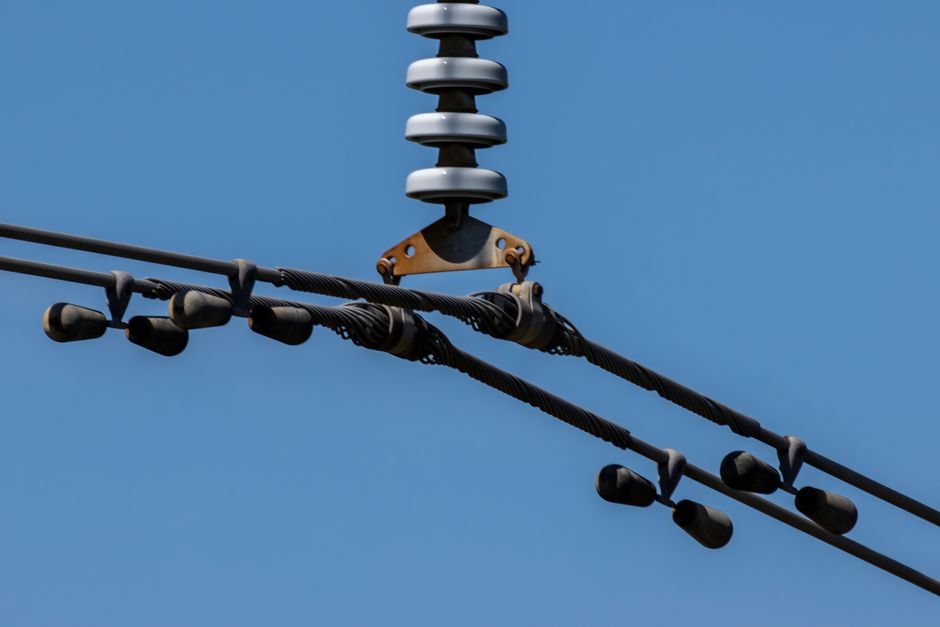
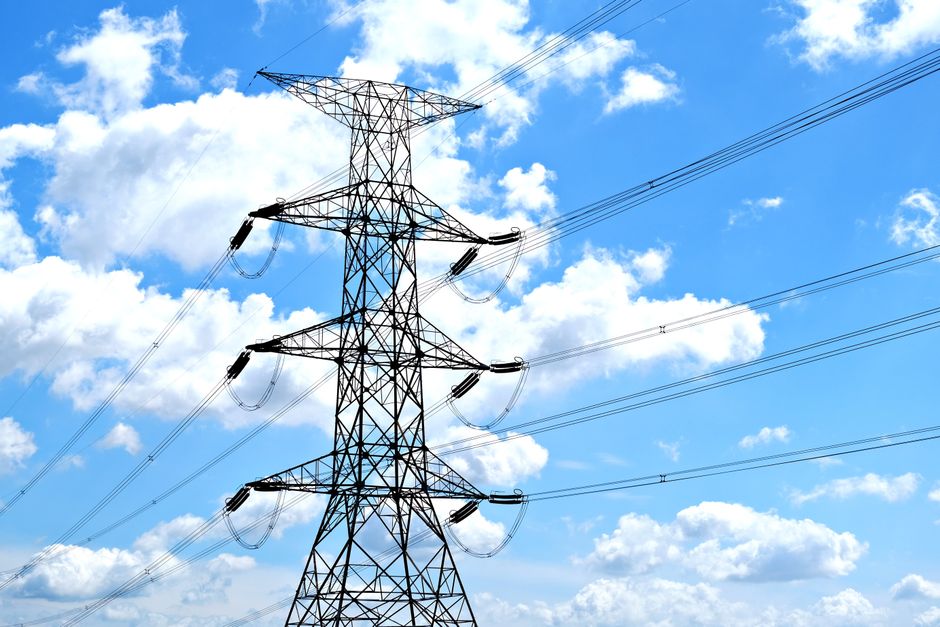
Bundling two, three, or four conductors per phase increases the effective surface area and reduces both resistance and corona effects. Bundling also lowers inductance, improving voltage regulation.
2. Optimize Voltage Levels
Because power equals voltage times current (P = VI), raising the transmission voltage reduces current for the same power delivered—and since losses are proportional to I², doubling voltage cuts resistive losses by a factor of four.
- High-voltage transmission: 345 kV, 500 kV, and 765 kV lines are standard for long-distance bulk power transfer.
- Ultra-high voltage (UHV): 1,100 kV AC and ±800 kV DC lines can transmit thousands of megawatts over 2,000+ km with losses below 3%.
- Voltage optimization: Even on existing lines, operating at the highest permissible voltage reduces current and losses.
However, higher voltages increase corona and insulation requirements. The optimal voltage is a balance between resistive losses, corona losses, and capital costs.
3. Implement Flexible AC Transmission Systems (FACTS)
FACTS devices use power electronics to dynamically control voltage, impedance, and phase angle. Key devices include:
| Device | Function | Loss Reduction Impact |
|---|---|---|
| SVC (Static VAR Compensator) | Fast reactive power compensation | Reduces line current by improving power factor |
| STATCOM | Voltage support and dynamic reactive control | Minimizes reactive current flow |
| UPFC (Unified Power Flow Controller) | Controls active and reactive power flow | Redirects power to less-loaded lines |
| Series Capacitors | Compensates line inductance | Reduces voltage drop and losses |
By injecting reactive power locally, FACTS devices reduce the reactive current that would otherwise flow over long distances, directly cutting I²R losses.
4. Improve Power Factor and Reactive Power Management
Reactive power does no useful work but increases current, raising losses. Utilities can:
- Install shunt capacitors and reactors at substations to supply reactive power locally.
- Encourage industrial customers to correct power factor to near unity with capacitor banks.
- Use dynamic voltage restorers and static VAR systems to maintain optimal voltage profiles.
A power factor improvement from 0.85 to 0.95 can reduce line current by roughly 10%, cutting resistive losses by nearly 20%.
5. Reduce Corona Discharge Losses
Corona discharge occurs when the electric field around a conductor ionizes the surrounding air, creating a visible glow and audible hum. It wastes energy, especially in humid or high-altitude conditions.
Mitigation Strategies
- Increase conductor diameter: Larger conductors lower the surface electric field gradient.
- Use bundled conductors: Bundling effectively increases the equivalent diameter.
- Optimize conductor spacing: Proper phase spacing reduces field concentration.
- Apply corona rings and grading devices: These smooth the electric field at hardware points.
- Choose weather-resistant surfaces: Hydrophobic coatings can reduce water droplet-induced corona.
Corona losses are most significant on EHV and UHV lines, often accounting for 1–3% of total losses. Careful design can cut this substantially.
6. Adopt High-Voltage Direct Current (HVDC) for Long Distances
HVDC transmission has lower resistive losses than AC for very long distances because it avoids reactive power losses and skin effect. Key advantages:
- No skin effect—current flows uniformly through the conductor.
- No reactive power losses—only resistive losses.
- Lower corona losses due to constant voltage polarity.
- Ability to connect asynchronous grids and underground/undersea cables.
For distances over 600–800 km, HVDC is often more economical and efficient than HVAC. Modern voltage source converter (VSC) HVDC systems can achieve losses as low as 1% per converter station.
7. Maintain and Monitor the Grid Continuously
Even the best-designed lines degrade over time. Proactive maintenance is essential to keep losses low.
Key Maintenance Practices
- Thermal imaging: Detect hot spots at joints, clamps, and connectors that indicate high resistance.
- Dynamic line rating (DLR): Use real-time weather and load data to safely increase line capacity without exceeding thermal limits.
- Corrosion control: Replace corroded conductors and hardware that increase resistance.
- Insulator cleaning: Contaminated insulators can cause leakage currents and flashovers.
- Vegetation management: Prevent tree contact that causes faults and leakage.
Advanced sensors and IoT monitoring can provide continuous data on conductor temperature, tension, and current, enabling operators to optimize loading and minimize losses.
8. Optimize Load Flow and Network Topology
Power does not always flow along the path operators intend. Loop flows and uneven loading can increase losses.
- Network reconfiguration: Switching operations can reroute power to shorter or less-loaded paths.
- Load balancing: Distribute load evenly across phases to reduce neutral currents and unbalanced losses.
- Distributed generation: Placing generation closer to load centers reduces transmission distance and losses.
- Smart grid automation: Real-time optimization algorithms can continuously adjust flows for minimum loss.
9. Use Superconducting Cables for Critical Corridors
High-temperature superconducting (HTS) cables offer zero resistance below their critical temperature, eliminating I²R losses entirely. While currently limited to short, high-value urban corridors due to cooling costs, HTS technology is advancing and may become more widespread as cooling efficiency improves.
10. Economic and Environmental Benefits
Reducing transmission losses delivers multiple benefits:
| Benefit | Impact |
|---|---|
| Lower generation costs | Less fuel burned to deliver the same power |
| Reduced CO₂ emissions | Fewer fossil fuel plants needed |
| Increased grid capacity | More power delivered without new lines |
| Improved reliability | Less stress on equipment, fewer outages |
| Regulatory compliance | Meets efficiency and emissions targets |
According to the U.S. Energy Information Administration, a 1% reduction in transmission and distribution losses in the United States would save approximately 30 billion kWh annually—enough to power nearly 3 million homes.
Conclusion
Reducing transmission line losses is a multifaceted challenge that requires a combination of advanced conductors, higher voltages, reactive power management, modern power electronics, and proactive maintenance. Utilities that invest in these strategies can cut losses by 20–50%, translating into millions of dollars in savings and a smaller environmental footprint.
Start with a detailed loss audit to identify the biggest contributors in your network. Then prioritize upgrades based on cost-effectiveness and technical feasibility. Whether you operate a small industrial grid or a national transmission system, the tips above provide a roadmap to a more efficient, reliable, and sustainable power delivery network.