
 English
 简体中文
简体中文 Русский
 Español
 Deutsch
Supply programme
Cheap vs Expensive Multimeters: Accuracy Compared
Does multimeter accuracy really differ by price? Compare cheap vs expensive multimeters, see specs side by side, and get a clear buying recommendation.
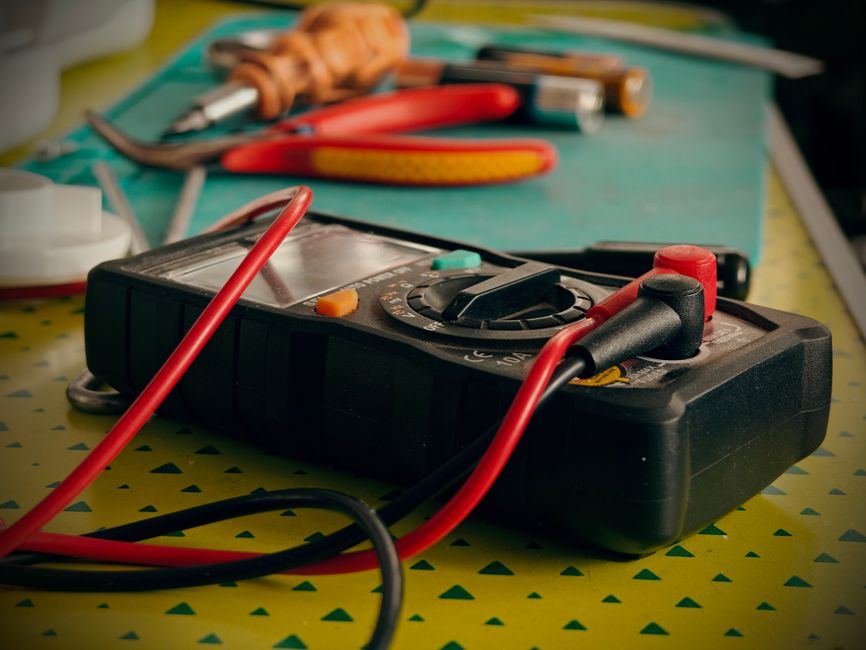
Cheap vs Expensive Multimeters: Does Accuracy Really Differ?
Anyone who has browsed for a digital multimeter has faced the same dizzying price range. A basic model from a discount tool bin costs $15, while a professional-grade meter from Fluke, Keysight, or Hioki can exceed $500. The obvious question follows: if both meters display 120.4 V on the same outlet, does the extra money actually buy better accuracy — or just a nicer case and a brand name?
The honest answer is that accuracy does differ, but not in the way most buyers expect. The gap is rarely about whether a meter can read a voltage at all. It is about how tightly that reading is guaranteed, how stable it stays over time and temperature, how safely it fails, and how much you can trust it when the measurement truly matters. This article breaks down where cheap and expensive multimeters genuinely diverge, compares real specifications side by side, and gives a clear recommendation for different types of users.
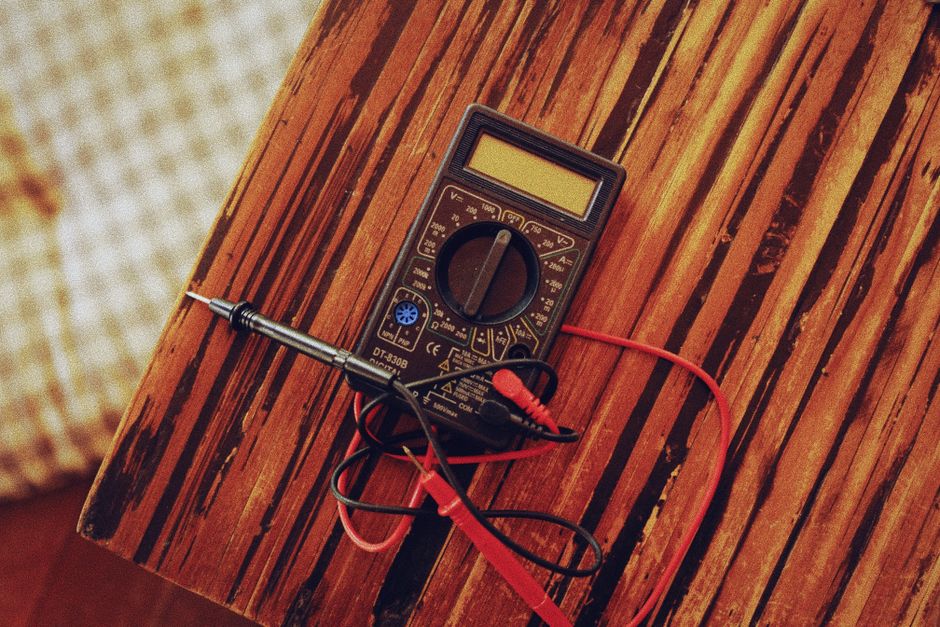
What "Accuracy" Actually Means on a Multimeter
Before comparing price tiers, it helps to understand the spec sheet. Multimeter accuracy is usually written as a percentage of reading plus a number of counts, for example ±(0.5% + 2). If a meter reads 10.00 V with that spec, the true value could be anywhere from about 9.93 V to 10.07 V. The percentage covers gain error, while the counts cover the last-digit uncertainty of the analog-to-digital converter.
Two meters can both claim "0.5% accuracy" and still behave very differently in practice, because the headline number hides several variables:
- Resolution vs. accuracy: A cheap meter may display four digits but only be accurate to two of them. Extra digits are meaningless if the underlying accuracy does not support them.
- Temperature coefficient: Accuracy is typically specified at 18–28 °C. Outside that window, cheap meters drift much faster than quality ones.
- Long-term stability: Calibration intervals of one year are common, but inexpensive meters may fall out of spec within months.
- True RMS: Measuring AC accurately on non-sinusoidal loads (like motor drives or switch-mode supplies) requires a true-RMS converter, which budget meters often fake with averaging.
- Burden voltage and input impedance: These affect how much the meter itself disturbs the circuit being measured.
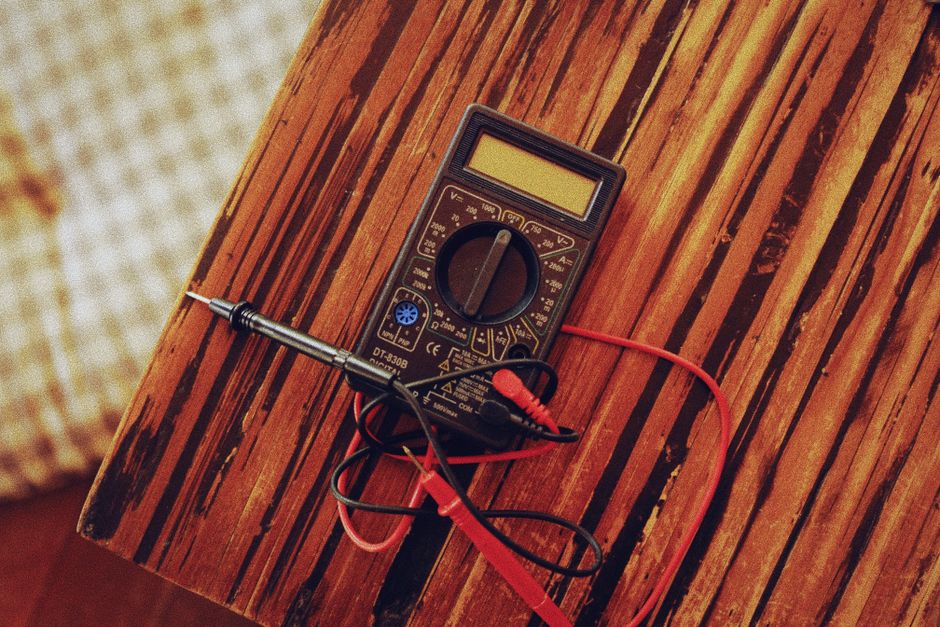
How Cheap Multimeters Are Built
A $15–$40 multimeter typically uses a single-chip ADC, a plastic-bodied rotary switch, and a basic input protection network. For household troubleshooting — checking whether a breaker is live, testing continuity on a lamp cord, or verifying a battery — this is often perfectly adequate. Many budget meters from brands like AstroAI, Kaiweets, or Innova are accurate to within 1% on DC volts when new, which is fine for hobbyist work.
The trade-offs appear in three areas. First, safety: cheap meters frequently lack proper CAT III or CAT IV ratings, or claim them without independent testing. A meter that arcs internally on a 480 V panel can injure the user. Second, durability: the jacks, fuses, and switch contacts wear out quickly under daily use. Third, drift: without a stable voltage reference, readings wander as the meter ages and the temperature changes.
What You Pay For in a Premium Multimeter
Spending $200–$600 buys engineering that is invisible until you need it. Premium meters use a precision voltage reference, a multi-slope integrating ADC, gold-plated switch contacts, high-energy fuses, and input protection that survives transient overvoltages. Brands like Fluke back this with a lifetime warranty, published calibration certificates, and safety certifications you can verify.
Just as important, expensive meters specify their accuracy honestly. A Fluke 87V, for instance, is rated at ±(0.05% + 1) on DC volts — ten times tighter than a typical budget meter — and holds that spec across a wide temperature range. For industrial technicians, that margin is not a luxury; it is the difference between a motor running within tolerance and one that fails prematurely.
Side-by-Side Comparison
| Feature | Budget Meter ($15–$50) | Mid-Range Meter ($80–$180) | Professional Meter ($200–$600) |
|---|---|---|---|
| DC voltage accuracy | ±(0.5%–1.0% + 2–5) | ±(0.1%–0.5% + 2) | ±(0.05% + 1) or better |
| True RMS | Often absent or averaging | Usually included | Always included, AC+DC |
| Safety rating | CAT II, sometimes unverified | CAT III 600 V typical | CAT III/IV 600–1000 V certified |
| Counts / resolution | 2,000–4,000 counts | 4,000–6,000 counts | 20,000–50,000 counts |
| Temperature drift | High, poorly specified | Moderate | Low, fully specified |
| Calibration certificate | No | Optional | Standard |
| Warranty | 1 year or none | 2–3 years | Lifetime (many brands) |
| Best use case | DIY, low-voltage checks | Electronics repair, field work | Industrial, lab, safety-critical |
Where the Accuracy Gap Shows Up in Practice
For most everyday tasks, the difference is invisible. Measuring a 12 V car battery or a 5 V USB rail, a $30 meter and a $400 meter will agree to the second decimal place. The gap becomes real in specific scenarios:
- Low-resistance measurements: Budget meters struggle below 1 Ω because their test leads and internal references add error. Four-wire capable premium meters handle milliohm work.
- Current measurement: Shunt accuracy and burden voltage vary widely; cheap meters can load a circuit enough to change its behavior.
- AC on distorted waveforms: Without true RMS, a cheap meter can be off by 20–50% on a variable-frequency drive output.
- Long-term trending: If you log data for months, drift in a budget meter corrupts the trend.
- Safety-critical work: On mains and industrial panels, the cost of a failure is not measured in dollars but in injury.
Do You Need to Spend More?
Not always. The right choice depends on what you measure and what happens if you are wrong. A hobbyist repairing guitar pedals will never recover the cost of a Fluke 87V through better readings. An electrician verifying a 480 V panel cannot afford to save $300 on a meter with questionable CAT ratings.
One practical middle path is to buy a reputable mid-range meter — brands like Brymen, Uni-T, or Amprobe offer genuine true RMS and CAT III ratings for under $150 — and pair it with a periodic calibration check against a known reference. This delivers most of the accuracy of a premium meter at a fraction of the price for non-critical work.
Recommendation
For DIY and hobbyist use: A $30–$60 true-RMS budget meter is sufficient. Prioritize one with a genuine CAT II or CAT III rating and fused inputs, and accept that its accuracy may drift over time.
For electronics repair and light field work: Step up to the $80–$180 range. The improved resolution, true RMS, and better leads make troubleshooting faster and more reliable, and the accuracy spec is trustworthy.
For industrial, utility, and safety-critical work: Buy a professional meter. The certified safety ratings, tight accuracy specs, calibration traceability, and lifetime warranty are not marketing extras — they are the reason the meter exists. In this tier, accuracy genuinely differs, and it is worth every dollar.
The short version: cheap meters are usually accurate enough when new and for simple tasks, but expensive meters stay accurate, stay safe, and stay trustworthy over years of hard use. Match the meter to the consequence of being wrong, and you will never overspend or underspend again.
Instruments in scope
Browse all Models frequently quoted with this programme
Keep reading
Other supply programmes
Fluke vs Keysight Multimeters: Which to Buy? Compare Fluke vs Keysight multimeters: accuracy, safety, features, and price. Find out which brand is best for your needs. Read our guide now! View solution Latest Testing Instruments Company News & Product Updates Stay updated with the latest testing instruments company news and product launches. Discover new multimeters, oscilloscopes, and more. Read now! View solution Power Quality Analyzer Buying Guide: Key Features Choose the right power quality analyzer. Learn which features matter: accuracy class, sampling rate, harmonics, recording, and software. Read our buying guide now. View solution How to Calibrate a Digital Multimeter: Step-by-Step Learn how to calibrate a digital multimeter step by step. Covers equipment, DC/AC voltage, resistance, current, tolerance checks, and documentation. Start now! View solution
Start a programme like this
Send the channel you sell into, the measurement jobs you cover and your annual volume.