 English
 简体中文
 Русский
 Español
 Deutsch
Why Do Fabric Curtains Get Wrinkled?
Fabric curtains are one of the most visible design elements in any room, but they are also prone to creasing. Wrinkles appear for several reasons: the way curtains are folded and packaged before shipping, the weight of the fabric pulling against the rod, humidity in the air, and even the way sunlight heats and softens certain fibers. Understanding the cause helps you choose the right removal method without damaging the material.
Natural fibers like cotton, linen, and silk wrinkle more easily than synthetics such as polyester and nylon. Blended fabrics fall somewhere in between. The good news is that almost every type of curtain fabric can be smoothed with the right technique — you just need to match the method to the material.
Check the Care Label First
Before you do anything, read the care label sewn into the curtain. It tells you the fiber content, the maximum iron temperature, and whether the fabric can be washed or steamed. Ignoring the label is the fastest way to shrink, scorch, or permanently damage your curtains.
| Fabric Type | Iron Temperature | Steam Safe? | Machine Wash? |
|---|---|---|---|
| Cotton | High (400°F / 204°C) | Yes | Yes, gentle cycle |
| Linen | High (400°F / 204°C) | Yes | Yes, gentle cycle |
| Polyester | Low (250°F / 121°C) | Yes | Yes, cold water |
| Silk | Low (250°F / 121°C) | Use caution | Hand wash only |
| Velvet | Low, use cloth barrier | Yes, from reverse | Dry clean only |
Method 1: Steaming — The Safest Option
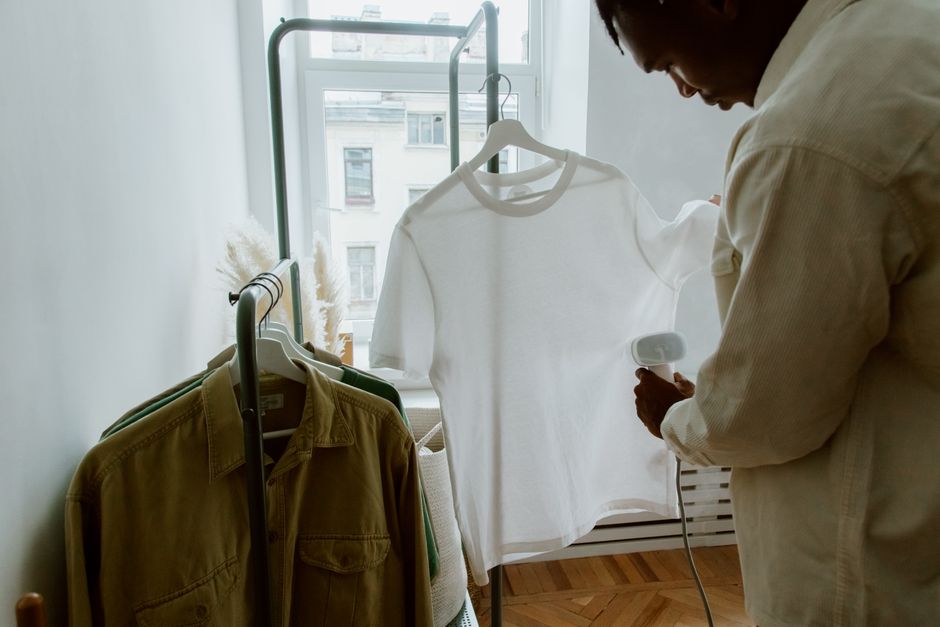
Steaming is the gentlest and most effective way to remove wrinkles from hanging curtains. A handheld garment steamer or a curtain steamer releases hot vapor that relaxes fibers without direct contact, so there is no risk of scorching or shiny iron marks.
Step-by-Step Steaming
- Hang the curtains on the rod or a shower curtain rod so gravity helps pull out creases.
- Fill the steamer with distilled water to prevent mineral spots.
- Work from the top down, holding the steamer 2–3 inches from the fabric.
- Move slowly and steadily; do not hold the steamer in one spot for more than a few seconds.
- Gently tug the bottom hem downward as you steam to stretch the fibers straight.
- Let the curtains hang and dry completely before closing windows or turning on fans.
For heavy drapes, steam both the front and the back. For sheer curtains, lower the steam setting and keep the nozzle farther away to avoid water spotting.
Method 2: Ironing With Care
If you do not own a steamer, ironing works well — but it requires more attention. Always iron curtains while they are slightly damp, or use the steam function on your iron. Dry ironing brittle fibers can set creases instead of removing them.
Ironing Tips
- Set the iron to the temperature recommended on the care label.
- Place a clean white cotton pressing cloth over the curtain to protect delicate weaves.
- Iron on the reverse side whenever possible, especially for velvet, silk, and embroidered fabrics.
- Press in long, smooth strokes rather than scrubbing back and forth.
- Hang the curtain immediately after ironing so remaining heat helps it drape smoothly.
Never iron pleats flat if you want to keep them crisp. Instead, steam the pleats back into shape after ironing the flat panels.
Method 3: Washing and Tumble Drying
For washable fabrics, a gentle machine wash followed by a low-heat tumble dry can remove deep wrinkles that steaming cannot. Remove curtains from the dryer while they are still slightly damp and hang them right away — the residual moisture lets gravity do the finishing work.
- Use a mild detergent and skip fabric softener, which can leave a coating that attracts dust.
- Wash curtains alone or with similar colors to avoid dye transfer.
- Choose a low heat or air-fluff setting; high heat can shrink synthetic blends.
- Hang damp curtains on the rod and smooth hems by hand.
Method 4: The Spray-and-Hang Trick
For light wrinkles, a simple spray bottle filled with water works surprisingly well. Mist the curtains evenly, gently tug the fabric, and let them hang dry. Adding a teaspoon of fabric relaxer or a capful of white vinegar to the water can help fibers release creases faster.
This method is ideal for curtains you cannot remove from the rod, such as extra-long panels or those with decorative headers.
Preventing Wrinkles in the Future
Prevention is easier than correction. Follow these habits to keep your curtains looking crisp:
- Unpack new curtains immediately and hang them so folds relax naturally.
- Keep indoor humidity between 40% and 50% to reduce moisture-driven creasing.
- Avoid cramming curtains into a tight space when storing them; roll them around a padded tube instead.
- Choose wrinkle-resistant fabrics like polyester blends for high-traffic rooms.
- Re-steam curtains once a season to maintain a tailored appearance.
Special Fabrics: What to Watch For
Velvet and Velour
Never press velvet directly. Steam it from the back or hold the iron above the fabric without touching it. Brushing the nap in one direction after steaming restores its rich look.
Silk and Satin
Use the lowest heat setting and a pressing cloth. Test on an inside hem first. Water spots can stain silk, so use distilled water in your steamer.
Blackout and Lined Curtains
These have multiple layers that trap heat. Steam gently and avoid high iron temperatures, which can melt the blackout coating and leave permanent marks.
When to Call a Professional
If your curtains are antique, heavily embellished, or made from expensive materials like brocade or hand-painted silk, professional dry cleaning and pressing is the safest choice. A specialist can also re-pleat and re-line curtains that have lost their shape.
Final Thoughts
Removing wrinkles from fabric curtains does not have to be a chore. Steaming is the fastest and safest method for most materials, while ironing, washing, and spray-and-hang techniques each have their place. Always check the care label, match the method to the fiber, and hang your curtains promptly so gravity can finish the job. With a little patience, your curtains will fall in smooth, elegant folds that elevate the entire room.