
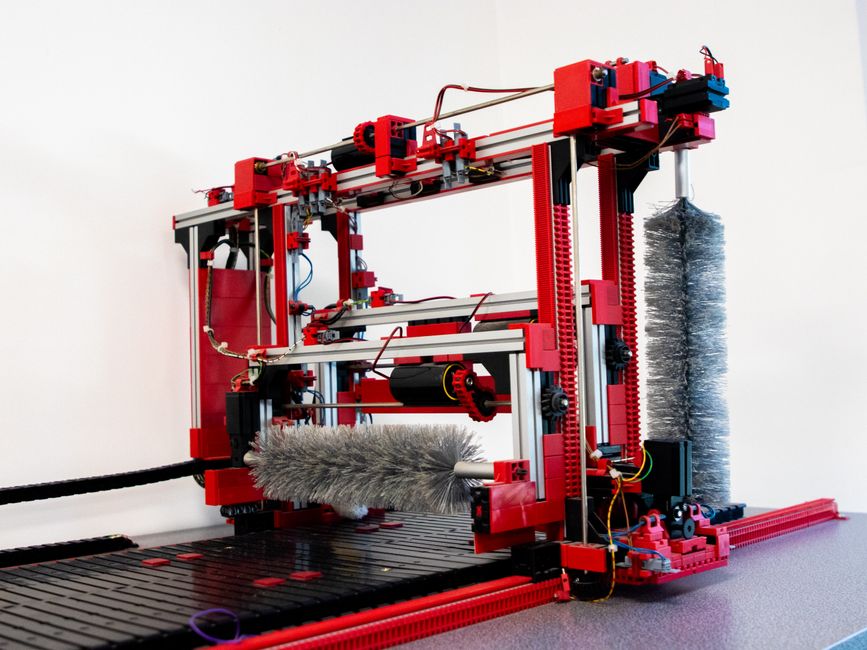
Introduction to Brush Machine Production Capacity
In the competitive world of brush manufacturing, understanding production capacity is crucial for B2B buyers and manufacturers alike. Production capacity refers to the maximum output a brush machine can achieve under normal conditions, typically measured in brushes per hour or per shift. For manufacturers specializing in foreign trade, this metric directly impacts lead times, pricing, and scalability. This guide will delve into the factors that influence capacity, how to calculate it, and strategies to optimize performance.

Key Factors Affecting Brush Machine Capacity
Machine Type and Automation Level
The type of brush machine—whether manual, semi-automatic, or fully automatic—significantly determines output. Automatic machines, such as those with CNC controls, can produce 500-2000 brushes per hour, while manual units may achieve only 50-100. Advanced features like servo-driven systems and multi-station operations further boost capacity.
Brush Complexity and Specifications
Simple brushes (e.g., flat toothbrushes) require less cycle time than complex shapes (e.g., twisted wire brushes or cosmetic brushes). Material type, trim length, and hole pattern also affect speed. For instance, filling a block with multiple rows of holes takes longer than a single row.
Raw Material Quality
Consistent bristle quality and uniform wire or plastic filaments reduce machine adjustments and downtime. Low-grade materials may cause jams or uneven trimming, lowering effective capacity.
Operator Skill and Maintenance
Skilled operators can maximize throughput by minimizing setup time and quickly troubleshooting issues. Regular maintenance—like cleaning, lubrication, and calibration—prevents unexpected breakdowns and maintains peak efficiency.

How to Calculate Brush Machine Production Capacity
To determine the theoretical capacity, use this formula:
Capacity (brushes/hour) = (3600 seconds) / (Cycle time per brush in seconds)
For example, if a machine takes 3 seconds per brush, the capacity is 1200 brushes per hour. However, real-world capacity must account for:
- Setup time: Time to change molds or adjust settings
- Downtime: Breaks, maintenance, and material loading
- Defect rate: Percentage of rejects that require rework or scrap
The actual output is typically 80-90% of theoretical capacity in a well-run facility.
Practical Tips to Optimize Brush Machine Output
1. Invest in Automation
Upgrade to fully automatic machines with features like automatic feeding, counting, and packaging. This reduces labor dependency and increases consistency.
2. Standardize Brush Designs
Limit variations in brush dimensions and materials. Standardizing components allows faster changeovers and reduces tooling costs.
3. Implement Preventive Maintenance
Schedule daily, weekly, and monthly checks. Replace worn parts like bearings, belts, and trimming blades before they cause failures.
4. Train Operators Thoroughly
Provide hands-on training for machine operation, troubleshooting, and quality inspection. Cross-train staff to handle multiple machines.
5. Monitor Key Metrics
Track Overall Equipment Effectiveness (OEE) to identify bottlenecks. OEE = Availability × Performance × Quality. Aim for >85%.
Case Study: Capacity Improvement in a Brush Factory
A medium-sized brush manufacturer producing 10,000 brushes/day wanted to increase output. By replacing old manual machines with semi-automatic models and implementing a preventive maintenance schedule, they achieved a 40% capacity increase within six months. The investment paid back in 18 months due to higher sales volume.
Choosing the Right Brush Machine for Your Needs
When evaluating machines, consider:
| Parameter | Consideration |
|---|---|
| Capacity | Match your target production volume (e.g., 500-2000 brushes/hour) |
| Flexibility | Ability to handle different brush types (e.g., round, flat, angled) |
| Automation | Level of automation vs. labor cost |
| After-sales support | Availability of spare parts and service |
Conclusion
Understanding and optimizing brush machine production capacity is vital for B2B success. By focusing on machine selection, process efficiency, and continuous improvement, manufacturers can meet customer demands faster and more cost-effectively. Contact us today to discuss your brush production needs and discover how our advanced machines can boost your capacity.