 English
 简体中文
简体中文 Русский
 Español
Best Dental Floss Sticks for Tight Teeth
Find the best dental floss sticks for tight teeth. Compare PTFE vs waxed picks, learn proper technique, and avoid common mistakes. Read our guide now!
Why Tight Teeth Demand a Different Floss Stick
If your teeth are crowded, rotated, or sit very close together, you already know the struggle: standard floss snaps, shreds, or simply refuses to slide between certain contacts. Dental floss sticks — also called floss picks or flossers — were designed for convenience, but not all of them handle tight interdental spaces well. Choosing the wrong pick can leave you frustrated, and worse, it can leave plaque behind in the exact spots where cavities and gum disease love to start.
This guide breaks down what actually matters when shopping for dental floss sticks for tight teeth: thread thickness, coating, pick geometry, handle flexibility, and how to use them without damaging your gums. You will also find a comparison table, practical technique tips, and answers to the questions dentists hear most often.
What Makes a Floss Stick Suitable for Tight Teeth?
Tight contacts create friction. The floss must be thin enough to enter the gap, strong enough not to break, and slippery enough to slide rather than grab. Four features determine whether a floss stick works for you.
1. Thread Thickness and Type
Waxed and PTFE (polytetrafluoroethylene) filaments are the two most common options. PTFE floss — the same family of material used in premium dental tape — is typically the thinnest and most shred-resistant, which makes it the top choice for very tight teeth. Waxed nylon is slightly thicker but more widely available and cheaper. Unwaxed nylon is the worst option for tight contacts because it frays easily.
2. Coating and Lubricity
A light wax or polymer coating reduces friction dramatically. If you have ever had floss squeak and then snap between two molars, that is a coating failure. Look for picks marketed as "glide," "smooth," or "shred-resistant."
3. Pick Geometry and Angle
Flat picks with a slight curve fit narrow mouths better than bulky Y-shaped handles. A slim, angled neck lets you reach the back of the arch without forcing your jaw wide open — an important detail when contacts are tight and you need precise control.
4. Handle Stiffness
Flexible handles feel comfortable but bend under pressure, which makes it hard to apply the controlled force needed to pop floss through a tight contact. A semi-rigid handle gives you better leverage.
Comparison: Floss Stick Types for Tight Teeth
| Type | Thread Material | Best For | Limitations |
|---|---|---|---|
| PTFE glide pick | PTFE monofilament | Very tight contacts, shred resistance | Higher cost, less eco-friendly |
| Waxed nylon pick | Waxed nylon multifilament | Moderately tight teeth, budget buyers | Can fray on rough restorations |
| Dental tape pick | Waxed flat tape | Wide contacts, bridgework | Too wide for very tight gaps |
| Biodegradable pick | Plant-based silk or cornstarch blend | Eco-conscious users with mild crowding | Often thicker, weaker |
| Interdental brush pick | Bristle head | Gaps after orthodontics | Not designed for tight contacts |
How to Floss Tight Teeth Without Snapping the Thread
Technique matters as much as the product. Follow these steps for a cleaner, less painful flossing session.
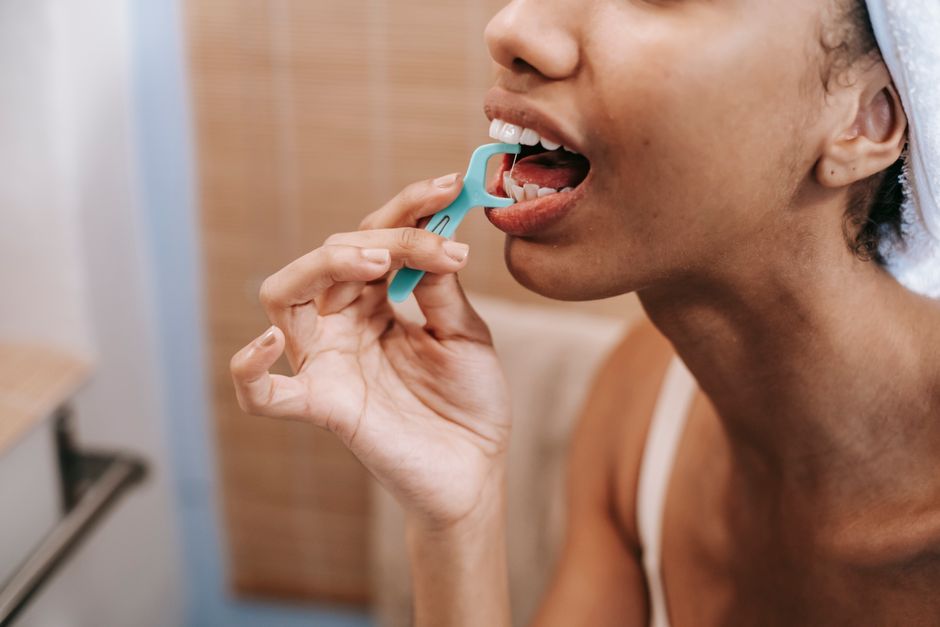
- Use a sawing motion, not a snap. Move the floss gently side to side as you press down. Forcing it straight through is the fastest way to break the thread and cut your gum.
- Wrap around each tooth in a C-shape. Once through the contact, curve the floss against one tooth and slide it up and down, including just below the gumline.
- Do not reuse a frayed pick. A frayed thread leaves nylon fragments between teeth and loses its ability to clean.
- Floss before brushing at night. Removing debris first lets fluoride toothpaste reach the now-open contacts.
- Consider a water flosser as a supplement, not a replacement. It helps with gum stimulation but cannot scrape sticky plaque off a tight contact the way floss does.
Common Mistakes When Buying Floss Picks for Crowded Teeth
Buying in Bulk Without Testing
Value packs are tempting, but a 200-count bag of thick, unwaxed picks is a waste if the thread will not pass between your teeth. Buy a small pack first, test it on your tightest contact, then commit.
Assuming "Extra Strength" Means "Thin"
Strength and thickness are different properties. Extra-strength picks often use thicker multifilament thread that resists breaking but struggles in narrow gaps. For tight teeth, prioritize thinness plus shred resistance over raw tensile strength.
Ignoring the Back Molars
Second and third molars are usually the tightest and hardest to reach. A long, slim neck with a slight angle makes these contacts accessible without over-opening your jaw.
Overlooking Restorations
Crowns, fillings, and veneers can have rough edges that shred floss. If you have restorations next to tight contacts, choose PTFE or a coated tape-style pick and inspect the thread after each use.
Do Dentists Recommend Floss Sticks at All?
Yes — with caveats. The American Dental Association recognizes floss picks as an effective interdental cleaner when used correctly. The main concern is that pick users often clean only the front-facing surfaces and skip the wrap-around motion that reaches below the gumline. Used properly, a quality floss stick can be just as effective as string floss, and it is far more likely to be used daily.
For people with braces, permanent retainers, or extremely tight contacts, a thin PTFE pick combined with an interdental brush for larger gaps gives the most complete clean.
Practical Buying Checklist
- Thread: PTFE or waxed, thin, shred-resistant
- Neck: slim, angled, long enough for molars
- Handle: semi-rigid for controlled pressure
- Coating: smooth glide, minimal wax buildup
- Packaging: resealable to keep picks clean
- Eco-factor: biodegradable options if sustainability matters to you
Final Thoughts
Tight teeth are not a reason to skip flossing — they are a reason to choose the right tool. A thin, coated, shred-resistant floss stick with a slim angled neck will slide through crowded contacts, clean below the gumline, and survive daily use. Test a small pack, refine your technique with a gentle sawing motion, and replace frayed picks immediately. Your gums will notice the difference within a week.
Tell us your market and volume — we send product suggestions, samples and pricing.