
 English
 简体中文
简体中文 Русский
 Español
 Deutsch
8 Yoga Hammock Exercises for Core Strength
Why Use a Yoga Hammock for Core Strength?
A yoga hammock, also known as an aerial yoga swing, suspends you in a soft fabric loop that challenges your balance in every direction. Unlike a mat, the hammock is unstable, so your deep core muscles — the transverse abdominis, obliques, and lower back — must constantly fire to keep you steady. This turns ordinary movements into serious core work.
The hammock also supports your body weight, which means you can hold positions longer and explore ranges of motion that are difficult on the floor. That combination of support and instability is exactly what makes aerial yoga so effective for building functional core strength.
Below are eight yoga hammock exercises you can use to build a stronger, more stable midsection. Perform them in order as a full routine, or pick three or four to add to your existing practice. Always warm up first and use a hammock rated for your weight.
1. Hammock Plank Hold
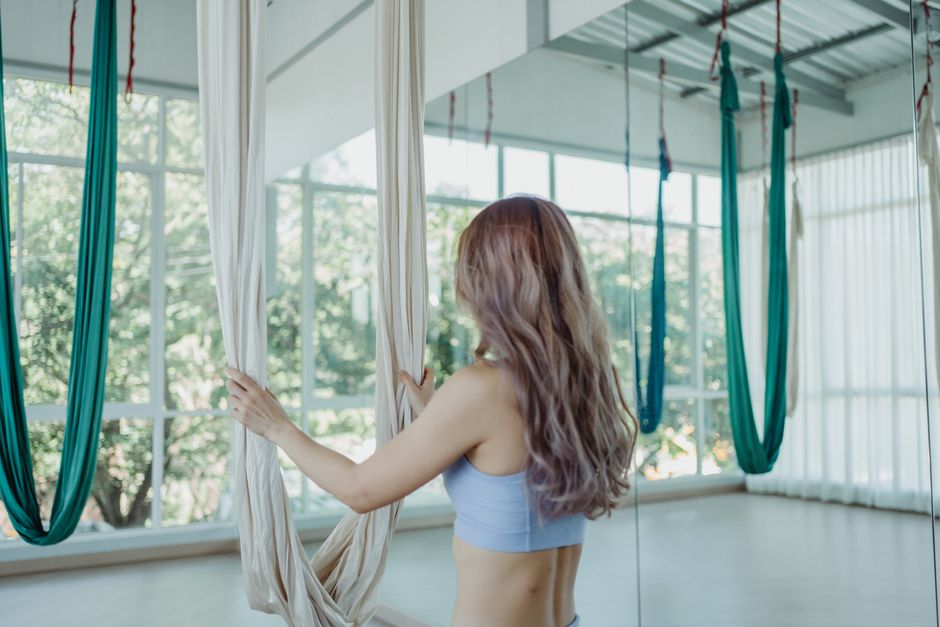
Place both feet into the hammock and walk your hands forward until your body forms a straight line from head to heels. The hammock should sit around your shins or ankles, depending on your height. Squeeze your glutes, brace your abs, and hold for 20–40 seconds.
Because the fabric moves, your core has to work overtime to stop your hips from swaying. Keep your gaze down and your neck neutral. If your lower back starts to sag, shorten the hold or bring your feet closer to the hammock's center.
Do three rounds, resting 30 seconds between holds. As you get stronger, try slowly rocking your hips side to side while holding — this adds an anti-rotation challenge that hits the obliques hard.
2. Hammock Crunch
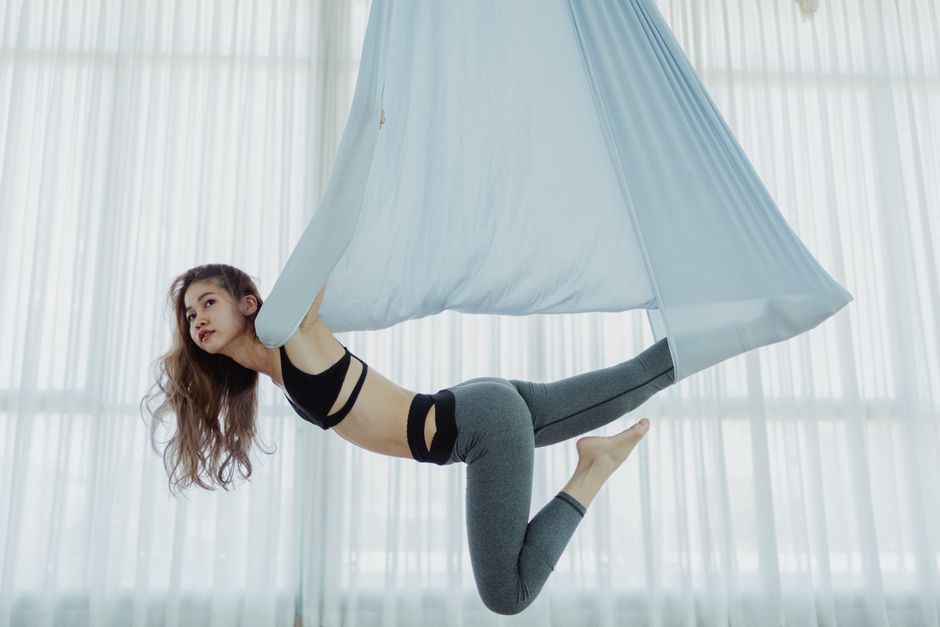
Sit in the hammock with the fabric supporting your lower back and hips. Grip the fabric on either side of your thighs, lean back slightly, and extend your legs forward. From here, draw your knees toward your chest while curling your spine, then slowly extend back out.
This is a classic crunch, but the hammock's sway means your abs can't rely on momentum. Move slowly and exhale on the way in. Keep your ribs knitted down so your lower back doesn't arch.
Aim for 10–15 controlled reps. If your neck feels strained, support your head lightly with one hand or reduce your range of motion until your core catches up.
3. Aerial Bicycle
Start in the same seated position as the crunch, but keep your legs extended. Alternate bringing one knee in while the other leg stays long, mimicking a bicycle pedal. Add a gentle twist toward the bent knee to engage the obliques.
The hammock will rock with each rep, forcing your core to stabilize against the movement. Keep your torso tall and avoid pulling with your arms — let your abs do the work.
Perform 20 total reps (10 per side) for three sets. This exercise also improves hip mobility, making it a great warm-up for deeper backbends later in your practice.
4. Hammock Knee Tucks
Come into a plank position with your feet in the hammock, hands on the floor beneath your shoulders. Keeping your back flat, draw both knees toward your chest, pause, then slowly push them back out to plank.
The tuck is the hard part — you're essentially doing a moving plank, and the hammock's instability means your abs never get a break. Avoid letting your hips pike up; keep them level with your shoulders.
Do 8–12 reps for three sets. For an advanced version, tuck one knee at a time, which increases the anti-rotation demand on your obliques.
5. Side Plank with Hammock Support
Place one foot in the hammock and stack the other on top, then rotate onto your forearm or hand for a side plank. The hammock supports your bottom leg, letting you focus entirely on the oblique and glute medius on the working side.
Keep your hips lifted and your body in one long line. Reach your top arm toward the ceiling to open your chest. Hold for 15–30 seconds per side.
This is a fantastic way to train the lateral core without the wrist and shoulder strain that floor side planks can cause. If it feels too easy, lift the top leg away from the bottom one.
6. Hollow Body Swing
Sit in the hammock facing forward, then lean back and extend your legs into a hollow body shape — lower back pressed into the fabric, ribs down, arms reaching past your ears. Gently swing forward and back while holding the shape.
The swing adds a dynamic element: your core must resist the urge to break the hollow position as gravity shifts. Keep the movement small and controlled at first.
Do 30–45 seconds of continuous swinging for three rounds. This drill translates directly to better control in inversions and arm balances.
7. Hammock Leg Lifts
Lie back in the hammock with your head supported and your legs extended. Grip the fabric above your head for stability. Keeping your legs straight, lift them toward the ceiling, then lower slowly without letting your lower back arch.
The hammock cradles your spine, so you can focus purely on the lower abs. Exhale as you lift, inhale as you lower. Stop before your back starts to round.
Perform 10–15 reps for three sets. For more challenge, pause for two seconds at the top of each lift, or add a slight hip lift at the peak.
8. Inverted Hammock Sit-Up
Hang upside down in the hammock with the fabric supporting your hips and lower back, legs bent and feet hooked over the fabric. From here, curl your torso up toward your knees, then lower with control.
This is the most advanced move on the list. Inversion increases blood flow to the upper body and demands serious core control to avoid swinging. Only attempt it once you're comfortable with the earlier exercises.
Do 6–10 slow reps. Come down immediately if you feel dizzy or pressure in your head. Always exit the inversion slowly and rest in a seated position before standing.
Sample Core Routine and Safety Tips
Try this sequence two or three times per week: Hammock Plank Hold, Hammock Crunch, Aerial Bicycle, Knee Tucks, Side Plank, Hollow Body Swing, Leg Lifts, and Inverted Sit-Ups. Rest 30–60 seconds between exercises.
| Exercise | Reps / Time | Primary Muscles |
|---|---|---|
| Hammock Plank Hold | 20–40 sec | Transverse abdominis, shoulders |
| Hammock Crunch | 10–15 reps | Upper abs |
| Aerial Bicycle | 20 reps | Obliques, hip flexors |
| Knee Tucks | 8–12 reps | Lower abs |
| Side Plank | 15–30 sec/side | Obliques, glutes |
| Hollow Body Swing | 30–45 sec | Full core |
| Leg Lifts | 10–15 reps | Lower abs |
| Inverted Sit-Up | 6–10 reps | Full core, hip flexors |
Before every session, check your hammock and hardware for wear. Mount only to a certified beam or ceiling mount rated for dynamic loads. Stop if you feel pain, numbness, or dizziness, and consult a professional if you're new to inversions.
With consistent practice, these eight yoga hammock exercises will build a stronger, more resilient core — and make your aerial practice feel lighter and more controlled.
Ask us anything about fabrics, rigging, load ratings or shipping — we answer personally.