
How to Safely Use a Circular Saw: Beginner Guide
Learn how to safely use a circular saw with this beginner guide covering PPE, setup, cutting technique, and kickback prevention. Start cutting with confidence!
Why Circular Saw Safety Matters
A circular saw is one of the most versatile and widely used power tools in woodworking, construction, and DIY projects. It can rip plywood, crosscut lumber, trim studs, and break down sheet goods with speed and precision. But that spinning blade — often turning at 5,000 RPM or more — also makes it one of the most dangerous tools in a workshop. Every year, thousands of users suffer serious lacerations, amputations, and kickback injuries that could have been prevented with proper technique and respect for the tool.
This beginner's guide walks you through everything you need to know to use a circular saw safely: choosing the right saw, dressing for the job, setting up your cut, handling the tool correctly, and avoiding the most common mistakes. By the end, you'll understand not just how to cut, but why each safety step matters.
Understanding Your Circular Saw
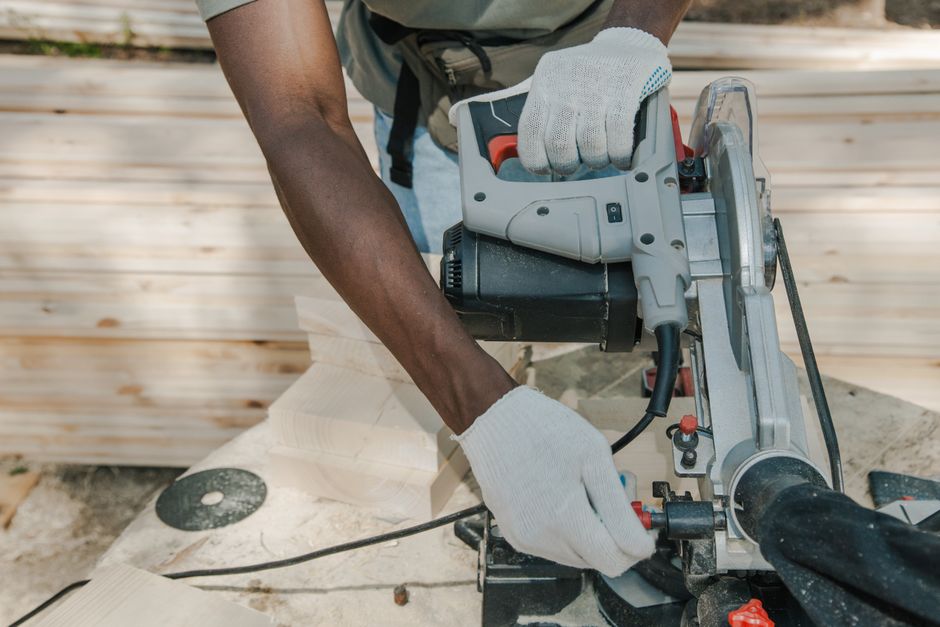
Before you plug in or pull the trigger, take time to learn the anatomy of your saw. Familiarity builds confidence and helps you react correctly if something goes wrong.
Key Components
- Motor and handle: The motor drives the blade; the main handle houses the trigger switch. Many saws also have a front pommel handle for two-handed control.
- Base plate (shoe): The flat metal or composite plate that rests on the workpiece. It can usually be adjusted for bevel cuts.
- Blade guard: The spring-loaded lower guard retracts as you push into the material and snaps back when the cut is finished. Never tape it open or disable it.
- Upper guard: The fixed housing that covers the top half of the blade.
- Depth adjustment lever: Controls how deep the blade cuts. Set it so the blade protrudes only about 1/4 inch (6 mm) below the material.
- Bevel adjustment: Tilts the base plate for angled cuts, typically from 0° to 45° or 50°.
- Riving knife (on some models): A small fin behind the blade that helps prevent kickback by keeping the kerf open.
Types of Circular Saws
| Type | Typical Blade Size | Best For |
|---|---|---|
| Sidewinder (in-line) | 6-1/2" to 8-1/4" | General framing, DIY, right-handed users |
| Worm-drive | 7-1/4" to 8-1/4" | Heavy framing, cutting thick stock, better torque |
| Mini / compact | 4-1/2" to 6-1/2" | Trim work, one-handed tasks, tight spaces |
| Cordless | 5-3/8" to 7-1/4" | Jobsite mobility, quick cuts |
Whichever type you own, read the manufacturer's manual. Each saw has specific warnings, blade-change procedures, and maintenance requirements.
Personal Protective Equipment (PPE)
Safety starts with what you wear — and what you don't. Circular saws throw sawdust, splinters, and occasionally broken blade teeth at high speed.
- Safety glasses: Always. A face shield adds protection for heavy cutting.
- Hearing protection: Circular saws routinely exceed 90 dB. Use earplugs or earmuffs.
- Dust mask or respirator: Essential when cutting MDF, pressure-treated lumber, or any material that produces fine dust.
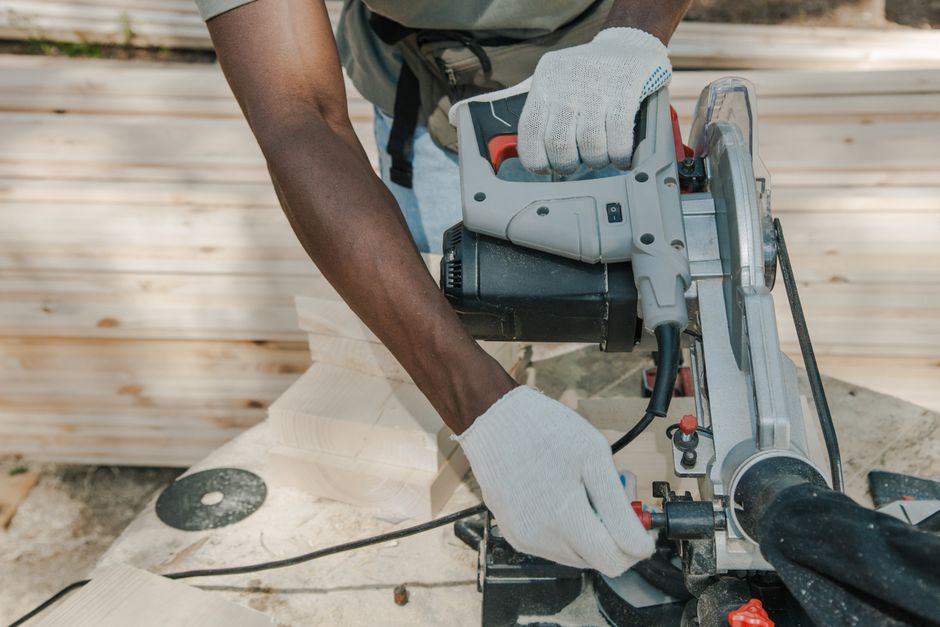
- Non-slip gloves: Protect your hands from splinters, but avoid loose cuffs or gloves that could catch in the blade.
- Close-fitting clothing: No loose sleeves, dangling jewelry, or drawstrings. Tie back long hair.
- Non-slip, closed-toe shoes: Protect your feet from dropped tools and offcuts.
Never wear loose gloves near a spinning blade. If a glove catches, it will pull your hand toward the blade faster than you can react.
Pre-Cut Safety Checks
Before every cut, run through this checklist. It takes seconds and prevents accidents.
- Inspect the blade: Check for missing teeth, cracks, or warping. A damaged blade can shatter.
- Verify blade direction: The teeth should point forward (toward the front of the saw) and the rotation arrow on the blade should match the arrow on the saw housing.
- Check the guards: The lower guard must snap back freely. Test it by hand with the saw unplugged.
- Tighten the blade: Use the correct arbor wrench. A loose blade wobbles and can bind.
- Set the depth: Blade should extend only 1/4 inch below the workpiece. Deeper settings increase kickback risk.
- Secure the workpiece: Clamp it to a stable surface. Never hold a board with one hand while cutting with the other.
- Check for obstructions: Nails, screws, and staples can damage the blade and cause kickback.
- Plan your cord path: Keep the power cord behind you, away from the cut line.
How to Make a Safe Cut: Step by Step
1. Set Up Your Workstation
Use sawhorses, a workbench, or a dedicated cutting station. The workpiece should be supported on both sides of the cut so it doesn't pinch the blade as you finish. If you're cutting sheet goods, lay rigid foam insulation underneath for support.
2. Mark and Guide Your Cut
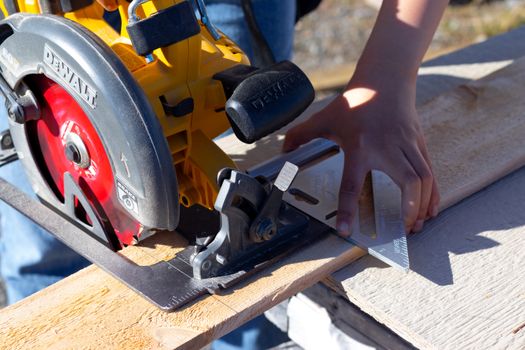
Measure twice, mark once with a pencil or marking knife. Use a straight edge, speed square, or a clamped guide rail to keep the saw on track. Freehand cutting is possible but increases the chance of binding and kickback.
3. Position Yourself Correctly
- Stand to the side of the saw, not directly behind it. If kickback occurs, the saw travels backward — you don't want to be in its path.
- Keep both hands on the saw: one on the rear handle, one on the front pommel.
- Maintain a balanced stance with feet shoulder-width apart.
4. Start the Saw Before Touching the Material
Let the blade reach full speed before engaging the workpiece. Starting a cut with the blade against the wood can cause the saw to jump.
5. Feed at a Steady Pace
Let the blade do the work. Pushing too fast bogs down the motor, overheats the blade, and increases kickback risk. If the saw slows noticeably, back off slightly. Listen to the motor — a healthy cut sounds steady, not strained.
6. Finish the Cut Carefully
As you near the end, keep supporting the saw so it doesn't drop. Release the trigger, wait for the blade to stop completely, then lift the saw. Never pull the saw backward out of a cut while the blade is still spinning.
Understanding and Preventing Kickback
Kickback is the sudden, violent backward thrust of the saw toward the operator. It's the leading cause of circular saw injuries. It happens when the blade binds in the kerf, the material pinches the blade, or the blade contacts an obstruction.
Kickback Prevention Tips
- Support the workpiece so the kerf stays open.
- Keep the blade sharp and appropriate for the material.
- Set the blade depth correctly — never more than 1/4 inch below the material.
- Use a riving knife if your saw has one.
- Don't twist or force the saw through a cut.
- Stand to the side, not directly behind the saw.
- Never cut wet, warped, or knotty wood without extra caution.
If kickback starts, hold tight, don't fight it, and release the trigger immediately. Let the saw come to a stop before moving.
Common Beginner Mistakes to Avoid
- Disabling the blade guard because it "gets in the way." The guard is your primary protection.
- Cutting without clamping the workpiece. Hand-holding is a recipe for disaster.
- Using the wrong blade for the material — a rip blade on plywood, or a metal-cutting blade on wood.
- Overreaching or cutting above shoulder height.
- Wearing loose clothing or gloves near the blade.
- Cutting toward yourself or pulling the saw backward through a cut.
- Ignoring the cord and cutting through it. Always route the cord behind you.
Blade Selection and Maintenance
The right blade makes cuts safer and cleaner. Match the blade to the material and task.
| Blade Type | Tooth Count | Best Use |
|---|---|---|
| Rip blade | 24T or fewer | Cutting with the grain, fast rough cuts |
| Crosscut blade | 40T–60T | Cutting across the grain, general framing |
| Combination blade | 24T–40T | All-purpose work |
| Fine-finish blade | 60T–80T | Trim, plywood, veneer, clean edges |
Keep blades sharp. A dull blade requires more force, generates heat, and dramatically increases kickback risk. Replace blades with chipped teeth or visible cracks immediately.
Final Safety Reminders
- Never operate a circular saw while tired, distracted, or under the influence.
- Unplug the saw before changing blades or making adjustments.
- Keep children and pets away from your work area.
- Store the saw with the blade guard closed and the cord coiled safely.
- Take a hands-on safety course if you're new to power tools.
Respect the tool, follow the checklist, and never rush. A circular saw is a powerful ally in the workshop — when used correctly, it's safe, efficient, and incredibly satisfying. Master the basics, and you'll be cutting with confidence in no time.
Want this program for your channel?
Send your volumes and target market. We quote with samples and lead time.