Superconductor Power Transmission: Pros & Cons
As global electricity demand rises and grids strain under the weight of renewable integration, superconductor power transmission has moved from laboratory curiosity to serious infrastructure candidate. Unlike conventional copper or aluminum cables, superconductors carry electricity with zero resistance below a critical temperature, promising near-lossless delivery. But is the technology ready for primetime? This article compares superconductor transmission against conventional and emerging alternatives, outlines the pros and cons, and offers a clear recommendation for utilities and grid planners.
What Is Superconductor Power Transmission?
Superconductors are materials that, when cooled below a critical temperature (Tc), exhibit zero electrical resistance. In power transmission, two families dominate:
- Low-Temperature Superconductors (LTS): Typically niobium-titanium alloys cooled with liquid helium to around 4 K (−269 °C).
- High-Temperature Superconductors (HTS): Materials like yttrium barium copper oxide (YBCO) or bismuth strontium calcium copper oxide (BSCCO), cooled with liquid nitrogen to 77 K (−196 °C).
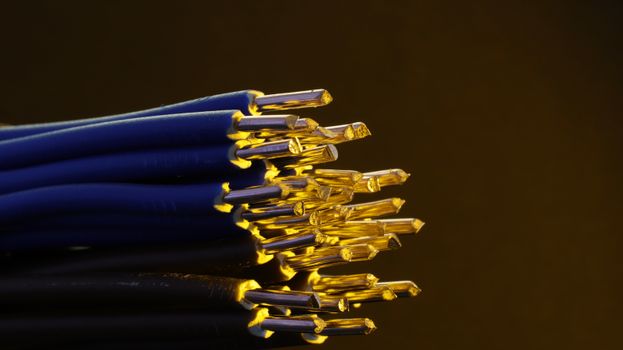
Both types are packaged into cables with cryogenic envelopes that maintain the low temperature. Because resistance vanishes, a superconductor cable can carry 5–10 times the current of a same-diameter copper cable, with virtually no resistive losses.
How Superconductors Compare to Other Transmission Options
To evaluate superconductors fairly, we must compare them with the incumbent technology (conventional AC overhead lines), high-voltage direct current (HVDC), and gas-insulated lines (GIL). The table below summarizes key attributes.
| Feature | Superconductor (HTS) | Conventional AC Overhead | HVDC | Gas-Insulated Line (GIL) |
|---|---|---|---|---|
| Resistive losses | Near zero (cryogenic cooling power ~2–5% of transferred power) | 6–8% typical | 3–5% per converter station pair | ~1–2% |
| Right-of-way footprint | Very small (underground, high capacity) | Large (towers, clearances) | Moderate (converter stations, cables/overhead) | Small (underground) |
| Capacity per circuit | Up to 5–10 GW at medium voltage | 1–3 GW at high voltage | 2–8 GW | 2–4 GW |
| Capital cost (per mile) | Very high (cryogenics, HTS wire) | Low to moderate | High (converters) | Moderate to high |
| Maturity | Demonstration / early commercial | Mature | Mature | Commercial |
| Best use case | Dense urban, short high-capacity links | Long-distance bulk power | Long submarine / asynchronous ties | Urban underground upgrades |
Pros of Superconductor Power Transmission
1. Extremely High Power Density
A single HTS cable can replace multiple conventional circuits, freeing up congested rights-of-way. In cities where new overhead lines are politically or physically impossible, this is a game-changer.
2. Near-Zero Resistive Losses
Unlike copper, superconductors do not heat up from I²R losses. The only significant energy penalty is the cryogenic cooling system, which typically consumes 2–5% of the transmitted power—still lower than the 6–8% lost on many conventional lines.
3. Compact Underground Installation
Superconductor cables can be buried in existing conduits or tunnels, minimizing visual impact and land acquisition costs. This is especially valuable in urban centers and environmentally sensitive areas.
4. Fault Current Limiting
Some HTS designs inherently limit fault currents, improving grid stability and reducing the need for expensive protective equipment.
Cons of Superconductor Power Transmission
1. High Capital and Operating Costs
HTS wire is expensive, and cryogenic cooling plants add significant upfront and ongoing costs. A recent 1 km demonstration project in Essen, Germany, cost several times more than a conventional cable of similar capacity.
2. Cryogenic Complexity
Maintaining liquid nitrogen or helium temperatures requires specialized pumps, vacuum insulation, and redundant cooling. A cooling failure can quickly quench the superconductor, turning it into a resistor and potentially damaging the cable.
3. Limited Length and Deployment
Most installations are under 10 km. Long-distance superconductor transmission is not yet economically viable because cooling stations must be spaced closely, and thermal insulation over hundreds of kilometers is challenging.
4. Immature Supply Chain
Few manufacturers produce HTS wire at scale, and installation expertise is concentrated in a handful of firms. This limits competition and slows cost reduction.
Recommendation: When to Choose Superconductors
Superconductor power transmission is not a universal replacement for conventional grids. Based on the comparison above, our recommendation is:
- Adopt superconductors for short, high-capacity urban links where right-of-way is scarce, land costs are extreme, and losses must be minimized. Examples include downtown distribution rings, data center campuses, and interconnections between substations in dense cities.
- Do not use superconductors for long-distance bulk transmission (over 50 km) today. HVDC remains more cost-effective and mature for that purpose.
- Pilot hybrid projects that combine HTS cables with existing infrastructure to gain operational experience and drive down costs through learning curves.
For most utilities, the pragmatic path is to monitor HTS development, participate in demonstration projects, and reserve superconductors for niche applications where their unique advantages outweigh the high price tag. As HTS wire prices fall and cryogenic systems become more reliable, the calculus will shift—but for now, superconductors are a powerful specialty tool, not a blanket solution.
Conclusion
Superconductor power transmission offers compelling benefits: zero resistive losses, massive capacity in a small footprint, and underground deployment. Yet high costs, cryogenic complexity, and limited length keep it from mainstream adoption. By targeting dense urban corridors and high-value applications, grid operators can capture the pros while avoiding the cons. The technology is worth watching—and in select cases, worth deploying today.