Introduction
Batteries power everything from remote controls to cars, and knowing whether a battery is still good or completely dead saves time, money, and frustration. A multimeter is the fastest, most reliable tool for this job. In this tutorial, you will learn exactly how to test a battery with a multimeter, what the readings mean, and how to avoid common mistakes that lead to false results.
Whether you are a technician, a hobbyist, or a homeowner, this guide walks you through DC voltage testing, load testing, continuity checks, and safety practices. By the end, you will be able to diagnose alkaline, lithium-ion, lead-acid, and rechargeable batteries with confidence.

Why Use a Multimeter to Test a Battery?
A multimeter measures voltage, current, and resistance. For batteries, voltage is the primary indicator of state of charge and overall health. Unlike a simple battery tester that only gives a pass/fail light, a multimeter provides precise numbers, allowing you to compare against the battery's rated voltage and determine whether it is fully charged, partially discharged, or failing.
Multimeters are also versatile. The same device that checks a battery can test fuses, outlets, and wiring, making it an essential instrument in any toolbox. Digital multimeters (DMMs) are preferred for battery testing because they display exact values and often include a dedicated battery test mode.
Tools and Safety Precautions
What You Need
- Digital multimeter with DC voltage settings
- Test leads (red and black)
- Battery to be tested
- Optional: a load resistor or dedicated battery load tester
- Safety glasses and insulated gloves when working with high-voltage batteries
Safety First
Batteries store chemical energy and can deliver high current. A short circuit can cause sparks, burns, or even an explosion. Never touch both terminals with your hands or metal objects. For lead-acid batteries, work in a ventilated area because they can release hydrogen gas. For lithium-ion packs, avoid puncturing or overheating cells. Always set the multimeter to the correct range and verify the leads are in the proper jacks.
Step-by-Step: How to Test a Battery With a Multimeter
Step 1: Prepare the Multimeter
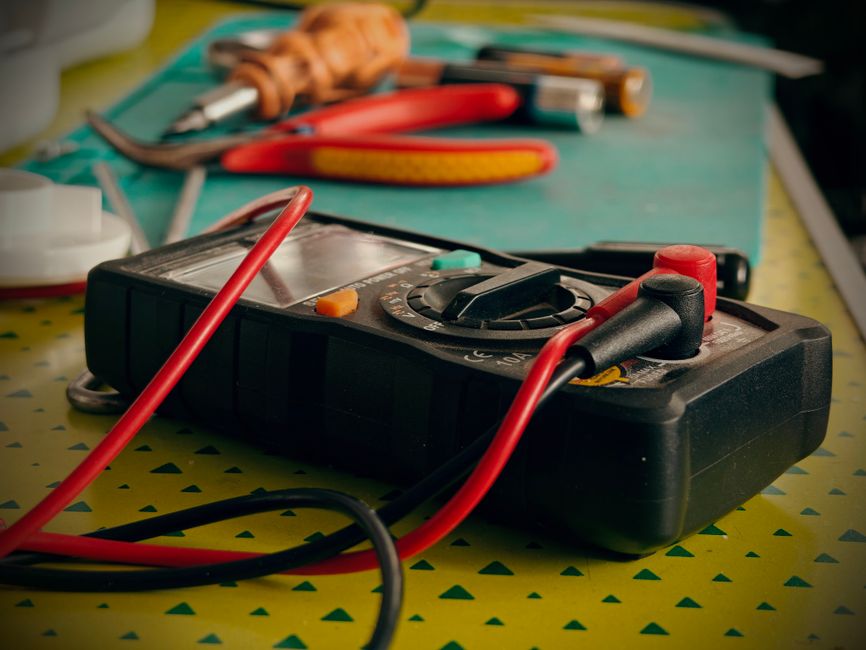
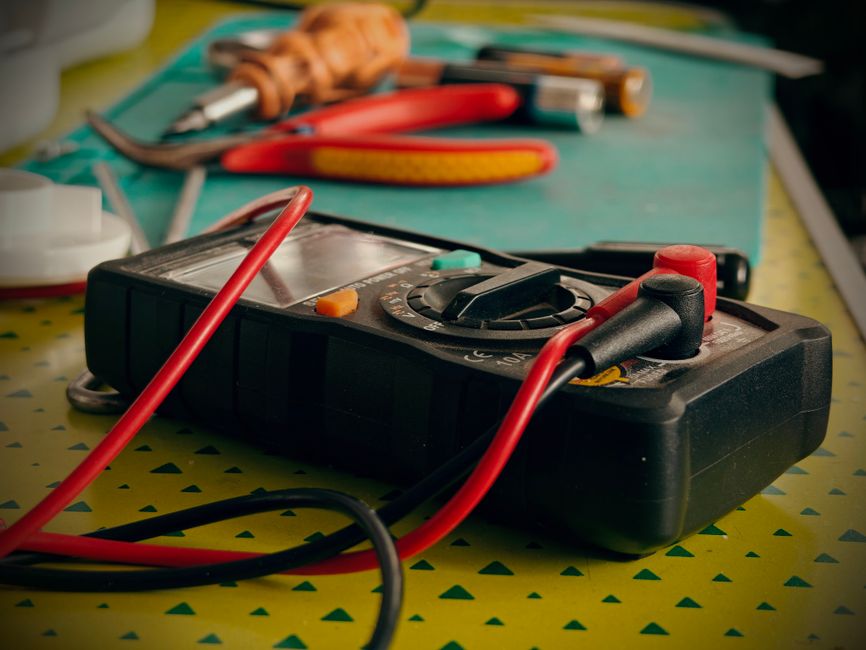
Insert the black lead into the COM jack and the red lead into the VΩmA jack. Turn the dial to DC voltage (marked V with a straight line). If your multimeter has auto-ranging, select DC volts; otherwise, choose a range higher than the battery's nominal voltage, such as 20V for a 12V battery or 2V for a 1.5V cell.
Step 2: Identify the Terminals
Every battery has a positive (+) and negative (-) terminal. On cylindrical cells, the positive end usually has a raised button. On rectangular 9V batteries, the smaller terminal is positive. On car batteries, the positive post is typically larger and marked red. Connecting the leads backward will show a negative reading, which is not harmful for a quick test but indicates reversed polarity.
Step 3: Measure Open-Circuit Voltage
Touch the red probe to the positive terminal and the black probe to the negative terminal. Hold them firmly and read the display. This is the open-circuit voltage (OCV). A healthy battery should read close to its rated voltage. For example, a fully charged 1.5V alkaline cell reads about 1.5V to 1.6V, while a 12V lead-acid battery reads about 12.6V when fully charged.
Step 4: Interpret the Reading
Use the table below as a general guide for common battery types.
| Battery Type | Nominal Voltage | Full Charge | Replace/Recharge Threshold |
|---|
| Alkaline AA/AAA | 1.5V | 1.5V–1.6V | Below 1.2V |
| Lithium coin cell | 3V | 3.0V–3.3V | Below 2.7V |
| Li-ion 18650 | 3.7V | 4.2V | Below 3.0V |
| Lead-acid 12V | 12V | 12.6V–12.8V | Below 12.0V |
| 9V alkaline | 9V | 9.0V–9.5V | Below 7.5V |
Step 5: Perform a Load Test
Open-circuit voltage can be misleading. A battery may show full voltage with no load but collapse under current draw. To perform a load test, connect a suitable load resistor across the terminals while measuring voltage. For a 1.5V cell, a 10-ohm resistor draws about 150mA. For a 12V battery, use a proper load tester or a resistor that draws a few amps. If the voltage drops significantly and does not recover, the battery is weak or failing.
Step 6: Check Internal Resistance (Advanced)
Some multimeters include a battery test mode that applies a small load and measures the voltage drop. You can also calculate internal resistance by comparing open-circuit voltage and loaded voltage: R = (V_oc - V_load) / I_load. A rising internal resistance indicates aging or damage.
Testing Different Battery Types
Alkaline and Carbon-Zinc
These are non-rechargeable. A reading below 1.2V under load means it is time to recycle. Do not attempt to recharge them, as they can leak or rupture.
Lithium-Ion and LiPo
These rechargeable cells should never be discharged below 2.5V–3.0V per cell. If a cell reads below 3.0V, charge it carefully with a proper charger. If it does not hold above 3.7V after charging, replace it. Swollen cells must be disposed of safely.
Lead-Acid (Car, UPS, SLA)
A 12V lead-acid battery at rest should read 12.6V or higher. At 12.2V it is about 50% charged; at 12.0V it is nearly empty. After charging, let it rest for a few hours before testing to get an accurate reading. Load testing is essential for car batteries because surface charge can give a false high reading.
Rechargeable NiMH and NiCd
Nominal voltage is 1.2V per cell. A fully charged NiMH cell reads about 1.4V to 1.45V. Under load, it should stay above 1.1V. If it drops below 1.0V quickly, the cell is worn out.
Common Mistakes to Avoid
- Testing while the battery is connected to a circuit, which can give false readings.
- Using the wrong multimeter range, causing an overload or inaccurate display.
- Relying only on open-circuit voltage without a load test.
- Testing a battery immediately after charging, when surface charge inflates the reading.
- Ignoring temperature effects; cold batteries have higher internal resistance and lower voltage.
- Reversing the probes and misreading a negative value as a fault.
Interpreting Results and Next Steps
If the battery passes both open-circuit and load tests, it is good to use. If it fails, recycle it at an appropriate facility. For rechargeable batteries, attempt a full charge and retest. If performance remains poor, replace the battery. Keeping a log of voltage readings over time helps you track battery health and predict failures before they happen.
Frequently Asked Questions
Can I test a battery without a load?
Yes, but open-circuit voltage only shows state of charge, not capacity. A load test is needed to confirm the battery can deliver current.
What should a good 12V battery read?
A fully charged 12V lead-acid battery reads 12.6V to 12.8V at rest. Anything below 12.0V indicates a significant discharge.
Why does my multimeter show 0V?
Check that the probes are in the correct jacks, the dial is set to DC volts, and the battery terminals are clean. A completely dead battery or a broken connection can also cause 0V.
Is it safe to test a car battery with a multimeter?
Yes, as long as you connect the probes correctly and avoid shorting the terminals. Wear safety glasses and work in a ventilated area.
Conclusion
Testing a battery with a multimeter is a simple yet powerful skill. By measuring open-circuit voltage, performing a load test, and interpreting the results for your specific battery chemistry, you can quickly determine whether a battery is healthy, needs charging, or should be replaced. Always prioritize safety, use the correct settings, and remember that a multimeter is only as good as the technique behind it. With practice, you will diagnose battery problems in seconds and keep your devices running reliably.

 English
 简体中文
简体中文 Русский
 Español
 Deutsch