
Hydraulic Press vs C-Frame Press: Key Differences for Buyers
When sourcing industrial presses for your manufacturing operations, understanding the nuances between machine types is crucial. Two popular choices in the metal forming industry are the hydraulic press and the C-frame press. While both serve to apply compressive force, their design, capabilities, and applications differ significantly. This comparison will help B2B buyers make an informed decision based on production needs, budget, and long-term ROI.
What is a Hydraulic Press?
A hydraulic press uses a hydraulic cylinder to generate compressive force via Pascal's law. It consists of a pump, hydraulic fluid, and a piston. These presses are known for their high force capacity, smooth operation, and ability to deliver full force throughout the stroke. They are ideal for deep drawing, forging, stamping, and molding applications.
What is a C-Frame Press?
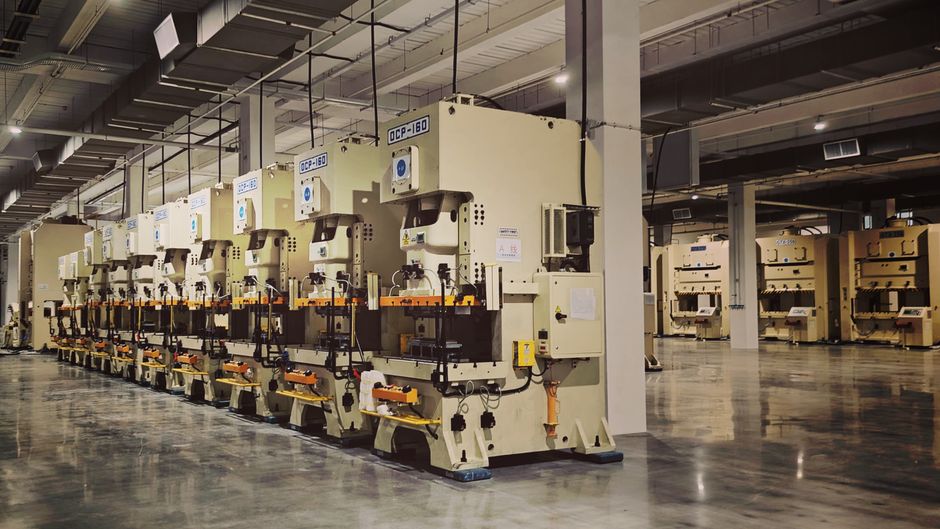
A C-frame press, also known as a gap frame press, features a C-shaped frame that provides open access on three sides. This design allows for easy loading and unloading of parts. C-frame presses can be mechanical or hydraulic, but the term often refers to hydraulic C-frame presses. They are commonly used for assembly, bending, straightening, and light to medium stamping.
Key Differences at a Glance
| Feature | Hydraulic Press | C-Frame Press |
|---|---|---|
| Frame Design | Typically four-column or H-frame; enclosed structure | Open C-shaped frame; three-sided access |
| Force Capacity | Wide range (20 tons to thousands of tons) | Typically up to 200 tons |
| Stroke Length | Long stroke capability | Limited stroke due to frame design |
| Speed | Moderate to fast (depending on pump) | Fast (especially hydraulic C-frame) |
| Precision & Control | Excellent; full control over force and speed | Good; but may have deflection at high loads |
| Deflection | Minimal due to rigid frame | Potential deflection in open frame |
| Cost | Higher initial investment | More affordable for small to medium capacities |
| Maintenance | Moderate; hydraulic system requires care | Low to moderate; simpler design |
| Applications | Deep drawing, forging, composite molding, heavy stamping | Assembly, bending, straightening, light stamping |
Advantages of Hydraulic Presses
- High Force Capacity: Can generate extremely high tonnage, suitable for heavy-duty tasks.
- Full Force Throughout Stroke: Unlike mechanical presses that deliver peak force only at bottom, hydraulic presses maintain force over the entire stroke.
- Versatility: Adjustable stroke length and speed make them adaptable to various processes.
- Precision: Advanced controls allow for exact force and position control.
- Safety: Overload protection is inherent in hydraulic systems.
Advantages of C-Frame Presses
- Accessibility: Open frame allows easy part loading from front, left, and right.
- Space-Saving: Compact footprint compared to four-column presses.
- Cost-Effective: Lower initial cost for moderate tonnage requirements.
- Speed: Hydraulic C-frame presses can operate at high cycle rates.
- Simplicity: Fewer components mean easier maintenance.
When to Choose a Hydraulic Press
Choose a hydraulic press if your operations require high tonnage (above 200 tons), long strokes, or deep drawing. Industries like automotive, aerospace, and heavy equipment manufacturing benefit from the rigidity and force consistency. If you need to form complex parts with tight tolerances, a four-column hydraulic press offers superior precision and minimal deflection.
When to Choose a C-Frame Press
Opt for a C-frame press when you need a flexible, cost-efficient solution for lighter tasks. It's ideal for job shops, maintenance facilities, and production lines requiring frequent die changes. The open frame simplifies automation integration, such as robotic part handling. For applications like bending, straightening, and light assembly, a C-frame press provides excellent value.
Comparison of Operating Costs
| Cost Factor | Hydraulic Press | C-Frame Press |
|---|---|---|
| Energy Consumption | Higher (pump runs continuously) | Moderate (on-demand hydraulic system) |
| Hydraulic Fluid | Large volume required | Smaller volume |
| Spare Parts | Seals, valves, pumps | Seals, simpler valves |
| Downtime Risk | Moderate (complex system) | Lower (fewer components) |
Recommendation for B2B Buyers
For heavy-duty, high-precision applications requiring over 200 tons of force, a hydraulic press is the superior choice. It offers the best long-term value for mass production of complex parts. For small to medium operations with varied tasks and lower tonnage needs, a C-frame press provides flexibility and cost savings. Evaluate your production volume, part geometry, and budget to choose wisely.
Final Thoughts
Both press types have their place in manufacturing. By understanding the key differences in frame design, force capacity, and application suitability, you can select the machine that aligns with your operational goals. Always consult with a reputable manufacturer to discuss your specific requirements and request a demo if possible.