
Introduction
When investing in a new press for your manufacturing line, the choice between hydraulic and mechanical presses is critical. Both have distinct advantages and limitations, and the right decision depends on your specific production needs. This article provides a detailed comparison to help B2B buyers make an informed decision.
How Hydraulic Presses Work
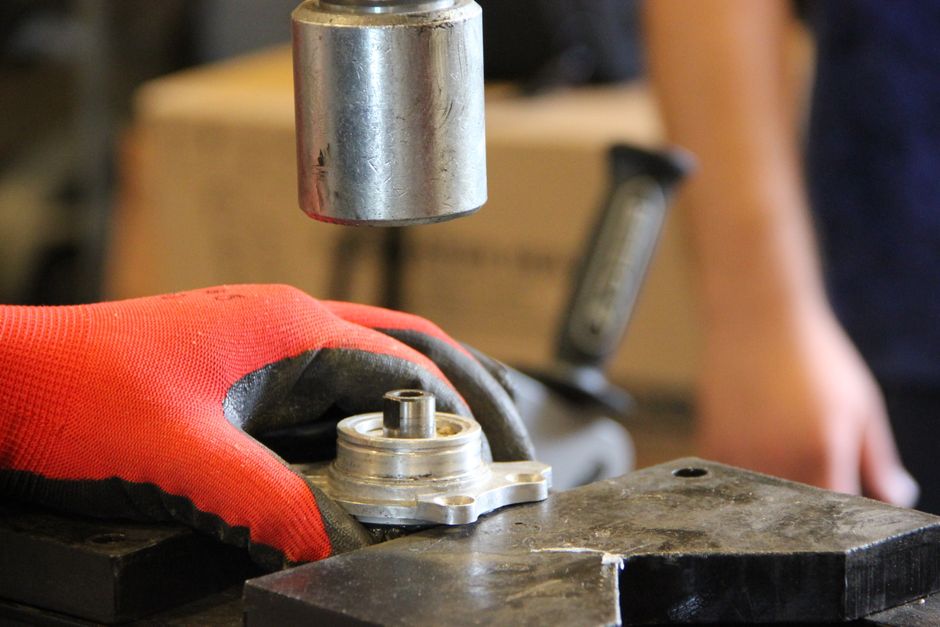
Hydraulic presses use Pascal's principle: fluid pressure is applied to a piston, generating force. A motor drives a pump that pushes hydraulic fluid into a cylinder, moving the ram. The force is easily adjustable by controlling fluid pressure, and the ram can stop at any point in the stroke.
How Mechanical Presses Work
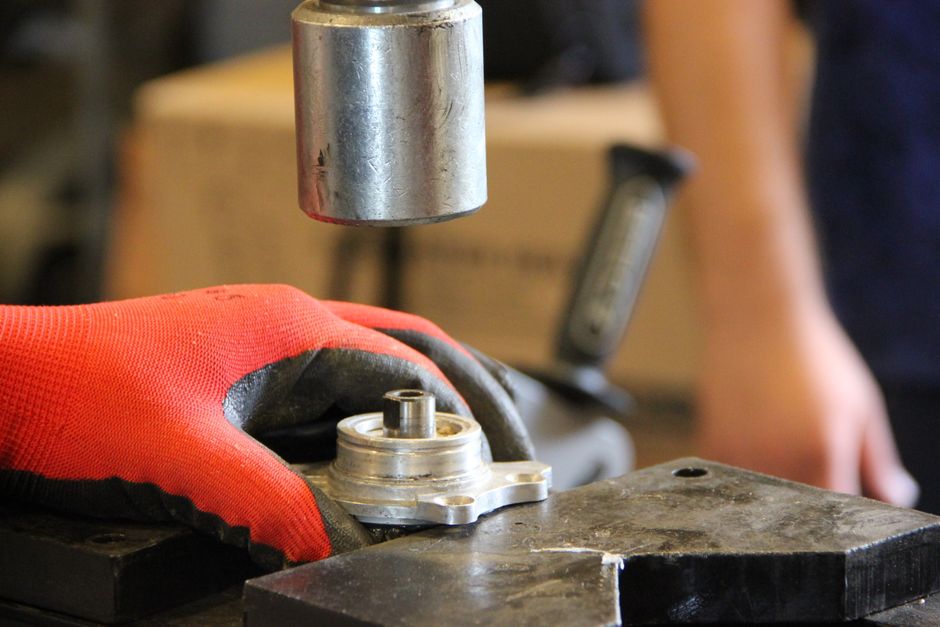
Mechanical presses use a motor connected to a flywheel, clutch, and crankshaft to convert rotational motion into linear ram movement. The stroke length is fixed, and the force is determined by the flywheel energy. They operate in a cycle and cannot stop mid-stroke without a brake.
Key Comparison Table
| Feature | Hydraulic Press | Mechanical Press |
|---|---|---|
| Force Control | Full control; adjustable pressure throughout stroke | Fixed at bottom of stroke; force depends on flywheel energy |
| Stroke Length | Adjustable; long strokes possible | Fixed; typically short to medium stroke |
| Speed | Slower; limited by pump flow | Fast; up to hundreds of strokes per minute |
| Accuracy | Excellent; position and force feedback | Good; but less precise at bottom |
| Maintenance | Moderate; seals, filters, fluid changes | High; clutch, brake, bearings, lubrication |
| Energy Efficiency | Lower; pump runs continuously | Higher; flywheel stores energy |
| Noise Level | Quieter | Louder due to mechanical impact |
| Initial Cost | Higher for same tonnage | Lower for standard models |
| Typical Applications | Deep drawing, forging, forming, assembly | Stamping, blanking, punching, shearing |
Advantages and Disadvantages
Hydraulic Press Pros
- Variable force and speed throughout stroke
- Full tonnage available at any point
- Ability to hold pressure for dwell time
- Less shock and vibration; quieter operation
- Ideal for deep drawing and complex shapes
Hydraulic Press Cons
- Slower cycle speeds
- Higher energy consumption
- Potential for fluid leaks
- Requires more floor space for power unit
Mechanical Press Pros
- High speed; excellent for mass production
- Lower initial cost
- Energy efficient due to flywheel
- Simple and robust design
- Consistent stroke length
Mechanical Press Cons
- Limited force control; only at bottom dead center
- Cannot hold pressure; no dwell capability
- Noisy and high vibration
- Higher maintenance on clutch and brake
- Risk of jamming if overloaded
Application-Specific Recommendations
Choose Hydraulic Press When:
- You need deep drawing or forming with long strokes
- Force must be controlled or varied during stroke
- You require dwell time for material flow
- Low noise and vibration are important
- Production volumes are low to medium
Choose Mechanical Press When:
- High-speed stamping or blanking is needed
- Production volumes are high (thousands per hour)
- Consistent stroke length is acceptable
- Initial budget is limited
- Energy efficiency is a priority
Cost Analysis
Initial investment for a 100-ton hydraulic press ranges from $20,000 to $50,000, while a mechanical press of similar capacity costs $15,000 to $35,000. However, hydraulic presses offer lower maintenance costs over time due to fewer mechanical wear parts. Total cost of ownership depends on usage: for high-speed operations, mechanical presses often have lower per-part cost.
Conclusion and Final Recommendation
Both hydraulic and mechanical presses have their place in manufacturing. If your applications involve deep drawing, forming, or require precise force control, invest in a hydraulic press. For high-speed blanking, stamping, or punching with tight budgets, a mechanical press is the better choice. Consider your production volume, part complexity, and required accuracy. We recommend consulting with press manufacturers to run trials on your specific parts.
At [Your Company Name], we offer a full range of hydraulic and mechanical presses tailored to B2B customers. Contact our sales team for a free consultation and quote.