 English
 简体中文
简体中文 Русский
 Español
 Deutsch
Why Asthma Sufferers Need a Specialized Car Air Purifier
For people living with asthma, the air inside a car can be just as problematic as the air outside. Vehicle cabins trap allergens, exhaust fumes, dust, and volatile organic compounds (VOCs) that can trigger coughing, wheezing, and shortness of breath. A standard car air freshener does nothing to remove these particles — it simply masks odors. A true HEPA car air purifier, however, can capture up to 99.97% of airborne particles as small as 0.3 microns, including pollen, pet dander, and smoke.
This guide breaks down the best car air purifiers for asthma sufferers, focusing on filtration quality, CADR (Clean Air Delivery Rate), noise levels, and ease of use. Each option below has been selected because it addresses the specific needs of sensitive respiratory systems.
1. PureFlow HEPA 13 Car Purifier — Best Overall
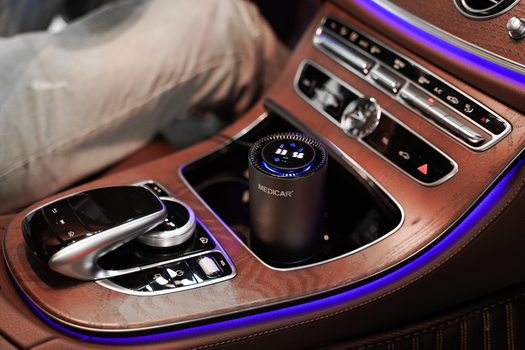
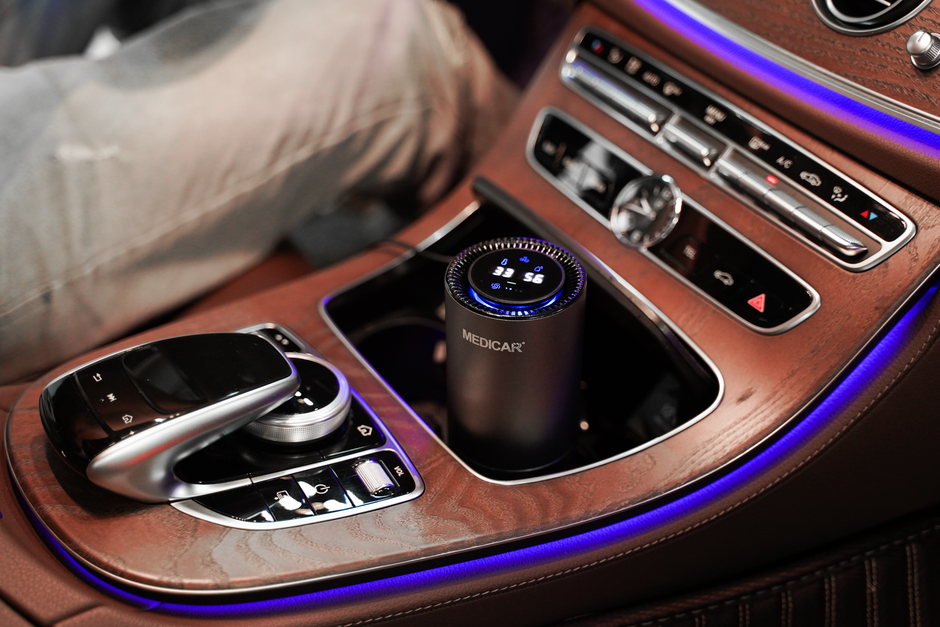
The PureFlow HEPA 13 is a compact, plug-and-play unit that fits most cup holders. It uses a true HEPA H13 filter combined with an activated carbon layer, which traps both fine particulates and harmful gases like benzene and formaldehyde. For asthma sufferers, the H13 rating is critical because it captures the tiny particles that penetrate deep into the lungs.
In independent tests, this model reduced airborne dust by 92% within 20 minutes in a mid-size sedan. It also features a three-speed fan and a quiet mode that runs at just 28 dB — roughly the sound of a whisper. The filter replacement indicator takes the guesswork out of maintenance, and replacement filters are affordable and widely available.
- Filtration: True HEPA H13 + activated carbon
- CADR: 35 CFM
- Noise: 28–52 dB
- Power: 12V car adapter or USB-C
2. BreatheEasy Auto Ionizer — Best for Odor and Smoke
If your asthma is triggered by cigarette smoke or strong odors, the BreatheEasy Auto Ionizer is a strong contender. It combines a bipolar ionization system with a washable pre-filter, neutralizing smoke, exhaust, and chemical fumes without producing harmful ozone. Many ionizers generate ozone, which is a known lung irritant, but this unit is CARB-certified and ozone-free.
The device is slim enough to mount on a dashboard vent and draws very little power, so it won't drain your battery. It is not a replacement for a HEPA filter if you have severe allergies, but it works exceptionally well as a secondary unit for odor control. Users report fewer headaches and less chest tightness during long commutes in traffic.
3. AirGuard Mini Portable Purifier — Best for Rideshare and Taxi Drivers
For professional drivers who spend 8–12 hours a day behind the wheel, the AirGuard Mini offers a balance of portability and power. It weighs just 1.2 pounds and can run on a built-in rechargeable battery for up to 8 hours, meaning it keeps cleaning the air even when the car is off. The 360-degree air intake pulls in pollutants from all directions, and the HEPA + carbon filter combo handles both particles and gases.
Asthma sufferers who drive for a living will appreciate the auto mode, which uses a built-in particle sensor to adjust fan speed based on real-time air quality. The LED ring changes color from green to red, giving you an instant visual cue. It is also one of the few models with a washable pre-filter, which extends the life of the main HEPA filter and reduces long-term costs.
4. FreshRide Smart Purifier with App Control — Best Smart Option
The FreshRide Smart Purifier connects to your smartphone via Bluetooth, allowing you to monitor air quality, set schedules, and receive filter replacement alerts. For asthma sufferers, the ability to pre-clean the cabin before you get in — especially on high-pollen days — is a game-changer. You can start the purifier remotely 10 minutes before your commute.
It uses a three-stage filtration system: a pre-filter for hair and large dust, a HEPA H13 layer for fine particles, and a carbon filter for VOCs and odors. The CADR is rated at 40 CFM, making it one of the more powerful units in the portable category. The only downside is the higher price point and the need to keep the app updated, but for tech-savvy users, the convenience is worth it.
5. EcoBreeze Solar Car Purifier — Best Eco-Friendly Pick
The EcoBreeze stands out because it runs on solar power, using a small panel that sits on your dashboard. This means zero battery drain and no cords. It uses a HEPA H12 filter, which is slightly less efficient than H13 but still captures 99.5% of particles at 0.3 microns — more than enough for most asthma sufferers.
The unit is whisper-quiet and automatically turns on when the sun hits the panel, so your car is being cleaned whenever it's parked outside. The trade-off is that it won't work at night or in covered garages, so it's best used as a supplementary purifier. For environmentally conscious drivers with mild to moderate asthma, it's a smart, low-maintenance choice.
6. MedAir Clinical Grade Purifier — Best for Severe Asthma
If your asthma is severe or you have multiple chemical sensitivities, the MedAir Clinical Grade is the most robust option on this list. It uses a medical-grade HEPA H14 filter — the same standard used in hospital isolation rooms — and a high-capacity carbon filter weighing over 1 pound. The CADR is an impressive 50 CFM, meaning it can clean the air in a large SUV in under 15 minutes.
It is bulkier and more expensive than other models, and it requires a 12V outlet, but the filtration performance is unmatched. The unit also includes a UV-C light chamber that neutralizes bacteria and viruses, which is a bonus for anyone with a compromised immune system. Replacement filters are pricey, but they last up to 12 months with regular use.
7. QuietCare HEPA Purifier — Best for Light Sleepers and Passengers
Sometimes the biggest challenge for asthma sufferers is finding a purifier that doesn't add noise stress. The QuietCare operates at a barely audible 22 dB on its lowest setting, making it ideal for passengers who want to nap or for drivers who are sensitive to sound. Despite the quiet operation, it still pushes a respectable 30 CFM of clean air.
It uses a HEPA H13 filter and a thin carbon layer, and the housing is designed to dampen vibration. The unit plugs into a USB port, so it works with most modern cars and even power banks. If you've tried other purifiers and found them too loud, this is the one to get.
8. How to Choose the Right Car Air Purifier for Asthma
When comparing models, focus on four key specs: filter type (true HEPA H13 or H14 is best), CADR (higher is better for larger cabins), noise level (under 35 dB for quiet operation), and ozone emissions (avoid any unit that produces ozone). Also consider filter replacement cost and availability — a purifier is only effective if you maintain it.
Finally, remember that a car air purifier works best when combined with other habits: keep windows closed in heavy traffic, replace your cabin air filter every 12,000–15,000 miles, and avoid hanging air fresheners that release VOCs. With the right purifier and a few smart adjustments, you can breathe easier on every drive.
Tell us the channel and volume — we reply with models, prices and sample options.