 English
 简体中文
简体中文 Русский
 Español
 Deutsch
Car Air Purifier vs Ozone Generator: Which Is Safer?
If you've ever searched for a way to remove odors, smoke, or allergens from your vehicle, you've likely encountered two very different solutions: the car air purifier and the ozone generator. Both promise cleaner, fresher cabin air, but they work in completely different ways — and one of them carries serious safety risks if used incorrectly.
In this guide, we compare how each device works, their effectiveness, health and safety implications, costs, and maintenance. By the end, you'll have a clear recommendation for the safest option for everyday use.

How Car Air Purifiers Work
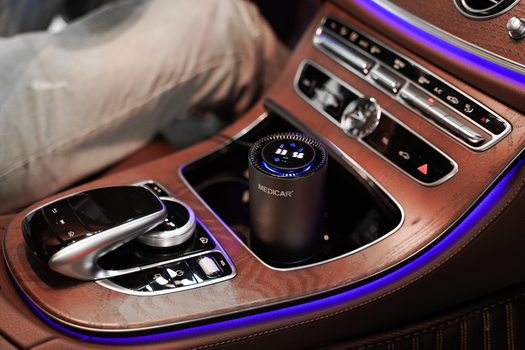
A car air purifier is a small device that plugs into your 12V socket or USB port and continuously circulates and filters the air inside your cabin. Most models combine a HEPA filter to trap particles with an activated carbon filter to absorb odors and gases. Some premium units add ionizers or UV-C lamps to neutralize bacteria and viruses.
Key characteristics:
- Runs continuously while you drive or while parked (with a power bank)
- Physically captures pollutants rather than chemically altering them
- No harmful byproducts when used as directed
- Requires periodic filter replacement

How Ozone Generators Work
An ozone generator produces ozone (O₃) — a highly reactive gas made of three oxygen atoms. Ozone is an effective oxidizer: it breaks down odor molecules, kills mold, and neutralizes smoke residue. This is why ozone generators are popular in hotels, used cars, and restoration services for deep odor removal.
However, ozone is also a known lung irritant. The U.S. EPA and OSHA have issued warnings that inhaling ozone can cause coughing, chest pain, throat irritation, and reduced lung function — especially in people with asthma or other respiratory conditions.
Head-to-Head Comparison
| Feature | Car Air Purifier | Ozone Generator |
|---|---|---|
| Primary mechanism | Filtration (HEPA + carbon) | Oxidation via ozone gas |
| Continuous use | Safe while driving | Never safe while occupied |
| Health risk | Very low | High (lung irritant) |
| Odor removal | Good with carbon filter | Excellent for severe odors |
| Particle removal | Excellent (HEPA) | None |
| Allergen removal | Excellent | Limited |
| Ventilation required | No | Yes — must air out fully |
| Typical cost | $25–$120 | $60–$300 |
| Maintenance | Replace filters every 3–6 months | Minimal, but risky to operate |
| Best for | Daily cabin air quality | Post-fire, post-smoke restoration |
Safety: The Deciding Factor
Car Air Purifier Safety
When used as intended, a car air purifier poses virtually no health risk. HEPA and carbon filters are passive technologies — they don't emit chemicals into the air. Even ionizers, which do release trace amounts of ozone, are regulated to stay well below harmful thresholds (CARB-certified models are the safest choice).
The main precaution is to avoid cheap units with unverified ionizer output. Look for CARB certification and a clear ozone emission rating of less than 0.05 ppm.
Ozone Generator Safety
Ozone generators are safe only when:
- No people or pets are inside the vehicle during treatment
- The vehicle is fully ventilated for at least 30–60 minutes afterward
- The generator is used occasionally, not daily
Even brief exposure to high ozone concentrations can trigger headaches, shortness of breath, and long-term respiratory damage. For this reason, ozone generators are considered a professional restoration tool, not a consumer air purifier.
Effectiveness: Different Strengths
It's important to note that these devices solve different problems:
- Car air purifier: Removes dust, pollen, pet dander, smoke particles, and VOCs continuously — ideal for daily driving.
- Ozone generator: Eliminates deeply embedded odors (mildew, cigarette smoke, dead animals) that filtration cannot reach.
If your goal is cleaner air every day, a purifier wins. If you've just bought a heavily smoked-in used car, a one-time professional ozone treatment followed by a purifier is a reasonable strategy.
Cost and Maintenance
Car air purifiers have a lower upfront cost and predictable maintenance (filter replacements). Ozone generators have a higher upfront cost and require no consumables, but the hidden cost is potential health damage and the need for careful, supervised operation.
Our Recommendation
For the vast majority of drivers, a car air purifier is the safer and more practical choice. It delivers continuous, low-risk air cleaning without exposing you or your passengers to lung irritants. Choose a model with a true HEPA filter, an activated carbon layer, and CARB certification.
Reserve ozone generators for rare, professional-grade odor remediation — and never run one while anyone is inside the vehicle. When in doubt, prioritize the device that cleans the air rather than one that chemically alters it.
Bottom line: A car air purifier protects your health every mile. An ozone generator is a specialized tool that demands strict precautions. For daily safety, the purifier wins.
Tell us the channel and volume — we reply with models, prices and sample options.