
Why Forklift Safety Deserves Your Full Attention
Forklifts are the workhorses of modern warehouses, moving pallets, loading trucks, and keeping inventory flowing. Yet behind their productivity lies a serious risk: forklift accidents cause roughly 85 deaths and 34,900 serious injuries every year in the United States alone, according to OSHA estimates. Many of these incidents are entirely preventable with the right training, inspection routines, and workplace culture.
This guide breaks down practical forklift safety tips every warehouse needs, from pre-shift inspections to pedestrian management and load handling. Whether you run a small distribution center or a large 3PL operation, these strategies will help you protect your team, your equipment, and your bottom line.
1. Start Every Shift With a Thorough Inspection
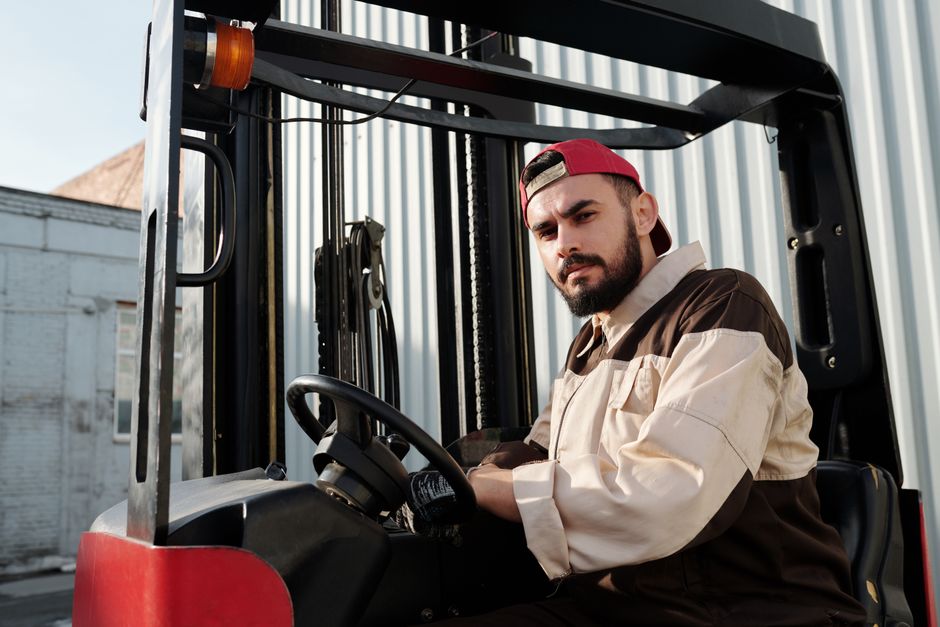
OSHA requires that powered industrial trucks be examined before each shift and after each shift if used around the clock. A pre-use inspection takes only a few minutes but catches problems before they become accidents.
What to Check on a Forklift
- Fluid levels: Engine oil, hydraulic fluid, coolant, and fuel or battery charge.
- Tires and wheels: Look for cuts, gouges, chunking, and correct pressure.
- Forks: Check for cracks, bends, excessive wear, and proper locking pins.
- Mast and chains: Inspect for wear, lubrication, and equal tension.
- Brakes and steering: Test service brakes, parking brake, and steering response.
- Horn, lights, and alarms: Confirm they work, especially the backup alarm.
- Seat belt and overhead guard: Ensure the restraint functions and the guard is intact.
Document every inspection. A simple checklist signed by the operator creates accountability and gives you a paper trail if an incident occurs.
2. Train Operators Properly — and Recertify
OSHA's Powered Industrial Trucks Standard (29 CFR 1910.178) requires formal instruction, practical training, and evaluation before an operator is allowed to work independently. Training must cover truck-related topics and workplace-specific hazards.
Core Training Topics
- Operating instructions, warnings, and precautions for the specific truck type.
- Differences between a forklift and an automobile, especially steering and stability.
- Capacity, stability triangle, and load center concepts.
- Inspections, maintenance, and refueling or battery charging procedures.
- Pedestrian traffic, narrow aisles, and hazardous floor conditions.
Recertify operators at least every three years, and sooner after an accident, near miss, or unsafe observation. Refresher training is not a punishment — it is a safety investment.
3. Respect the Stability Triangle and Load Limits
Most forklift tip-overs happen because the center of gravity moves outside the stability triangle. The load center, load weight, lift height, and tilt all shift that balance point.
Load Handling Best Practices
- Know the truck's rated capacity and never exceed it.
- Keep loads low and tilted back while traveling.
- Center the load on the forks and spread forks as wide as the load allows.
- Avoid lifting or traveling with an elevated load.
- Never use a counterweight or a second person to balance a load.
- Use the load backrest extension when handling tall or unstable loads.
If a tip-over does occur, operators should stay in the seat, brace themselves, and lean away from the direction of the fall. Jumping out is one of the leading causes of fatal crushing injuries.
4. Separate Pedestrians From Forklifts
Pedestrian injuries are among the most common and most severe warehouse incidents. A forklift weighs roughly two to three times as much as a car and cannot stop quickly, especially with a load.
Engineering and Behavioral Controls
- Paint dedicated walkways and mark them with signage and bollards.
- Install mirrors, convex domes, and motion sensors at blind corners and doorways.
- Use gates or barriers at pedestrian crossings.
- Require high-visibility vests for all floor personnel.
- Enforce a strict no-walking-in-aisles rule when forklifts are active.
- Train drivers to make eye contact and use the horn at intersections.
The goal is to design the traffic flow so pedestrians and forklifts rarely share the same space. Where they must, speed and visibility become critical.
5. Control Speed and Travel Safely
Speed is a factor in a large share of forklift accidents. A loaded forklift traveling too fast can tip on a turn, slide on a wet floor, or strike a rack or person.
- Travel at a speed that allows you to stop within the visible clear distance.
- Slow down on wet, oily, or uneven surfaces.
- No horseplay, racing, or stunt driving — ever.
- Keep the forks low, about 2 to 4 inches off the floor, when traveling.
- Sound the horn at intersections, doorways, and blind spots.
- Never carry passengers unless the truck has a designated seat and the passenger is authorized.
6. Master Ramp, Dock, and Trailer Safety
Docks and trailers present unique hazards: uneven surfaces, gaps, and shifting loads. Follow these rules:
- Inspect trailer floors and dock plates before entering.
- Ensure trailer wheels are chocked and the tractor is secured.
- Use dock lights and wheel guides for visibility.
- Never turn on a ramp or incline — travel straight up and down.
- Keep a safe distance from the edge of docks and ramps.
7. Maintain Your Forklift Fleet
Well-maintained equipment is safe equipment. A preventive maintenance schedule should include:
| Interval | Typical Tasks |
|---|---|
| Daily | Pre-use inspection, fluid checks, visual damage check |
| Weekly | Battery watering, tire pressure, chain lubrication |
| Monthly | Brake test, hydraulic inspection, mast and chain adjustment |
| Annually | Full service, load test, structural inspection |
Remove any forklift from service immediately if it is unsafe. Tag it out and report the issue.
8. Build a Safety-First Culture
Rules only work when people follow them. Encourage near-miss reporting without blame, recognize safe behavior, and hold regular toolbox talks. Post signage in multiple languages if your workforce is multilingual. When leadership visibly prioritizes safety, operators do too.
Final Thoughts
Forklift safety is not a one-time training event — it is a daily discipline. By inspecting equipment, training operators, controlling traffic, and respecting load limits, warehouses can dramatically reduce accidents and keep productivity high. Start with one improvement this week, and build from there.