1. TDK Expands MLCC Capacity with $1.2 Billion Investment
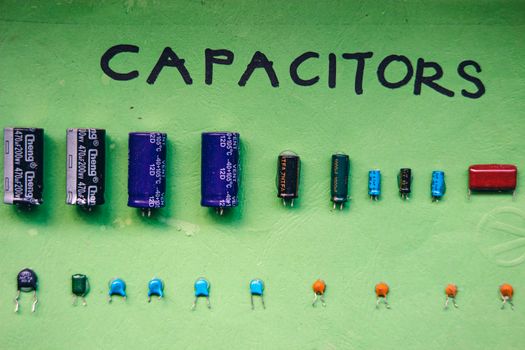
TDK Corporation announced a major capital expenditure plan to expand multilayer ceramic capacitor (MLCC) production at its facilities in Japan and Southeast Asia. The investment, valued at approximately $1.2 billion, targets the surging demand for passive components in electric vehicles, 5G infrastructure, and data center power systems. Industry analysts view this as a direct response to the supply constraints that have plagued the MLCC market since 2020.
The expansion is expected to increase TDK's MLCC output by roughly 30% by 2027. The company is also investing in advanced automation and AI-driven quality control to improve yield rates. For procurement managers, this signals a gradual easing of lead times, though high-capacitance and automotive-grade parts may remain tight in the near term.
2. Murata Commits $500 Million to Battery and Sensor R&D
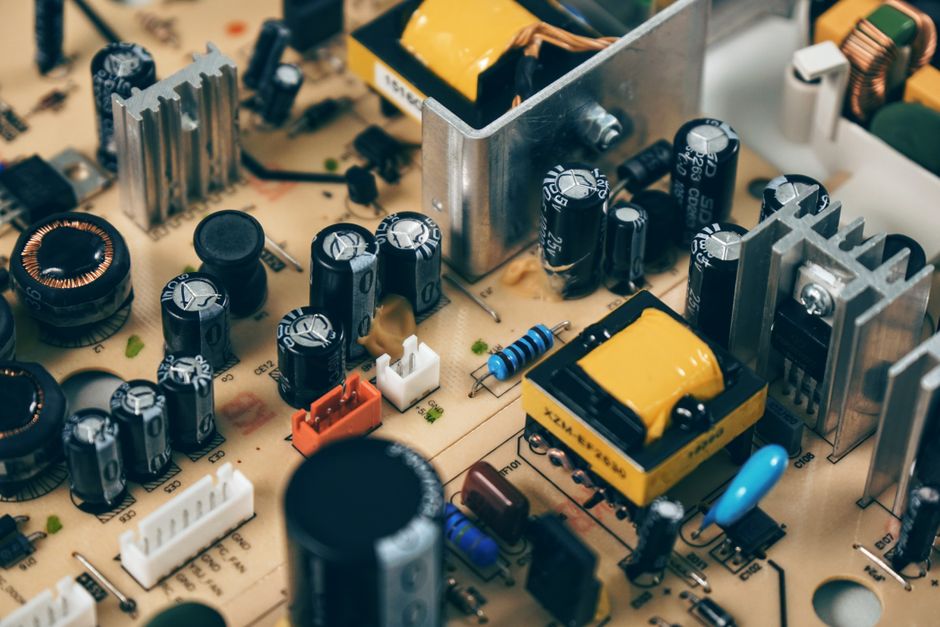
Murata Manufacturing unveiled a five-year, $500 million research and development program focused on solid-state batteries and advanced MEMS sensors. The initiative aims to diversify Murata's revenue beyond its traditional ceramic capacitor business, which still accounts for a majority of sales. The company is targeting applications in wearables, medical devices, and IoT edge nodes.
Murata's move reflects a broader trend among Japanese component makers to hedge against price volatility in commodity passives. The company has already secured partnerships with several automotive OEMs for prototype solid-state battery cells. If successful, this could position Murata as a key supplier in the next generation of energy storage for compact electronics.
3. Vishay Intertechnology Acquires Newport Components for $380 Million
Vishay Intertechnology completed its acquisition of Newport Components, a UK-based specialist in high-reliability resistors and inductors for aerospace and defense. The $380 million all-cash deal adds Newport's MIL-spec product lines to Vishay's portfolio, strengthening its position in the high-margin, low-volume military market.
The acquisition is expected to be accretive to Vishay's earnings within the first year. Newport's manufacturing facilities in the UK and Malaysia will be integrated into Vishay's global operations, with no immediate layoffs planned. For design engineers, this means a broader selection of qualified components for mission-critical systems.
4. Yageo and KEMET Announce Joint Venture for Automotive Passives
Yageo Corporation and KEMET Electronics have formed a joint venture to develop and manufacture automotive-grade passive components. The JV, named AutoPass Solutions, will focus on AEC-Q200 qualified capacitors, resistors, and inductors for EV powertrains and ADAS systems. Both companies will contribute intellectual property and manufacturing capacity.
The partnership aims to reduce reliance on single-source suppliers and improve supply chain resilience for automotive Tier 1s. Production is slated to begin in late 2025 at a new facility in Taiwan. Analysts note that this collaboration could pressure other passive component makers to consolidate or form similar alliances.
5. Samsung Electro-Mechanics Boosts Substrate Investment for AI Chips
Samsung Electro-Mechanics announced a $900 million investment to expand production of flip-chip ball grid array (FC-BGA) substrates used in AI accelerators and high-performance computing. The company is building a new plant in Vietnam to meet demand from NVIDIA, AMD, and other chip designers. FC-BGA substrates are a critical but often overlooked component in advanced packaging.
The investment underscores the growing importance of substrates in the AI supply chain. Lead times for high-layer-count FC-BGAs have stretched beyond 30 weeks, prompting chipmakers to secure capacity years in advance. Samsung's expansion is expected to add 20% to global FC-BGA capacity by 2026.
6. Texas Instruments Invests $11 Billion in 300mm Wafer Fabs
Texas Instruments is proceeding with its $11 billion investment in new 300mm wafer fabrication plants in Texas and Utah. While TI is primarily known for analog and embedded processors, the investment also supports its growing portfolio of power management ICs and embedded components. The fabs will produce chips for automotive, industrial, and personal electronics markets.
TI's strategy of owning its manufacturing capacity contrasts with many fabless competitors. The company believes this vertical integration will provide cost advantages and supply security. For component buyers, TI's expanded capacity could lead to more stable pricing for analog and power devices over the next decade.
7. Bourns and Littelfuse Expand Circuit Protection Portfolios
Bourns and Littelfuse both announced new product lines in circuit protection, targeting renewable energy and EV charging applications. Bourns introduced a series of high-voltage TVS diodes and gas discharge tubes, while Littelfuse launched a new family of fuses and varistors rated for 1500V DC systems. These components are essential for protecting sensitive electronics in solar inverters and fast-charging stations.
The timing aligns with global infrastructure spending on green energy. Both companies are ramping up production in North America and Europe to reduce reliance on Asian supply chains. Design engineers should watch for updated datasheets and qualification reports as these products become available.
8. Amphenol Acquires Cable Assembly Specialist for $450 Million
Amphenol Corporation acquired a privately held cable assembly and connector specialist for $450 million, expanding its presence in the industrial and medical markets. The target company, which was not immediately named, brings proprietary overmolding technology and a customer base in surgical robotics and factory automation. The deal is Amphenol's third acquisition this year.
Amphenol expects the acquisition to add $150 million in annual revenue and to be immediately accretive to earnings. The company continues to pursue a roll-up strategy in niche interconnect markets. For OEMs, this means potential supply chain consolidation but also access to more integrated interconnect solutions.
9. Nexperia Opens New Assembly and Test Facility in Malaysia
Nexperia inaugurated a new assembly and test facility in Penang, Malaysia, representing a $200 million investment. The plant will package discrete components, logic ICs, and MOSFETs for automotive and industrial customers. The facility is part of Nexperia's strategy to diversify manufacturing away from China amid geopolitical tensions.
The Penang site is expected to create 800 jobs and will be fully operational by mid-2025. Nexperia plans to use the facility for advanced packaging technologies, including copper clip and wafer-level packaging. This move could help stabilize supply for customers concerned about single-region dependencies.
10. STMicroelectronics and GlobalFoundries Partner on 300mm Fab in France
STMicroelectronics and GlobalFoundries finalized a joint venture to build a 300mm semiconductor fab in Crolles, France. The facility will produce a range of components, including FD-SOI, RF, and power management chips. The project received significant French government subsidies as part of the EU Chips Act.
The fab is expected to begin production in 2026 and will serve automotive, IoT, and industrial markets. This partnership highlights the trend of European semiconductor sovereignty and could reduce lead times for European component buyers. STMicroelectronics will operate the fab, with GlobalFoundries as a primary customer.
 English
 简体中文
简体中文 Русский
 Español
 Deutsch