1. Global Passive Component Capacity Boom: Murata and TDK Lead the Charge
Murata Manufacturing has confirmed a multi-billion-yen expansion at its Fukui and Izumo plants, targeting multilayer ceramic capacitor (MLCC) output for automotive and 5G infrastructure. The new lines are expected to come online in phases through 2026, adding roughly 10% to the company's global MLCC capacity. Analysts see this as a direct response to surging demand from EV powertrains, ADAS modules, and high-frequency RF front-ends.
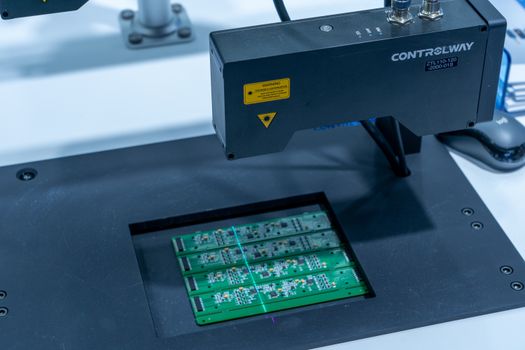
TDK is pursuing a parallel strategy, investing in its Japanese and Southeast Asian facilities to boost production of inductors, ceramic capacitors, and piezo components. The company has emphasized automation and AI-driven inspection to keep yields high while scaling volume. For procurement teams, this means long-term supply contracts may become easier to negotiate, though lead times for high-reliability automotive grades will likely remain extended.
What It Means for Buyers
- Expect gradual improvement in MLCC availability through late 2025 and 2026.
- Automotive-grade and high-voltage parts will stay tightest.
- Dual-sourcing strategies remain essential despite new capacity.
2. Semiconductor Packaging and Substrate Plants Expand Across Asia
Advanced packaging has become the bottleneck for AI accelerators, and component factories are responding. ASE Technology has broken ground on new fan-out and 2.5D/3D packaging lines in Taiwan and Malaysia, while Amkor is expanding its Vietnam facility to serve North American fabless customers. These projects focus on chiplet integration, through-silicon vias, and high-density substrates.
Substrate makers Ibiden and Shinko Electric are also ramping new ABF substrate capacity, a critical input for CPUs, GPUs, and networking ASICs. The expansions are capital-intensive and slow to qualify, so meaningful output gains are expected in 2026 rather than immediately. Still, the direction is clear: the packaging and substrate supply chain is globalizing to reduce geographic concentration risk.
Key Takeaways
- Advanced packaging capacity is the new semiconductor battleground.
- Vietnam, Malaysia, and Japan are emerging as packaging hubs.
- Substrate shortages may ease later than raw wafer supply.
3. Power Electronics Factories Bet Big on SiC and GaN
Silicon carbide (SiC) and gallium nitride (GaN) are moving from niche to mainstream, and factory expansions reflect that shift. Infineon is scaling its Kulim, Malaysia fab for SiC power devices, while STMicroelectronics is expanding its Catania, Italy site into a fully integrated SiC campus. ON Semiconductor has also announced new SiC boule and device capacity in the Czech Republic and South Korea.
GaN is following a similar path, with foundries adding 200mm GaN-on-Si lines for fast chargers, data center power supplies, and automotive DC-DC converters. Because SiC and GaN require specialized equipment and substrates, the expansion race also drives demand for crystal growth furnaces, epitaxy tools, and high-purity gases.
Why Power Components Matter
- EV traction inverters and onboard chargers are the largest SiC demand driver.
- Data center efficiency goals are pushing GaN adoption in PSUs.
- Substrate and epitaxy capacity will determine how fast prices fall.
4. Connector and Electromechanical Manufacturers Scale Up
Connectors, relays, and switches are often overlooked, but they are essential to every electronic system. TE Connectivity, Molex, and Amphenol have all announced capacity additions in Mexico, Eastern Europe, and Southeast Asia. The focus is on high-speed board-to-board connectors, automotive-grade sealed connectors, and power connectors for battery management systems.
These expansions are partly a response to nearshoring trends, as OEMs want suppliers closer to final assembly plants in North America and Europe. Automation is a common theme, with vision inspection and robotic assembly reducing labor costs and improving consistency. For designers, this means more options for high-reliability interconnect without the long lead times seen during the 2021–2023 shortage.
5. PCB and Substrate Fabrication Investments Accelerate
Printed circuit board (PCB) factories are expanding to support higher layer counts, finer lines, and advanced materials like high-frequency laminates. Major investments are underway in Thailand, Vietnam, and India, driven by customer demand for supply chain diversification. Companies such as Zhen Ding, Unimicron, and AT&S are building or upgrading plants for HDI, rigid-flex, and IC substrate products.
Environmental compliance is shaping these projects as much as cost. New facilities are designed for wastewater recycling, copper recovery, and lower energy consumption per panel. This matters for OEMs with strict ESG reporting requirements, since PCB sourcing is a major part of a product's embodied carbon footprint.
6. Sensor and MEMS Fabs Target Automotive and Industrial Markets
Sensor demand keeps climbing, from LiDAR and radar in vehicles to environmental and motion sensors in industrial IoT. Bosch Sensortec, STMicroelectronics, and TDK InvenSense are expanding MEMS fabrication and test capacity. New lines emphasize smaller die sizes, lower power, and integrated sensor fusion for edge AI.
Automotive qualification remains the highest barrier, so much of the new capacity is dedicated to AEC-Q100 and ISO 26262-compliant parts. Industrial customers benefit indirectly as consumer-grade sensor capacity frees up. Expect improved availability and gradually declining prices for common MEMS devices over the next two years.
7. What These Expansions Mean for the Electronics Supply Chain
Across capacitors, packaging, power devices, connectors, PCBs, and sensors, the common thread is geographic diversification and higher automation. Governments are incentivizing local production through the US CHIPS Act, the EU Chips Act, and similar programs in Japan, Korea, and India. The result is a more distributed but also more complex supply chain.
For procurement and design engineers, the practical implications are mixed. More capacity should ease shortages, but qualification cycles, export controls, and logistics still add friction. Building resilient bills of materials, qualifying alternate parts, and maintaining visibility into tier-2 and tier-3 suppliers remain the best defenses.
| Component Segment | Main Expansion Regions | Expected Impact |
|---|
| MLCC & Passives | Japan, Malaysia, Philippines | Easing lead times by 2026 |
| Advanced Packaging | Taiwan, Malaysia, Vietnam | Relief for AI chip supply |
| SiC & GaN Power | Malaysia, Italy, South Korea | Lower EV power costs |
| Connectors | Mexico, Eastern Europe | Faster nearshore delivery |
| PCB & Substrates | Thailand, Vietnam, India | More diversified sourcing |
8. Outlook: A Buyer's Market by 2026?
If current expansion plans stay on schedule, the electronics component market could shift from constrained to balanced by 2026. That does not mean prices will collapse everywhere, since advanced nodes, automotive grades, and specialty materials will stay in tight supply. But the era of blanket allocation and 50-week lead times appears to be fading.
Smart companies are using this window to lock in strategic partnerships, negotiate multi-year agreements, and co-develop custom components with suppliers. The factory expansion news of today will define who has leverage in the negotiations of tomorrow.
 English
 简体中文
简体中文 Русский
 Español
 Deutsch