The testing and measurement industry moves fast, and 2025 has already delivered a wave of instruments that promise faster readings, tighter accuracy, and smarter connectivity. Whether you work in electrical maintenance, industrial calibration, HVAC diagnostics, or laboratory research, this year's launches are worth a closer look. Below are eight of the most notable new testing instruments of 2025, with details on what makes each one stand out.
1. Next-Generation True-RMS Digital Multimeters
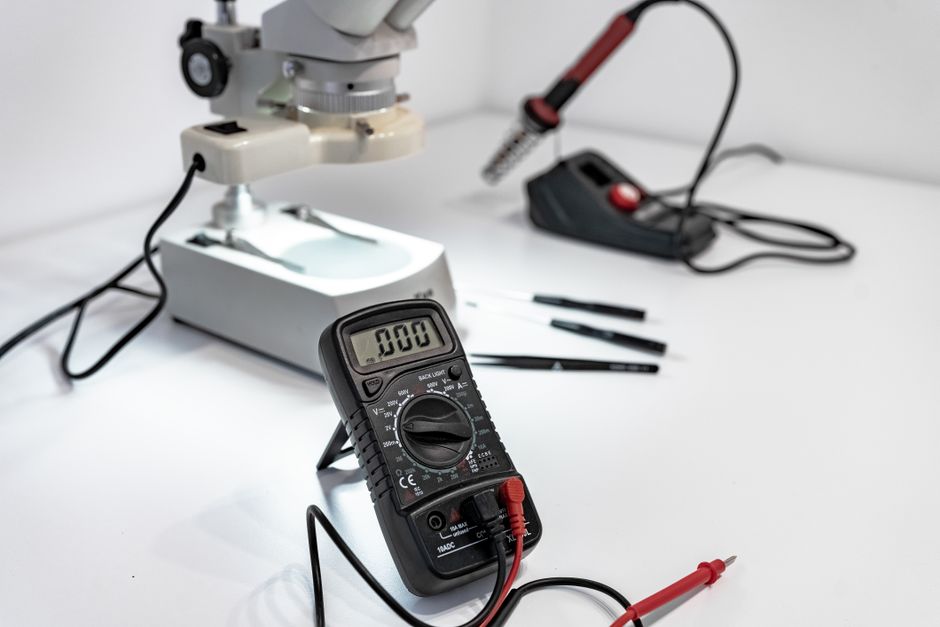
Leading manufacturers have refreshed their flagship handheld multimeters with faster sampling rates and improved true-RMS accuracy on non-sinusoidal waveforms. The 2025 models typically add Bluetooth logging, a low-impedance mode for ghost-voltage detection, and CAT IV 1000 V safety ratings as standard rather than a premium upgrade.
What really separates this year's multimeters is the firmware. Several new units now support over-the-air updates, so a meter you buy today can gain new measurement functions or bug fixes without leaving your bench. For field technicians who rely on one meter for everything, that longevity is a genuine cost saver.
If you are upgrading from a five-year-old meter, expect noticeably quicker auto-ranging and a brighter, higher-contrast display that stays readable in direct sunlight — a small change that makes a big difference on rooftop and outdoor jobs.
2. Portable Thermal Imaging Cameras with AI-Assisted Analysis
Thermal cameras have been shrinking for years, but 2025's models add on-device intelligence. New units can automatically flag temperature anomalies, label suspected loose connections or overloaded circuits, and generate a summary report before you leave the site.
Resolution has also crept upward at the entry level, with 256×192 sensors now common in mid-range cameras that once offered only 160×120. Combined with improved thermal sensitivity, that means you can spot smaller temperature differences from a safer distance.
For predictive maintenance teams, the biggest win is workflow. Images sync directly to cloud platforms, where they can be compared against baseline scans from previous inspections, turning a single snapshot into a trend you can actually act on.
3. Advanced Clamp Meters with Flexible Current Probes
Clamp meters in 2025 increasingly ship with flexible Rogowski-coil probes alongside the traditional jaw. This lets electricians measure around awkward busbars and large conductors where a rigid clamp simply will not fit, without sacrificing accuracy on high-current readings.
New models also combine AC/DC current, voltage, inrush, and power-quality measurements in a single handheld device. Inrush capture has become faster and more reliable, which matters when diagnosing motors and compressors that trip breakers on startup.
Many units now include a detachable display or a phone app that mirrors the reading, so you can clamp a live conductor in a cramped panel and read the result from a safe position — a feature that directly improves workplace safety.
4. Smart Insulation Testers with Automatic PI and DAR Calculation
Insulation resistance testing is tedious by nature, but 2025's testers automate much of the process. New instruments calculate polarization index (PI) and dielectric absorption ratio (DAR) automatically, running the timed test sequence and presenting a pass/fail verdict on screen.
These testers also add trending memory, storing results by asset tag so you can track insulation health over months and years. That historical view is often more valuable than any single reading, because insulation degradation is a slow process.
Safety features have improved too, with faster discharge circuits and clear live-voltage warnings. For anyone testing motors, transformers, and cables regularly, the time saved per test adds up quickly across a large facility.
5. Compact Vibration Meters and Analyzers for Predictive Maintenance
Vibration analysis used to require bulky, expensive equipment and specialist training. The 2025 crop of handheld vibration meters changes that, offering route-based measurement, built-in ISO 10816 severity scales, and simple color-coded alarms for bearings and rotating machinery.
Higher-end models now include FFT spectrum analysis with automatic fault identification, pointing to imbalance, misalignment, or bearing wear without requiring the user to interpret raw spectra. This lowers the barrier for maintenance teams that want to start a predictive program.
Connectivity is standard: readings upload to asset-management software, where trend charts highlight machines that are slowly getting worse. Catching a failing bearing weeks early is exactly the kind of payoff these instruments are designed to deliver.
6. Multi-Function Installation Testers with Faster Loop Testing
For electricians doing verification and commissioning, 2025's multi-function installation testers speed up the slowest part of the job: loop impedance and RCD testing. New units complete no-trip loop tests in a fraction of the time while maintaining accuracy on circuits protected by type A, AC, and even type B RCDs.
These testers bundle continuity, insulation resistance, loop impedance, RCD trip time, and sometimes earth resistance into one rugged handset. Auto-test sequences run an entire board's checks with a single button press, then store results for certification reports.
Several 2025 models add on-board report generation and direct export to certification software, cutting the paperwork that often takes longer than the testing itself. That efficiency is why installation testers remain one of the fastest-moving product categories this year.
7. Benchtop Source Measure Units for Lab and Production Test
In the lab, 2025 has brought a new generation of source measure units (SMUs) with wider dynamic range, lower noise floors, and faster digitizing rates. These instruments are essential for characterizing semiconductors, sensors, batteries, and other devices where precise voltage and current sourcing must be paired with accurate measurement.
New models emphasize ease of use, with touchscreen interfaces, scriptable test sequences, and improved software drivers for automated production lines. Some units now offer modular channel expansion, letting a single chassis grow from one channel to several as test needs increase.
For battery and power-device research in particular, the combination of high-speed sampling and low current resolution makes it possible to capture subtle behavior that older instruments would miss entirely.
8. IoT-Enabled Environmental and Air Quality Monitors
Environmental testing has gone fully connected in 2025. New air quality monitors measure particulate matter, CO₂, VOCs, temperature, and humidity simultaneously, streaming data to dashboards that trigger alerts when thresholds are exceeded.
These instruments are increasingly used in industrial hygiene, building commissioning, and indoor air quality investigations. Calibration reminders, sensor-health diagnostics, and replaceable sensor modules extend service life and keep data trustworthy over long deployments.
Because the data lives in the cloud, trends across multiple rooms or sites can be compared at a glance. That makes it far easier to prove compliance, identify ventilation problems, and justify remediation work with hard evidence.
What These Launches Mean for Buyers
Across all eight categories, three themes stand out in 2025: connectivity, automation, and safety. Instruments are no longer isolated tools — they feed data into software that turns measurements into decisions. Automation handles the repetitive calculations and test sequences that once consumed hours. And safety ratings and warnings have improved across the board.
When evaluating new equipment this year, look beyond the spec sheet. Ask how the instrument integrates with your existing software, whether it supports firmware updates, and how calibration and service are handled. Those factors often matter more over a five-year ownership period than a marginal accuracy difference.
Finally, consider total cost of ownership rather than purchase price alone. A slightly more expensive instrument that saves fifteen minutes per test, or that prevents a single unplanned downtime event, will usually pay for itself long before its warranty expires.
| Instrument Type | Key 2025 Trend | Best For |
|---|
| Digital Multimeters | Bluetooth logging, OTA updates | Electrical field work |
| Thermal Cameras | On-device AI analysis | Predictive maintenance |
| Clamp Meters | Flexible Rogowski probes | High-current diagnostics |
| Insulation Testers | Automatic PI/DAR | Motors and cables |
| Vibration Meters | Auto fault identification | Rotating machinery |
| Installation Testers | Faster no-trip loop testing | Electrical commissioning |
| Source Measure Units | Modular channel expansion | Lab and production test |
| Air Quality Monitors | Cloud dashboards and alerts | Environmental compliance |
Whichever category fits your work, 2025 is a strong year to upgrade. The gains in speed, connectivity, and safety are real, and they translate directly into better decisions and less downtime.

 English
 简体中文
简体中文 Русский
 Español
 Deutsch