
Best Material Handling Equipment Brands Reviewed
Choosing the right material handling equipment brand is one of the most consequential decisions a warehouse, manufacturing plant, or distribution center can make. Forklifts, pallet jacks, conveyors, and automated storage systems form the backbone of your operations, and downtime caused by unreliable equipment can cost thousands of dollars per hour. In this detailed review, we evaluate the leading material handling equipment brands based on build quality, innovation, service network, total cost of ownership, and customer satisfaction. Whether you are equipping a small warehouse or a large-scale fulfillment center, this guide will help you make an informed purchasing decision.
Why Brand Selection Matters
Material handling equipment operates in demanding environments. Brands differ significantly in engineering standards, parts availability, dealer support, and technology integration. A brand with a strong local service network can reduce downtime dramatically, while a cheaper brand with poor support may end up costing more over the equipment's lifespan. The following review compares the top brands across the categories that matter most to operations managers and procurement teams.
Top Material Handling Equipment Brands at a Glance
| Brand | Best For | Rating | Price Range |
|---|---|---|---|
| Toyota Material Handling | Forklifts & reliability | 9.4/10 | $$$ |
| Crown Equipment | Ergonomics & narrow aisle | 9.2/10 | $$$ |
| Hyster-Yale | Heavy-duty applications | 8.9/10 | $$$ |
| Jungheinrich | Automation & lithium-ion | 9.0/10 | $$$$ |
| Raymond | Intralogistics & telematics | 8.8/10 | $$$ |
| Clark | Value & durability | 8.5/10 | $$ |
1. Toyota Material Handling — Best Overall
Toyota has held the title of the world's largest forklift manufacturer for years, and for good reason. Its electric and internal combustion forklifts are known for exceptional reliability, low maintenance costs, and strong resale value.
Pros
Industry-leading reliability and durability
Extensive dealer and service network worldwide
Advanced safety systems, including Toyota's System of Active Stability
Strong resale value preserves total cost of ownership
Cons
Higher upfront purchase price
Some advanced features require premium packages
Verdict: Toyota remains the safest bet for most operations seeking dependable forklifts with excellent long-term support.
2. Crown Equipment — Best for Ergonomics and Narrow Aisle
Crown is renowned for operator-focused design. Its reach trucks, order pickers, and pallet trucks are engineered to reduce fatigue and improve productivity in high-throughput warehouses.
Pros
Superior ergonomic design reduces operator injury risk
Excellent narrow-aisle and high-lift performance
Integrated fleet management via Crown's InfoLink system
Strong build quality with long service intervals
Cons
Premium pricing compared to value brands
Service network less dense in some rural regions
Verdict: Ideal for warehouses prioritizing operator comfort and space efficiency.
3. Hyster-Yale — Best for Heavy-Duty Applications
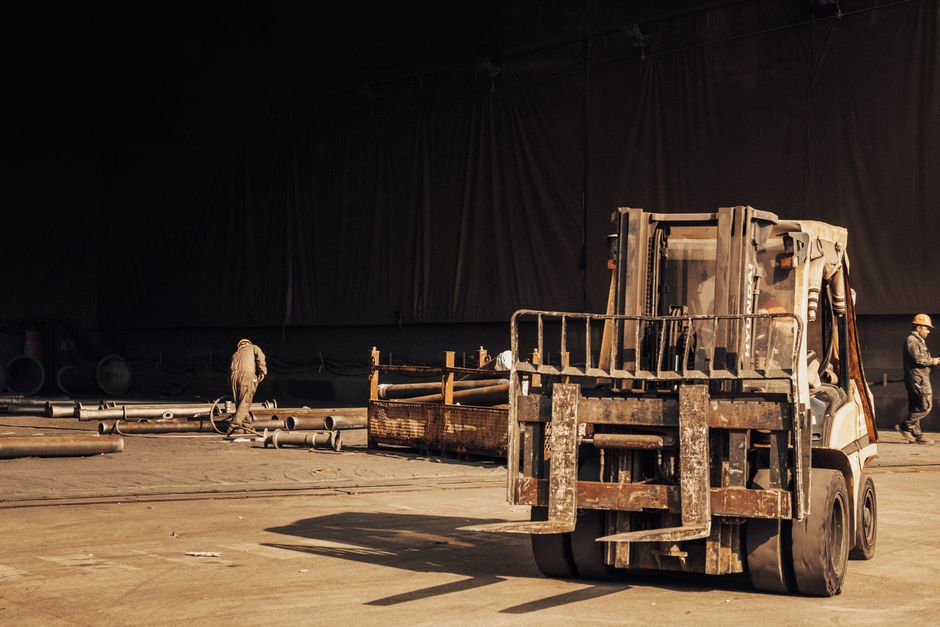
Hyster-Yale builds rugged equipment for ports, steel mills, and heavy manufacturing. Their trucks handle extreme loads and harsh conditions with ease.
Pros
Exceptional durability in harsh environments
Wide range of high-capacity models
Strong parts availability
Cons
Less refined ergonomics than Crown
Fuel consumption higher on ICE models
Verdict: A top choice for heavy industry where toughness trumps finesse.
4. Jungheinrich — Best for Automation and Lithium-Ion
Jungheinrich leads in warehouse automation and lithium-ion technology. Their automated guided vehicles (AGVs) and energy-efficient forklifts suit modern smart warehouses.
Pros
Cutting-edge lithium-ion and fuel-cell options
Advanced automation and AGV integration
Excellent energy efficiency lowers operating costs
Cons
High initial investment
Automation setup requires technical expertise
Verdict: Best for forward-thinking facilities investing in automation.
5. Raymond — Best for Intralogistics and Telematics
Raymond combines electric lift trucks with sophisticated telematics through its iWarehouse platform, helping managers optimize labor and equipment utilization.
Pros
Powerful fleet telematics and data analytics
Energy-efficient electric models
Strong support for narrow-aisle operations
Cons
Telematics subscriptions add recurring cost
Limited ICE offerings
Verdict: A smart pick for data-driven warehouse managers.
6. Clark — Best Value Brand
Clark offers dependable equipment at competitive prices, making it popular among small and mid-sized businesses.
Pros
Affordable purchase and lease options
Simple, durable designs easy to maintain
Good entry-level electric and ICE models
Cons
Fewer advanced technology features
Resale value below premium brands
Verdict: Great for budget-conscious buyers who still want reliability.
How to Choose the Right Brand
Consider these factors before committing:
Application: Match equipment type to your load, aisle width, and lift height needs.
Service network: Prioritize brands with local dealers for fast repairs.
Total cost of ownership: Factor in energy, maintenance, and resale value.
Technology: Decide whether telematics or automation justifies the premium.
Financing: Compare lease vs. buy options for cash flow flexibility.
Final Recommendation
For most operations, Toyota and Crown offer the best balance of reliability, support, and long-term value. Facilities pursuing automation should evaluate Jungheinrich and Raymond, while heavy industry will appreciate Hyster-Yale. Budget-focused buyers can trust Clark for solid, no-frills performance. Whichever brand you choose, prioritize dealer support and total cost of ownership over sticker price alone.