Introduction: Why ROI Matters for Material Handling Equipment
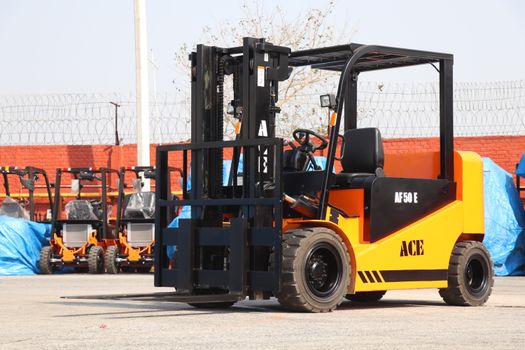
Material handling equipment (MHE) is a significant capital investment for any warehouse, manufacturing plant, or distribution center. From forklifts and conveyors to automated guided vehicles (AGVs) and robotic arms, these machines keep your operations running smoothly. But how do you know if your investment is paying off? Calculating the return on investment (ROI) for material handling equipment is essential to justify purchases, optimize performance, and make informed decisions about future upgrades. In this comprehensive guide, we'll walk you through the step-by-step process of calculating MHE ROI, including key metrics, formulas, and practical tips to maximize your returns.
What is ROI for Material Handling Equipment?
ROI is a financial metric that measures the profitability of an investment. For material handling equipment, it compares the net benefits (gains) from the equipment to its total cost. A positive ROI indicates that the equipment is generating more value than it costs, while a negative ROI suggests a loss. The basic ROI formula is:
ROI = (Net Benefit / Total Investment Cost) × 100%
However, calculating ROI for MHE involves more than just the purchase price. You need to consider operational savings, productivity gains, labor reductions, and other tangible and intangible benefits.
Key Components of MHE ROI Calculation
To accurately calculate ROI, you must identify all costs and benefits associated with the equipment over its useful life. Here are the main components:
1. Initial Investment Costs
- Purchase price or lease down payment
- Delivery and installation fees
- Training for operators and maintenance staff
- Infrastructure modifications (e.g., racking, charging stations, power supply)
- Software integration (e.g., fleet management systems)
2. Operational Costs
- Fuel or electricity expenses
- Maintenance and repairs
- Operator wages (if additional staff are needed)
- Insurance and licensing
- Depreciation
3. Benefits (Savings and Revenue Gains)
- Labor cost reduction (e.g., fewer manual handlers)
- Increased throughput and productivity
- Reduced product damage and waste
- Improved workplace safety (lower accident costs)
- Space utilization improvements
- Energy savings (e.g., electric vs. internal combustion)
- Revenue growth from higher capacity or faster order fulfillment
Step-by-Step Guide to Calculating MHE ROI
Follow these steps to compute ROI for your material handling equipment:
Step 1: Determine the Total Investment Cost
Sum all initial and ongoing costs over the equipment's lifespan. For example, if you purchase a forklift for $30,000 with a 10-year life, and annual maintenance costs $2,000, the total cost over 10 years would be $30,000 + ($2,000 × 10) = $50,000. Don't forget to include residual value if you plan to sell it at the end.
Step 2: Quantify the Benefits
Estimate the financial gains. This can be challenging, but use historical data or industry benchmarks. For instance:
- If the forklift replaces two manual workers earning $35,000 each, annual labor savings = $70,000.
- If it increases throughput by 20%, leading to $50,000 additional revenue per year, that's a benefit.
- If it reduces product damage by $10,000 annually, include that.
Sum these benefits over the equipment's life. Be conservative to avoid overestimating ROI.
Step 3: Calculate Net Benefit
Net Benefit = Total Benefits - Total Costs. Using the above example, if total benefits over 10 years are $800,000 and total costs are $50,000, net benefit = $750,000.
Step 4: Apply the ROI Formula
ROI = ($750,000 / $50,000) × 100% = 1,500%. This means for every dollar spent, you gain $15 in return. While this seems high, it's not uncommon for labor-saving equipment.
Step 5: Consider the Payback Period
The payback period is the time it takes for the benefits to cover the initial investment. It's calculated as:
Payback Period = Initial Investment / Annual Net Cash Flow
If the initial investment is $30,000 and annual net cash flow is $75,000, payback period = 0.4 years (about 5 months). A shorter payback period indicates a more attractive investment.
Advanced ROI Metrics for Material Handling Equipment
For a more nuanced analysis, consider these advanced metrics:
Net Present Value (NPV)
NPV accounts for the time value of money by discounting future cash flows. A positive NPV means the investment is worthwhile.
Internal Rate of Return (IRR)
IRR is the discount rate that makes NPV zero. It helps compare different equipment options.
Total Cost of Ownership (TCO)
TCO includes all costs over the equipment's life, providing a holistic view. It's often used alongside ROI.
Practical Tips for Accurate ROI Calculation
- Involve stakeholders: Work with finance, operations, and maintenance teams to gather accurate data.
- Use real data: Avoid guesswork; use historical performance and vendor quotes.
- Account for intangible benefits: Safety improvements and employee morale can be hard to quantify but are valuable. Assign a monetary value if possible.
- Consider scalability: Will the equipment support future growth? Factor in potential expansion.
- Review regularly: ROI isn't static; revisit it annually to track actual vs. projected performance.
- Leverage software: Use ROI calculators or fleet management software to automate calculations.
Common Pitfalls to Avoid
- Ignoring hidden costs: Training, downtime, and disposal fees can add up.
- Overestimating benefits: Be realistic about productivity gains and savings.
- Forgetting inflation: Adjust future costs and benefits for inflation.
- Not comparing alternatives: Always evaluate multiple equipment options or leasing vs. buying.
Case Study: ROI of an Automated Guided Vehicle (AGV) System
Suppose a distribution center invests $500,000 in an AGV system. Annual benefits include $200,000 in labor savings, $50,000 in reduced damage, and $30,000 in energy savings, totaling $280,000 per year. Annual operating costs are $20,000. Over 7 years, total benefits = $280,000 × 7 = $1,960,000. Total costs = $500,000 + ($20,000 × 7) = $640,000. Net benefit = $1,320,000. ROI = ($1,320,000 / $640,000) × 100% ≈ 206%. Payback period = $500,000 / ($280,000 - $20,000) = 1.92 years. This demonstrates a strong ROI.
Conclusion: Making Data-Driven Decisions
Calculating ROI for material handling equipment is not just a financial exercise; it's a strategic tool to ensure your investments align with business goals. By following the steps outlined in this guide, you can confidently assess the value of new equipment, justify expenditures to stakeholders, and optimize your operations for maximum efficiency and profitability. Remember, the most successful ROI calculations are based on accurate data, realistic assumptions, and a comprehensive view of both costs and benefits. Start calculating today to unlock the full potential of your material handling investments.