
Why Warehouse Ergonomics Matters More Than Ever
Warehouse work is physically demanding. Order pickers walk miles per shift, lift thousands of pounds cumulatively, and repeat the same motions hundreds of times a day. The result? Musculoskeletal disorders (MSDs) remain the single largest category of workplace injuries in warehousing and material handling, accounting for roughly one-third of all reported cases according to industry safety data. Each injury costs employers in lost productivity, workers' compensation claims, and retraining — not to mention the human toll on workers.
The good news: ergonomic risk in warehouses is largely predictable and preventable. With the right combination of equipment, workstation design, and training, facilities can dramatically reduce injury rates while improving throughput and morale. This guide walks through the major ergonomic challenges in modern warehouses and the equipment solutions that address them.
The Core Ergonomic Risk Factors in Warehousing
Before selecting equipment, it helps to understand what actually causes injury. Ergonomics professionals generally group warehouse risk factors into five categories:
- Force: The amount of physical effort required to lift, push, pull, or carry loads.
- Repetition: Performing the same motion frequently — scanning, lifting, reaching — without variation.
- Posture: Sustained awkward positions such as bending, twisting, reaching overhead, or stooping.
- Vibration: Whole-body vibration from driving forklifts or powered equipment over rough surfaces.
- Static loading: Holding a position or load for extended periods, which fatigues muscles faster than dynamic movement.
Most warehouse injuries result from a combination of these factors. A picker who repeatedly bends and twists to retrieve cases from a low pallet position is exposed to force, repetition, and awkward posture simultaneously. Effective ergonomic programs target the highest-risk combinations first.
Lifting and Handling Equipment Solutions
Manual lifting is the most common source of back and shoulder injuries in warehouses. The hierarchy of controls says the best solution is to eliminate the lift entirely — and modern equipment makes that increasingly practical.
Lift Tables and Tilters
Spring-loaded or hydraulic lift tables keep work at waist height, eliminating the need to bend to floor level. Position-indicating lift tables automatically raise or lower pallets as layers are removed, maintaining a consistent working height. Tilters add the ability to angle loads toward the worker, reducing reach and trunk flexion. These are among the highest-ROI ergonomic investments for pallet-handling workstations.
Vacuum and Air-Assist Lifters
For repetitive lifting of boxes, bags, or irregular items, vacuum lifters and articulated jib cranes remove nearly all muscular effort. Operators guide the load with minimal force while the device carries the weight. These systems shine in high-volume pick-and-pack operations where manual lifting would otherwise occur hundreds of times per shift.
Scissor Lifts and Pallet Positioners
Scissor lift tables integrated into packing or receiving lines keep materials at ergonomic heights. Pallet positioners rotate and tilt loads so workers can access all four sides without walking around or overreaching. Both reduce the awkward postures that lead to cumulative trauma.
Mobile Equipment and Whole-Body Vibration
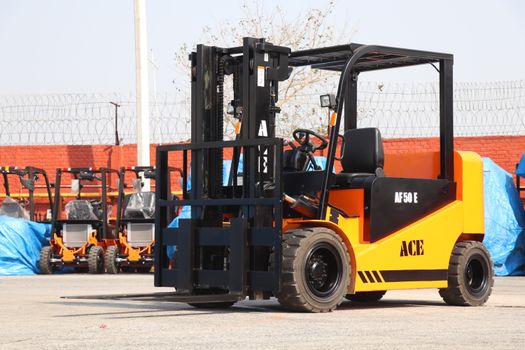
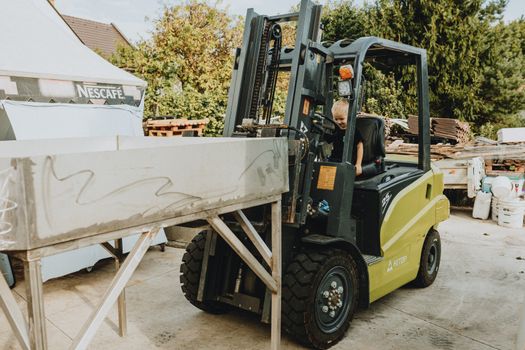
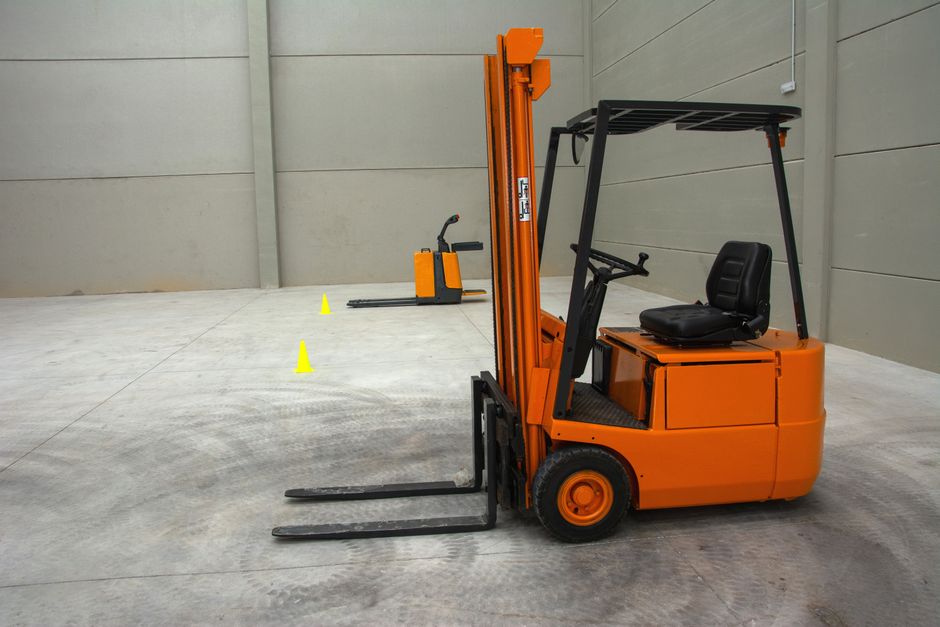
Forklifts, reach trucks, and order pickers expose operators to whole-body vibration, which is linked to lower back pain and spinal degeneration. Several equipment strategies help:
- Suspended or air-ride seats that dampen vibration and adjust to operator weight.
- Pneumatic tires on rough floors, or specification of smooth, well-maintained floor surfaces.
- Adjustable steering columns and armrests to support neutral postures.
- Order pickers with ergonomic platforms that raise the operator to the pick face rather than forcing overhead reaching.
Specifying the right truck for the task matters too. Using a counterbalance forklift for high-level order picking forces operators into awkward positions; a purpose-built order picker with a lift platform is far safer.
Workstation and Layout Design
Equipment alone won't fix a poorly designed workstation. The physical layout determines how far workers reach, how much they twist, and how often they walk.
The Golden Zone
Design workstations so that the most frequent tasks occur within the "golden zone" — roughly from waist to shoulder height and within 16 to 18 inches of the body. Everything else should be secondary. This single principle prevents a large share of shoulder and back strain.
Adjustability and Shared Workstations
In facilities with multiple shifts or mixed workforces, height-adjustable workbenches, anti-fatigue matting, and adjustable chairs accommodate a range of worker statures. A workstation that fits one worker may injure another.
Conveyors and Gravity Flow
Gravity roller conveyors, skatewheel conveyors, and powered belt systems move goods without manual carrying. Flexible and expandable conveyors let facilities reconfigure lines as needs change, keeping travel and carrying distances short.
Comparison of Common Ergonomic Equipment
| Equipment | Primary Risk Addressed | Best Use Case | Typical Impact |
|---|---|---|---|
| Lift tables | Bending, lifting force | Pallet build/break, packing | High |
| Vacuum lifters | Repetitive lifting | High-volume pick and pack | High |
| Pallet positioners | Reaching, twisting | Manual palletizing | Medium-High |
| Anti-fatigue matting | Static standing | Packing, assembly stations | Medium |
| Order pickers | Overhead reaching, climbing | High-bay picking | High |
| Conveyors | Carrying, walking | Transport between zones | Medium-High |
| Adjustable workbenches | Posture, reach | Inspection, kitting | Medium |
Practical Steps to Build an Ergonomic Program
Buying equipment is only part of the solution. A structured program turns purchases into lasting injury reduction:
- Conduct ergonomic risk assessments. Walk the floor, observe tasks, and use tools like the NIOSH Lifting Equation or RULA to quantify risk.
- Involve frontline workers. They know which tasks hurt and often suggest simple fixes.
- Prioritize by risk and frequency. Fix the tasks that combine high force, repetition, and awkward posture first.
- Pilot before rolling out. Test equipment in one area, measure results, then scale.
- Train on proper use. Even the best lift assist fails if workers don't use it correctly.
- Track leading indicators. Monitor near-misses, discomfort reports, and turnover — not just recordable injuries.
- Reassess regularly. Product mix, volumes, and layouts change; ergonomic needs change with them.
Calculating the Return on Ergonomic Investment
Ergonomic equipment often looks expensive up front, but the math usually favors action. Consider a single back injury: direct medical and indemnity costs can run tens of thousands of dollars, with indirect costs (overtime, replacement labor, training) often two to four times higher. A $3,000 lift table that prevents one injury per year pays for itself immediately. Add productivity gains from faster, less fatigued work, and the payback period shrinks further. Many facilities report double-digit reductions in MSD claims within two years of a focused ergonomics program.
Common Mistakes to Avoid
- Buying equipment without assessing the task. A lift assist that doesn't match the load or cycle time won't be used.
- Ignoring the whole system. Fixing one station while leaving upstream or downstream tasks risky just moves the injury.
- Overlooking maintenance. Hydraulics, casters, and controls need servicing to stay safe and effective.
- Skipping training. Equipment adoption depends on clear instruction and reinforcement.
- Treating ergonomics as a one-time project. It's an ongoing process, not a purchase order.
Conclusion
Warehouse ergonomics is not a luxury or a compliance checkbox — it's an operational strategy. The right equipment, from lift tables and vacuum lifters to ergonomic order pickers and conveyors, removes the physical stressors that cause most injuries. Combined with thoughtful workstation design and a structured assessment program, these solutions protect workers, reduce costs, and keep product moving. Facilities that invest in ergonomics today build a safer, more productive, and more resilient operation for years to come.