How Much Does a Conveyor System Cost?
If you are planning to automate or upgrade material flow in a warehouse, distribution center, or manufacturing plant, one of the first questions you will ask is: how much does a conveyor system cost? The honest answer is that conveyor pricing varies enormously — from a few thousand dollars for a simple gravity roller line to well over a million dollars for a fully automated, sortation-integrated system. This guide breaks down the real cost drivers, typical price ranges, hidden expenses, and practical ways to budget accurately for your project.
Why Conveyor System Costs Vary So Much
Conveyors are not off-the-shelf commodities like shelving or pallet jacks. Every system is engineered around your product dimensions, throughput targets, facility layout, and integration requirements. Two facilities with identical square footage can receive quotes that differ by 300% because of differences in:
- Product type, weight, and dimensions
- Required throughput (units or cartons per hour)
- System length and number of turns, inclines, and merges
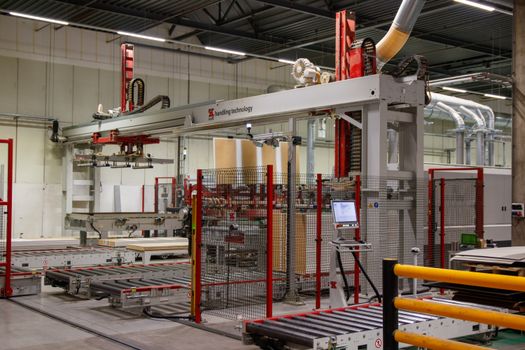
- Level of automation and controls sophistication
- Integration with existing WMS, WCS, or ERP software
- Installation complexity and local labor rates
Understanding these variables is the key to understanding your quote.
Typical Conveyor System Cost Ranges
The table below gives a general benchmark for common conveyor categories. Treat these as planning figures, not firm quotes — final pricing depends on engineering, freight, and installation.
| Conveyor Type | Typical Cost Range | Best For |
|---|---|---|
| Gravity roller conveyor | $30 – $120 per linear foot | Simple, non-powered transport and staging |
| Belt conveyor (light duty) | $100 – $300 per linear foot | Cartons, parcels, small parts |
| Belt conveyor (heavy duty) | $300 – $800 per linear foot | Bulk materials, mining, heavy loads |
| Live roller / powered roller | $200 – $500 per linear foot | Accumulation, zones, sortation infeed |
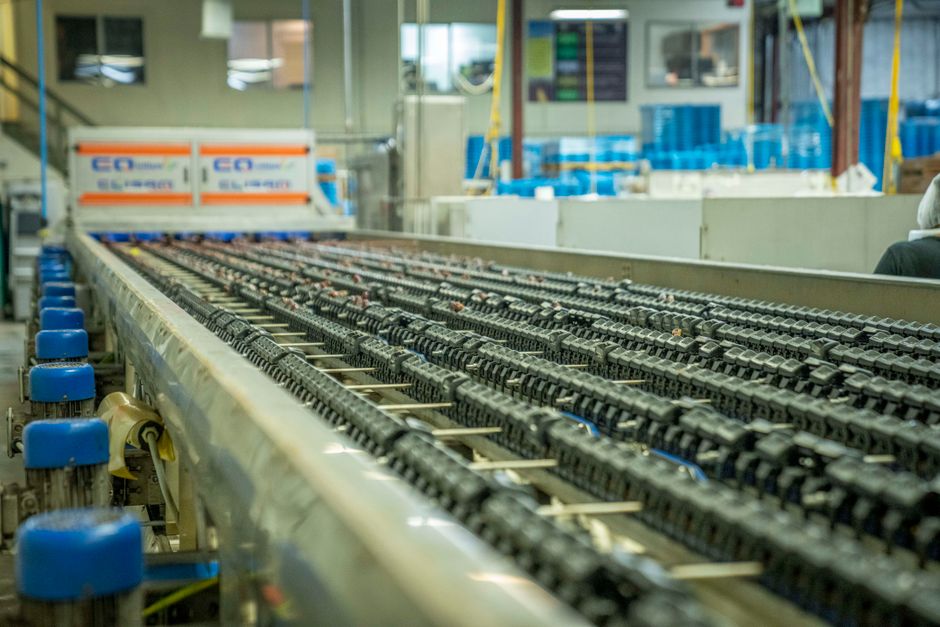
| Modular plastic chain | $250 – $600 per linear foot | Beverage, packaging, washdown areas |
| Overhead / power-and-free | $400 – $1,200 per linear foot | Painting lines, garment handling, assembly |
| Sortation system (per sorter) | $150,000 – $1,000,000+ | E-commerce, parcel hubs, high-volume DCs |
As a rule of thumb, a small manual conveyor line might cost $15,000 to $50,000, a mid-sized automated system with accumulation and controls could run $150,000 to $500,000, and a large integrated sortation and conveyor network can exceed $2 million.
Key Cost Drivers Explained
1. System Length and Layout
Length is the most obvious cost driver, but layout matters just as much. Every curve, incline, decline, and transfer point adds components, motors, and engineering time. A straight 100-foot run is far cheaper than a 100-foot run with four curves, two merges, and a vertical lift.
2. Load Characteristics
Conveyors handling 5 lb parcels require lighter frames and smaller motors than those moving 50 lb cases or 2,000 lb pallets. Heavier loads mean thicker gauge steel, larger drive units, and more robust supports — all of which increase cost.
3. Throughput and Speed
Higher throughput demands faster belts, more powerful drives, accumulation zones, and often sortation. If your target is 3,000 cartons per hour, you will need a very different system than a facility moving 300 per hour.
4. Controls and Software Integration
Controls can represent 15–30% of total project cost. This includes PLCs, variable frequency drives, photo eyes, barcode scanners, HMI panels, and software integration with your WMS or WCS. Advanced features like automatic label application, weight checking, and real-time tracking add further cost.
5. Installation and Site Conditions
Installation typically accounts for 10–25% of the total. Factors that raise it include mezzanine modifications, sprinkler relocation, electrical work, union labor requirements, and working in an active facility where installation must happen overnight or on weekends.
Hidden and Ongoing Costs to Budget For
Smart buyers plan for the full lifecycle cost, not just the purchase price. Consider these often-overlooked expenses:
- Freight and rigging: Large conveyor sections ship on multiple trucks; rigging can add thousands.
- Permits and engineering stamps: Required in some jurisdictions.
- Spare parts inventory: Budget 3–5% of system cost for critical spares.
- Maintenance: Annual preventive maintenance runs 2–5% of capital cost.
- Energy: Motors and controls consume electricity continuously during shifts.
- Training: Operators and maintenance staff need proper onboarding.
- Downtime risk: Poorly planned systems cost far more in lost throughput than in hardware.
How to Get an Accurate Quote
To receive a meaningful proposal, prepare the following before contacting vendors:
- Product dimensions, weights, and photos of every item type
- Peak and average throughput requirements
- Facility drawings with column locations and clear heights
- Available power and any hazardous area classifications
- Integration points with existing equipment and software
- Timeline, budget range, and phasing preferences
Request at least three quotes and ask each vendor to itemize equipment, controls, installation, and commissioning separately. This makes comparison far easier and prevents surprises later.
Ways to Reduce Conveyor System Costs
- Phase the project: Start with the highest-ROI section and expand later.
- Standardize components: Fewer unique parts reduce engineering and spare parts costs.
- Consider pre-owned or refurbished equipment: Suitable for non-critical applications.
- Right-size automation: Do not over-automate low-volume processes.
- Optimize layout early: Moving a conveyor on paper is free; moving it after installation is not.
- Leverage modular systems: They are easier to expand and reconfigure.
Is a Conveyor System Worth the Investment?
For most operations moving more than a few hundred items per day, the answer is yes. Conveyors reduce labor costs, improve safety, increase throughput, and provide a predictable, scalable material flow. A well-designed system often pays for itself within 12 to 36 months through labor savings and accuracy improvements alone.
The key is to treat conveyor cost as an investment in operational efficiency rather than a simple equipment purchase. Work with an experienced integrator, define your requirements clearly, and plan for the full lifecycle — not just the invoice.
Final Thoughts
How much a conveyor system costs depends on what you need it to do. Simple gravity lines start in the low thousands, while automated sortation networks can exceed seven figures. By understanding the cost drivers, budgeting for hidden expenses, and preparing detailed specifications, you can secure accurate quotes and build a system that delivers long-term value for your material handling operation.