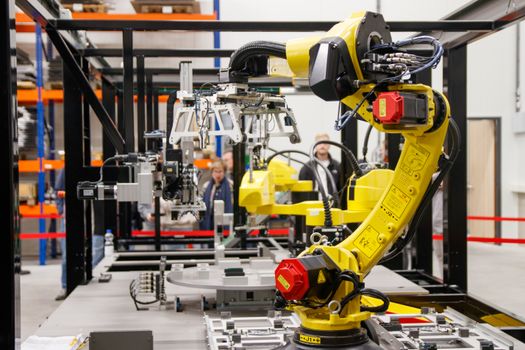
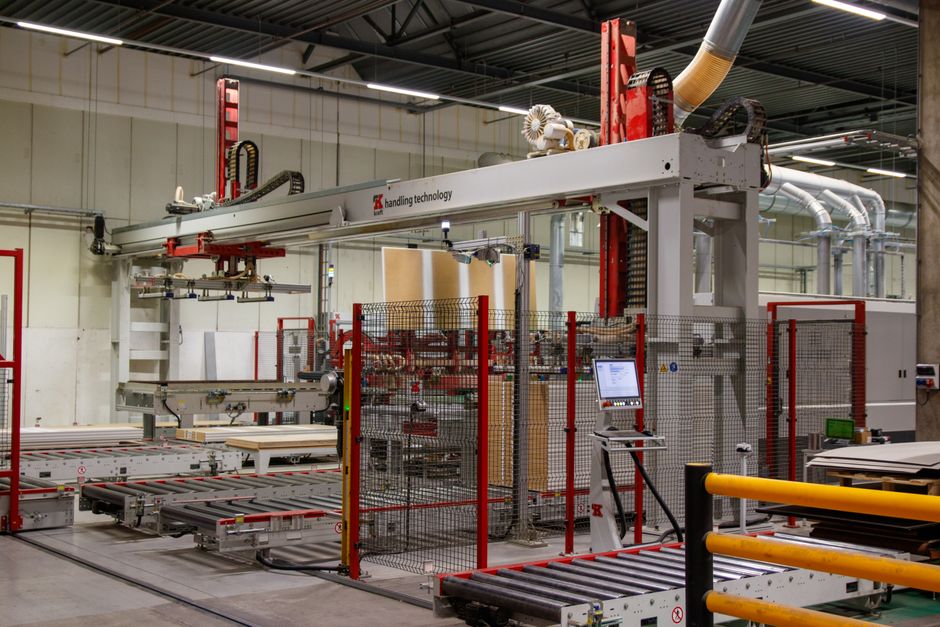
Robotic palletizing systems are transforming material handling operations by automating the stacking of goods onto pallets. These systems boost efficiency, reduce labor costs, and improve workplace safety. In this comprehensive review, we evaluate the top robotic palletizing systems on the market, comparing their features, pros and cons, and providing ratings to help you make an informed decision.
Why Invest in a Robotic Palletizing System?
Before diving into the reviews, it's essential to understand the benefits. Robotic palletizers offer consistent throughput, handle heavy loads, and can operate in harsh environments. They also reduce the risk of repetitive strain injuries and free up human workers for more skilled tasks.
Top Robotic Palletizing Systems Reviewed
1. FANUC M-410iC Series
The FANUC M-410iC is a dedicated palletizing robot known for its speed and reliability. It features a payload capacity of up to 700 kg and a reach of 3.1 meters. The integrated vision system allows for precise picking and placing.
- Pros: High payload, fast cycle times, robust construction, easy integration with existing lines.
- Cons: High initial cost, requires specialized programming.
Rating: 4.8/5
2. ABB IRB 660
ABB's IRB 660 is a flexible robot designed for high-speed palletizing. With a payload of up to 250 kg and a reach of 3.15 meters, it's ideal for medium to high-volume operations. The robot's compact design saves floor space.
- Pros: Fast, energy-efficient, flexible mounting options, good for multiple palletizing patterns.
- Cons: Lower payload than some competitors, complex setup for beginners.
Rating: 4.7/5
3. KUKA KR 700 PA
KUKA's KR 700 PA is a heavy-duty palletizing robot with a payload of 700 kg. It's designed for high-speed applications and offers excellent repeatability. The robot can be ceiling-mounted to save floor space.
- Pros: High payload, high speed, ceiling-mount option, durable.
- Cons: Expensive, requires significant installation space if floor-mounted.
Rating: 4.6/5
4. Yaskawa Motoman PL190
The Motoman PL190 is a 4-axis robot specifically for palletizing. It has a payload of 190 kg and a reach of 3.1 meters. It's known for its smooth motion and ease of use.
- Pros: User-friendly programming, reliable, good for medium-duty tasks.
- Cons: Lower payload, limited to specific applications.
Rating: 4.5/5
5. Universal Robots UR20
The UR20 is a collaborative robot (cobot) that can be used for palletizing. With a payload of 20 kg, it's suitable for lighter loads. Its collaborative nature allows it to work safely alongside humans.
- Pros: Easy to program, safe for collaborative work, flexible deployment.
- Cons: Low payload, slower cycle times compared to industrial robots.
Rating: 4.3/5
Comparison Table
| Model | Payload (kg) | Reach (m) | Speed (cycles/min) | Rating |
|---|---|---|---|---|
| FANUC M-410iC | 700 | 3.1 | Up to 30 | 4.8/5 |
| ABB IRB 660 | 250 | 3.15 | Up to 40 | 4.7/5 |
| KUKA KR 700 PA | 700 | 3.2 | Up to 35 | 4.6/5 |
| Yaskawa Motoman PL190 | 190 | 3.1 | Up to 25 | 4.5/5 |
| Universal Robots UR20 | 20 | 1.75 | Up to 10 | 4.3/5 |
Key Factors to Consider
When choosing a robotic palletizing system, consider the following:
- Payload and Reach: Match the robot's capacity to your typical load sizes and layout.
- Speed and Throughput: Ensure the system can meet your production rates.
- Integration: Check compatibility with your existing conveyor and palletizing software.
- Cost: Evaluate total cost of ownership, including maintenance and programming.
- Safety: Ensure compliance with safety standards, especially for collaborative robots.
Recommendations
For high-volume, heavy-payload applications, the FANUC M-410iC and KUKA KR 700 PA are excellent choices. If you need a balance of speed and flexibility, the ABB IRB 660 is a great option. For medium-duty tasks with ease of use, the Yaskawa Motoman PL190 is reliable. And for collaborative environments, the Universal Robots UR20 offers safe and flexible palletizing.
Conclusion
Robotic palletizing systems are a worthwhile investment for businesses looking to automate their material handling. Evaluate your specific needs and choose a system that aligns with your operational requirements. With the right choice, you can significantly enhance productivity and safety in your warehouse or production facility.